
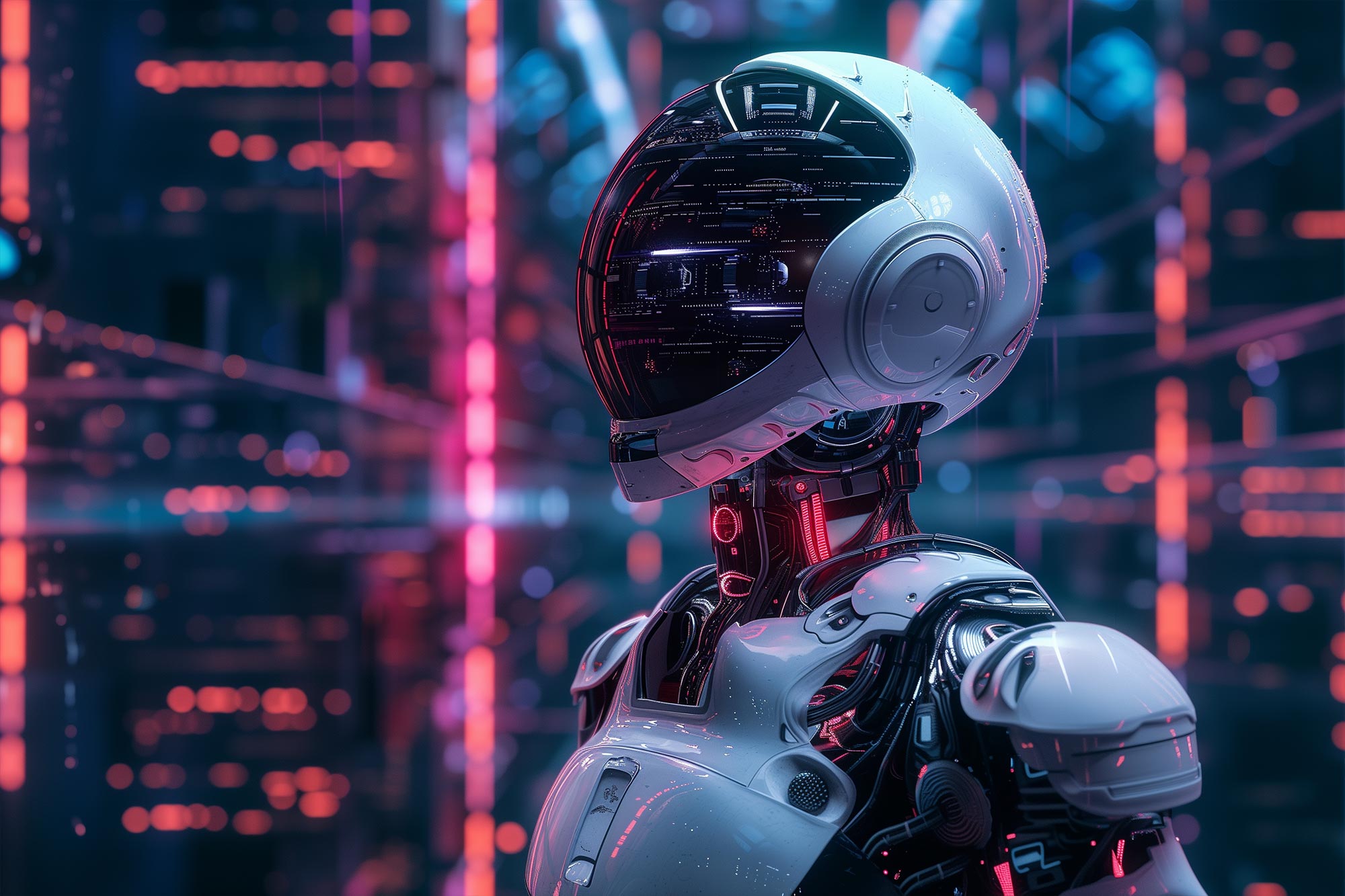
Scientists envision a future of AI units sharing knowledge like a hive-mind, enabling fast, adaptable responses across fields, without the risks of centralized control.
Leading computer scientists from institutions including Loughborough University, MIT, and Yale have outlined a vision for the future of artificial intelligence that echoes elements of science fiction—specifically, the interconnected intelligence of Star Trek’s Borg.
In a perspective paper published in Nature Machine Intelligence, the researchers describe the rise of “Collective AI”—a system in which multiple AI agents, each capable of learning and adapting independently, are networked together to continuously share knowledge and skills. This approach would allow AI systems to evolve more rapidly and efficiently by pooling their individual experiences and insights.
The authors acknowledge the resemblance between this concept and the fictional Borg: cybernetic beings in the Star Trek universe that operate as a collective consciousness, constantly exchanging information through a unified network.
However, unlike many sci-fi narratives, the computer scientists envision Collective AI will lead to major positive breakthroughs across various fields.
Rapid Response Through Shared Intelligence
Loughborough University’s Dr Andrea Soltoggio, the research lead, explained: “Instant knowledge sharing across a collective network of AI units capable of continuously learning and adapting to new data will enable rapid responses to novel situations, challenges, or threats.
“For example, in a cybersecurity setting if one AI unit identifies a threat, it can quickly share knowledge and prompt a collective response – much like how the human immune system protects the body from outside invaders.
“It could also lead to the development of disaster response robots that can quickly adapt to the conditions they are dispatched in, or personalized medical agents that improve health outcomes by merging cutting-edge medical knowledge with patient-specific information.
“The potential applications are vast and exciting.”
The researchers acknowledge there are risks associated with Collective AI – such as the swift spread of potentially unethical or illicit knowledge – but highlight a crucial safety aspect of their vision: AI units maintain their own objectives and independence from the collective.
Dr Soltoggio says this would “result in a democracy of AI agents, significantly reducing the risks of an AI domination by few large systems.”
The computer scientists arrived at the conclusion that the future of AI lies in collective intelligence following an analysis of recent advancements in machine learning.
Technological Foundations of Collective AI
Their research – funded by the Defense Advanced Research Project Agency (DARPA) – revealed global efforts are concentrated on enabling lifelong learning (where an AI agent can extend its knowledge throughout its operational lifespan) and developing universal protocols and languages that will allow AI systems to share knowledge with each other.
This differs from current large AI models, such as ChatGPT, which have limited lifelong learning and knowledge-sharing capabilities. Such models acquire most of their knowledge during energy-intense training sessions and are unable to continue learning.
“Recent research trends are extending AI models with the ability to continuously adapt once deployed, and make their knowledge reusable by other models, effectively recycling knowledge to optimize learning speed and energy demands,” says Dr Soltoggio.
“We believe that the current dominating large, expensive, non-shareable and non-lifelong AI models will not survive in a future where sustainable, evolving, and sharing collective of AI units are likely to emerge.”
He continued: “Human knowledge has grown incrementally over millennia thanks to communication and sharing.
“We believe similar dynamics are likely to occur in future societies of artificial intelligence units that will implement democratic and collaborating collectives.”
Vice-Chancellor and President of Loughborough University, Professor Nick Jennings, is an internationally recognised authority in the areas of AI, autonomous systems, cyber-security, and agent-based computing.
He said of the perspective paper: “I’m delighted to see Loughborough researchers leading in this important area of AI research.
“This paper helps set the agenda for the next wave of AI developments, based upon multiple, interacting agents. I look forward to seeing this vision becoming a reality in the coming years.”
Reference: “A collective AI via lifelong learning and sharing at the edge” by Andrea Soltoggio, Eseoghene Ben-Iwhiwhu, Vladimir Braverman, Eric Eaton, Benjamin Epstein, Yunhao Ge, Lucy Halperin, Jonathan How, Laurent Itti, Michael A. Jacobs, Pavan Kantharaju, Long Le, Steven Lee, Xinran Liu, Sildomar T. Monteiro, David Musliner, Saptarshi Nath, Priyadarshini Panda, Christos Peridis, Hamed Pirsiavash, Vishwa Parekh, Kaushik Roy, Shahaf Shperberg, Hava T. Siegelmann, Peter Stone, Kyle Vedder, Jingfeng Wu, Lin Yang, Guangyao Zheng and Soheil Kolouri, 22 March 2024, Nature Machine Intelligence.
DOI: 10.1038/s42256-024-00800-2
Never miss a breakthrough: Join the SciTechDaily newsletter.
Follow us on Google and Google News.
5 Comments
This is great! The singularity gets closer and closer.
🦾👍🏽
thank you for the last information
How will AI learn to communicate and work together for the greater good when all our current research is dominated by individual development programs driven by short-term profit maximisation considerations?
It will be driven by entities that are not ruled by glands and egos. Their evolutionary path will be entirely different than the human red claw, tooth, spear and conquest path. Good riddance!