
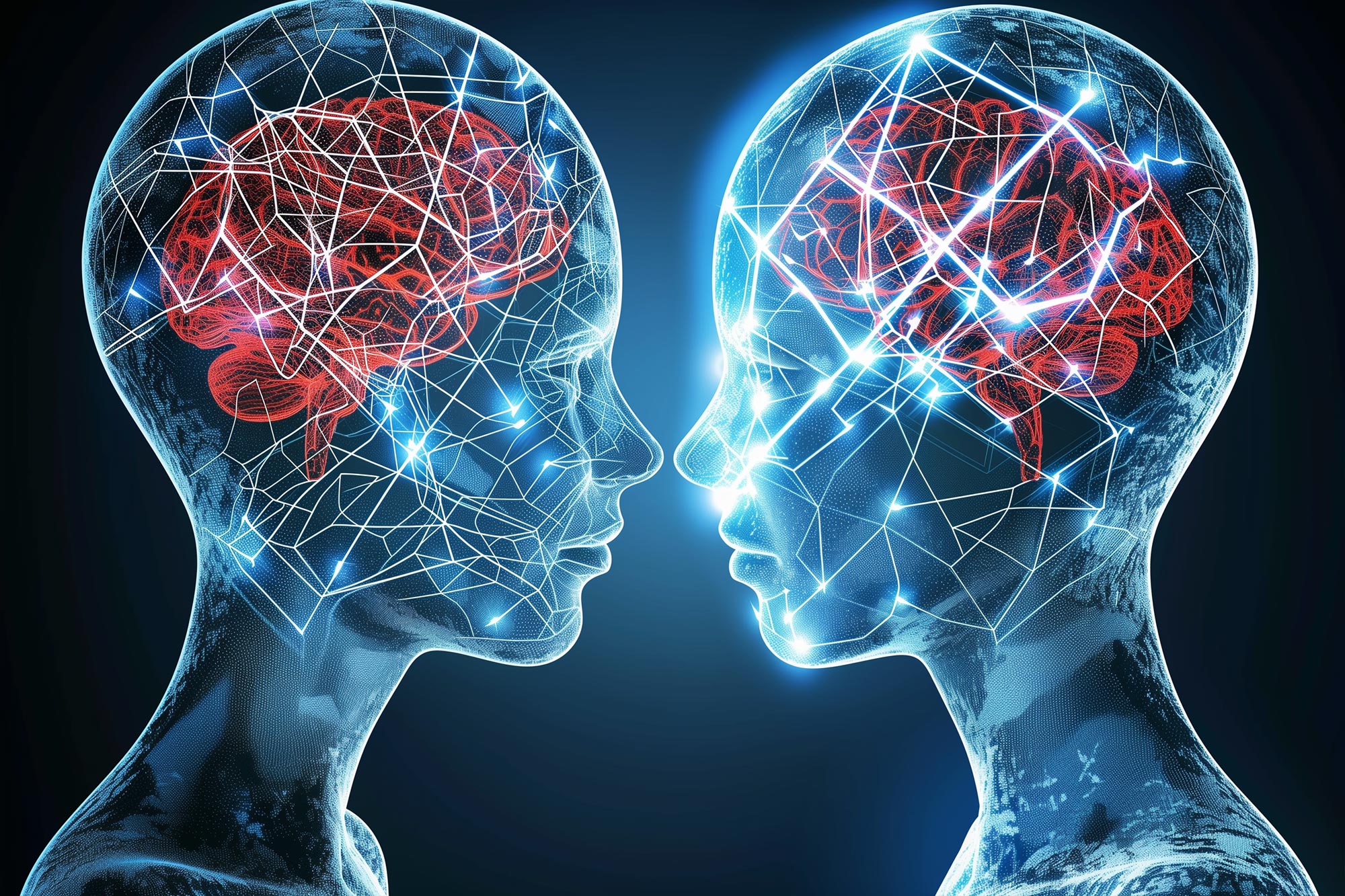
A study shows that physiological synchrony enhances romantic attraction, with “Super Synchronizers” perceived as more appealing. The research suggests that synchrony may be rooted in fundamental sensorimotor abilities, opening new avenues for understanding human relationships.
A new study reveals that physiological synchrony—the alignment of physiological responses between individuals—greatly enhances perceived romantic attraction. The research identifies “Super Synchronizers,” individuals who naturally synchronize well in both social and nonsocial situations, and who are perceived as more romantically appealing. These findings open the door for further exploration into how physiological and behavioral synchrony influence human relationships.
A new study led by Dr. Shir Atzil and her team from the Department of Psychology at the Hebrew University unveils intriguing insights into the mechanisms of romantic bonding, focusing particularly on physiological synchrony—the alignment of physiological responses between individuals—and its impact on perceived romantic attraction.
Physiological synchrony refers to the alignment of physiological responses between individuals. This can include parameters like heart rate, respiration, and skin conductance. When two people are physiologically in sync, their bodily functions align in a way that is measurable and often occurs naturally during interactions.
Experimental and Observational Findings
The research integrated both experimental and observational methods to investigate how physiological synchrony influences romantic appeal. An online experiment involving 144 participants demonstrated that inducing synchrony between actors significantly boosted their attractiveness ratings.
Further investigations in a lab-based speed-dating scenario with 48 participants identified individuals with a naturally high propensity to synchronize in both social and nonsocial contexts, termed ‘Super Synchronizers’. These individuals were consistently rated as more romantically appealing, underscoring the potential of physiological alignment to significantly enhance perceived attractiveness.
The Role of Sensorimotor Abilities in Synchrony
Dr. Atzil explains, “Our findings suggest that the ability to synchronize with others might not just be a social skill but could stem from more fundamental sensorimotor abilities that require an individual to adapt themselves to dynamic inputs. This adaptability, whether in response to social cues or rhythmic patterns, is perceived as attractive, potentially because of the beneficial physiological consequences a synchronous partner can have.”
The study proposes that synchronized physiological states can improve regulation across various bodily systems, making these interactions more fulfilling. Additionally, effective synchrony may indicate cognitive and evolutionary advantages, suggesting a deeper biological importance of this trait.
Despite these promising insights, Dr. Atzil notes the limitations of the research. “The cross-sectional design of our study limits our ability to draw definitive conclusions about the long-term stability of synchrony as a trait and its causal relationship with romantic attraction,” she remarks. Future research will delve into these dynamics more deeply, especially considering the implications of synchrony in sustained romantic relationships and across different sexual orientations.
This study not only advances our understanding of romantic attraction but also paves the way for further exploration into how physiological and behavioral synchrony can shape human relationships in broader contexts.
Reference: “Social and nonsocial synchrony are interrelated and romantically attractive” by M. Cohen, M. Abargil, M. Ahissar and S. Atzil, 10 June 2024, Communications Psychology.
DOI: 10.1038/s44271-024-00109-1
Never miss a breakthrough: Join the SciTechDaily newsletter.
Follow us on Google and Google News.
1 Comment
Oh, we are just mechanisms
Not created in the image of the creator, nor designed in his image?
God is love. Science observes through a mirror darkly what a loving creator inbuilt.