
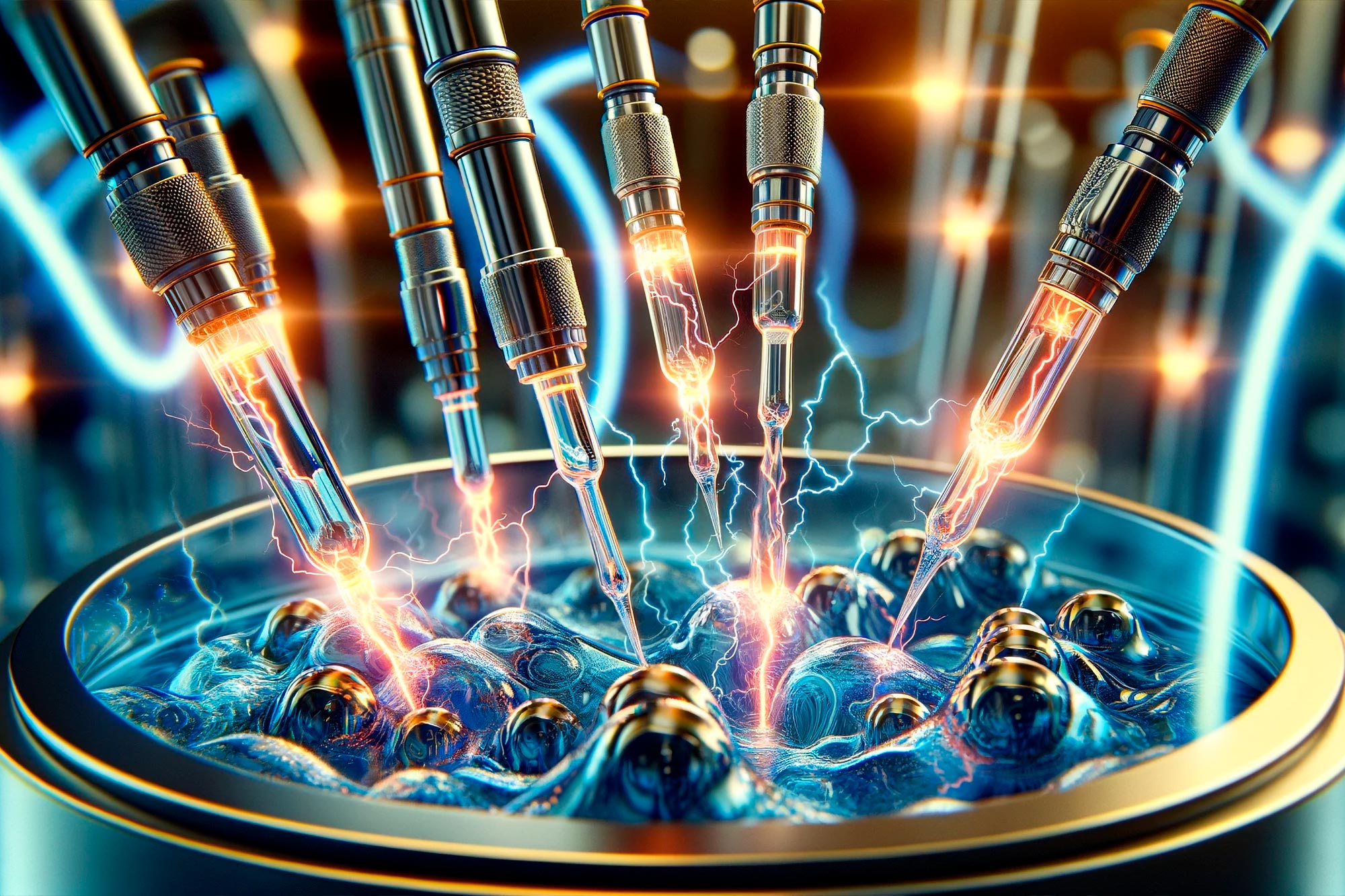
University of Chicago chemists hope to lay a foundation for greener chemistry.
As the world moves away from gas towards electricity as a greener power source, the to-do list goes beyond cars. The vast global manufacturing network that makes everything from our batteries to our fertilizers needs to flip the switch, too.
A study from UChicago chemists found a way to use electricity to boost a type of chemical reaction often used in synthesizing new candidates for pharmaceutical drugs.
Published on January 2 in the journal Nature Catalysis, the research is an advance in the field of electrochemistry and shows a path forward to designing and controlling reactions—and making them more sustainable.
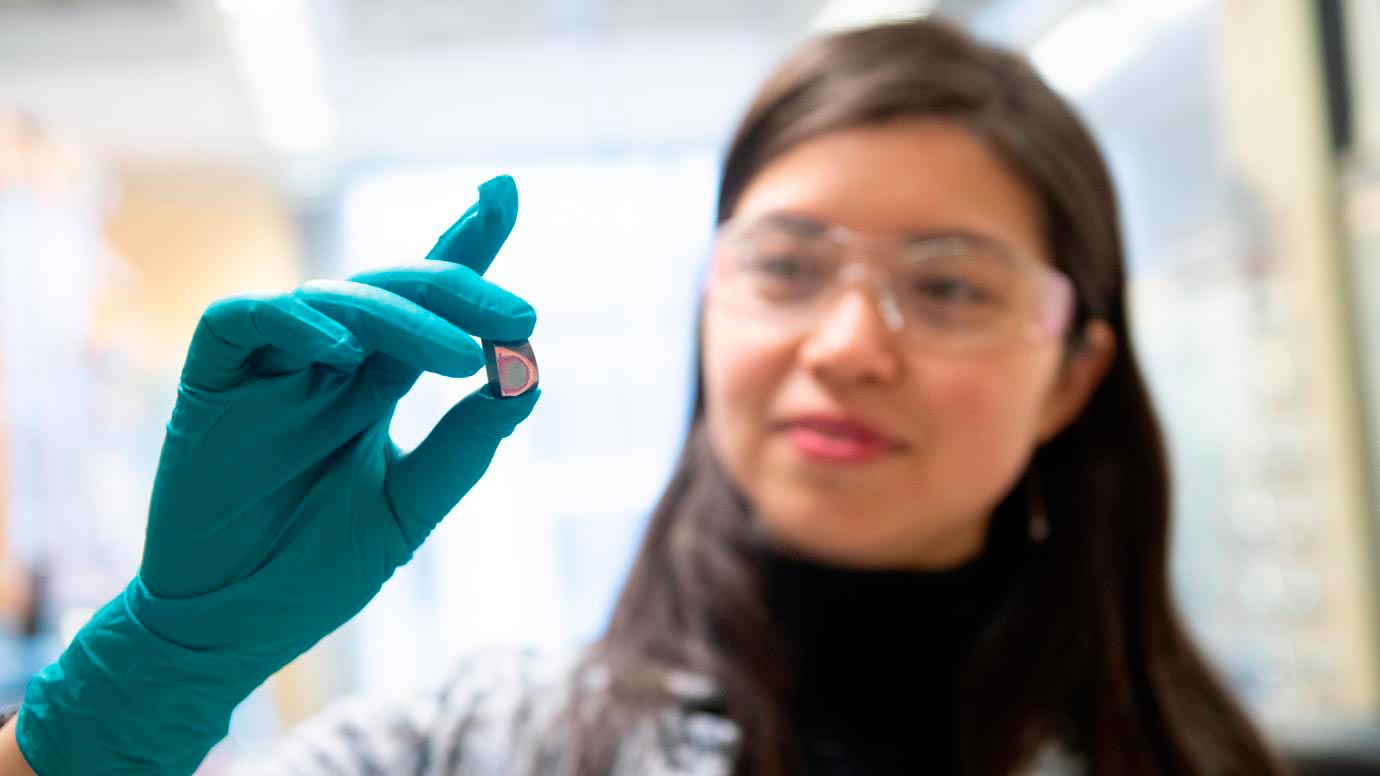
“What we want to do is understand what’s happening at the fundamental level at the electrode interface, and use that to predict and design more efficient chemical reactions,” said Anna Wuttig, UChicago Neubauer Family Assistant Professor and the senior author on the paper. “This is a step towards that eventual goal.”
Chemical Complexity
In certain chemical reactions, electricity can boost the output—and because you can get the needed electricity from renewable sources, it could be part of making the worldwide chemical industry greener.
But electrochemistry, as the field is known, is especially complex. There is much scientists don’t know about the molecular interactions, especially because you have to insert a conductive solid (an electrode) into the mix to provide the electricity, which means the molecules interact with that electrode as well as with each other. To a scientist trying to untangle the roles each molecule is playing and in what order, this makes an already complicated process even more complicated.
Wuttig, however, wants to turn this into an advantage. “What if you think about it as electrochemistry providing us with a unique design lever that’s not possible in any other system?” she said.
In this case, she and her team focused on the surface of the electrode that provides the electricity to the reaction.
“There were hints that the surface itself is catalytic, that it plays a role,” Wuttig said, “but we don’t know how to systematically control those interactions at the molecular level.”
They tinkered with a type of reaction that is commonly used in manufacturing chemicals for medicine, to form a bond between two carbon atoms.
According to theoretical predictions, when this reaction is performed using electricity, the yield from the reaction should be 100%—that is, all the molecules that went in are made into a single new substance. But when you actually run the reaction in the lab, the yield is lower.
The team thought the presence of the electrode was tempting some of the molecules away from where they were needed during the reaction. They found that adding a key ingredient could help: a chemical known as a Lewis acid added to the liquid solution redirected those molecules.
“You get a near-clean reaction,” Wuttig said.
Catalyzing Change
Moreover, the team was able to use special imaging techniques to watch the reactions unfold at the molecular level. “You can see that the presence of the modulator has a profound effect on the interfacial structure,” she said. “This allows us to visualize and understand what’s happening, rather than regard it as a black box.”
This is a crucial step, Wuttig said, because it shows a path forward towards being able to not only use the electrode in chemistry, but also to predict and control its effects.
Another benefit is that the electrode can be re-used for more reactions. (In most reactions, the catalyst is dissolved in the liquid and is drained away during the purification process to get the final product).
“What if you think about it as electrochemistry providing us with a unique design lever that’s not possible in any other system?”
Asst. Prof. Anna Wuttig
“This is a step towards sustainable synthesis,” she said. “Moving forward, my group is very excited to use these types of concepts and strategies to map out and address other synthetic challenges.”
Reference: “Interfacial tuning of electrocatalytic Ag surfaces for fragment-based electrophile coupling” by Qiu-Cheng Chen, Sarah Kress, Rocco Molinelli and Anna Wuttig, 2 January 2024, Nature Catalysis.
DOI: 10.1038/s41929-023-01073-5
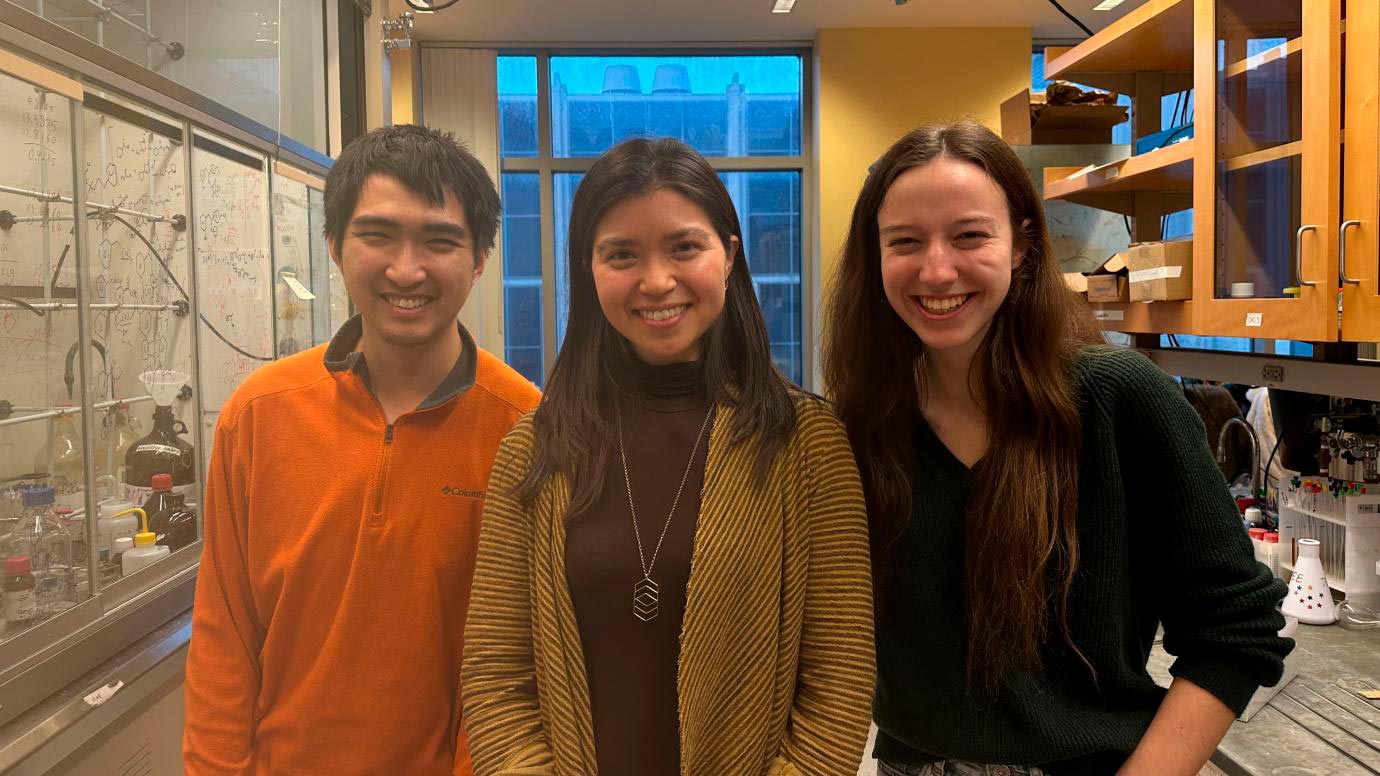
The first author was postdoctoral researcher Qiu-Cheng Chen; other authors on the paper were undergraduate students Sarah Kress and Rocco Molinelli.
Funding: University of Chicago, National Institutes of Health.
Never miss a breakthrough: Join the SciTechDaily newsletter.
Follow us on Google and Google News.