
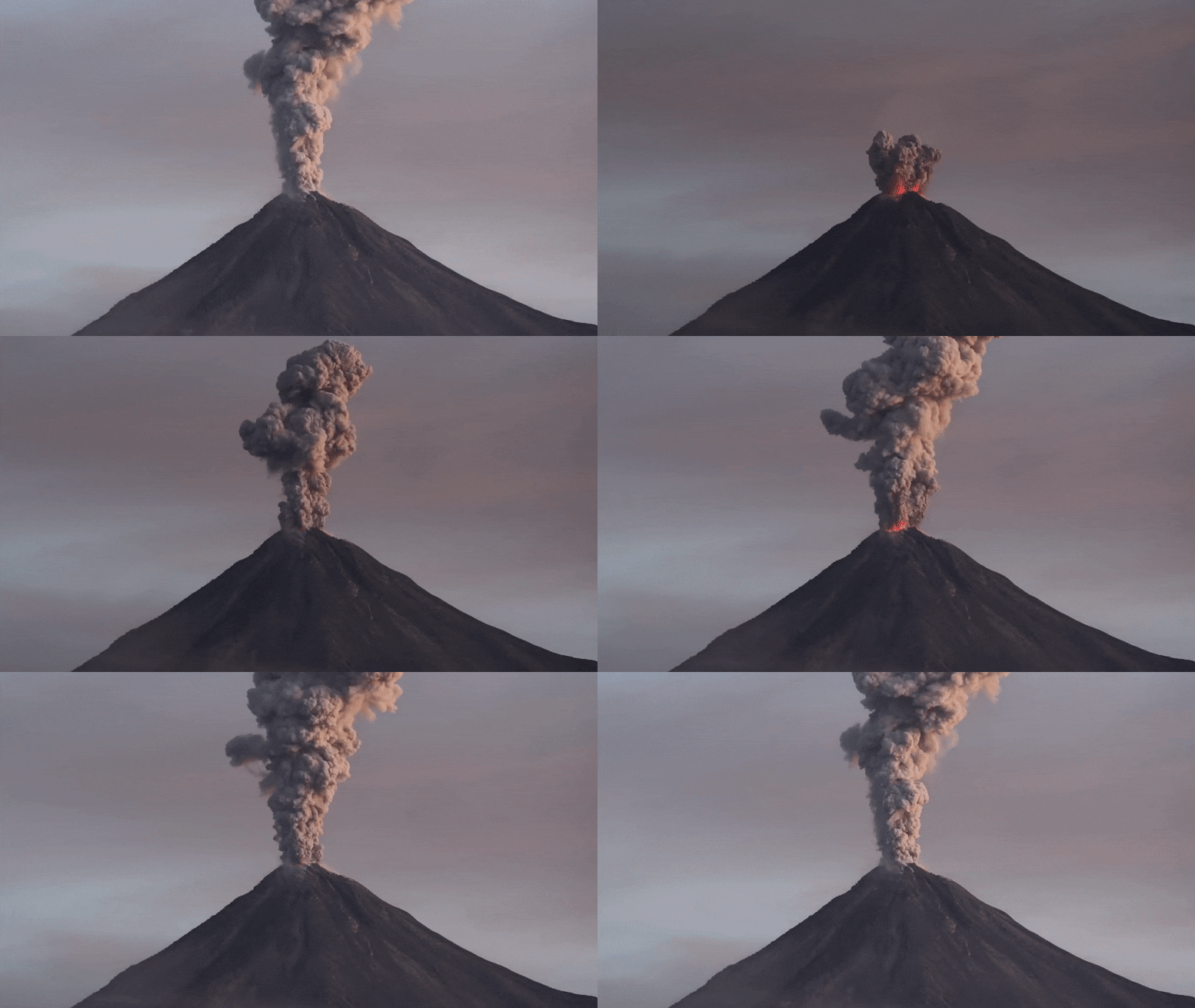
Geologists from the UNIGE and Peking University have developed a technique that makes it possible to estimate the maximum size of a future super-eruption of Toba volcano in Sumatra.
It is estimated that about 5-10 volcanoes worldwide are capable of producing a super-eruption that could catastrophically affect global climate. One of these volcanoes hides below the waters of Lake Toba in Sumatra and has caused two super-eruptions in the last one million years. But when will the next one be? Will there be any warning signs? To answer these questions, an international team of geologists led from the University of Geneva (UNIGE), Switzerland, and Peking University, China, developed an analysis of the levels of uranium and lead in zircons – a mineral typically found in explosive volcanic eruptions – to determine how long it took the volcano to prepare for its super-eruptions. Unfortunately, these results, published in the journal Proceedings of the National Academy of Sciences (PNAS), refute the notion that unusual geological signs would herald an imminent super-eruption. Instead, the magma silently accumulated in the magma reservoir until these massive explosions occur.
The Toba volcano in Sumatra caused two of the largest eruptions known on the Earth: the first 840,000 years ago, the second 75,000 years ago, each measuring about 2,800 km³ (670 mi³), enough to blanket the whole of Switzerland with 7 cm (2.8 in) thick of ash, and representing 70,000 times the amount of magma erupted to this moment by the ongoing La Palma eruption. Two other smaller eruptions took place, one 1.4 million years ago and the other 500,000 years ago.
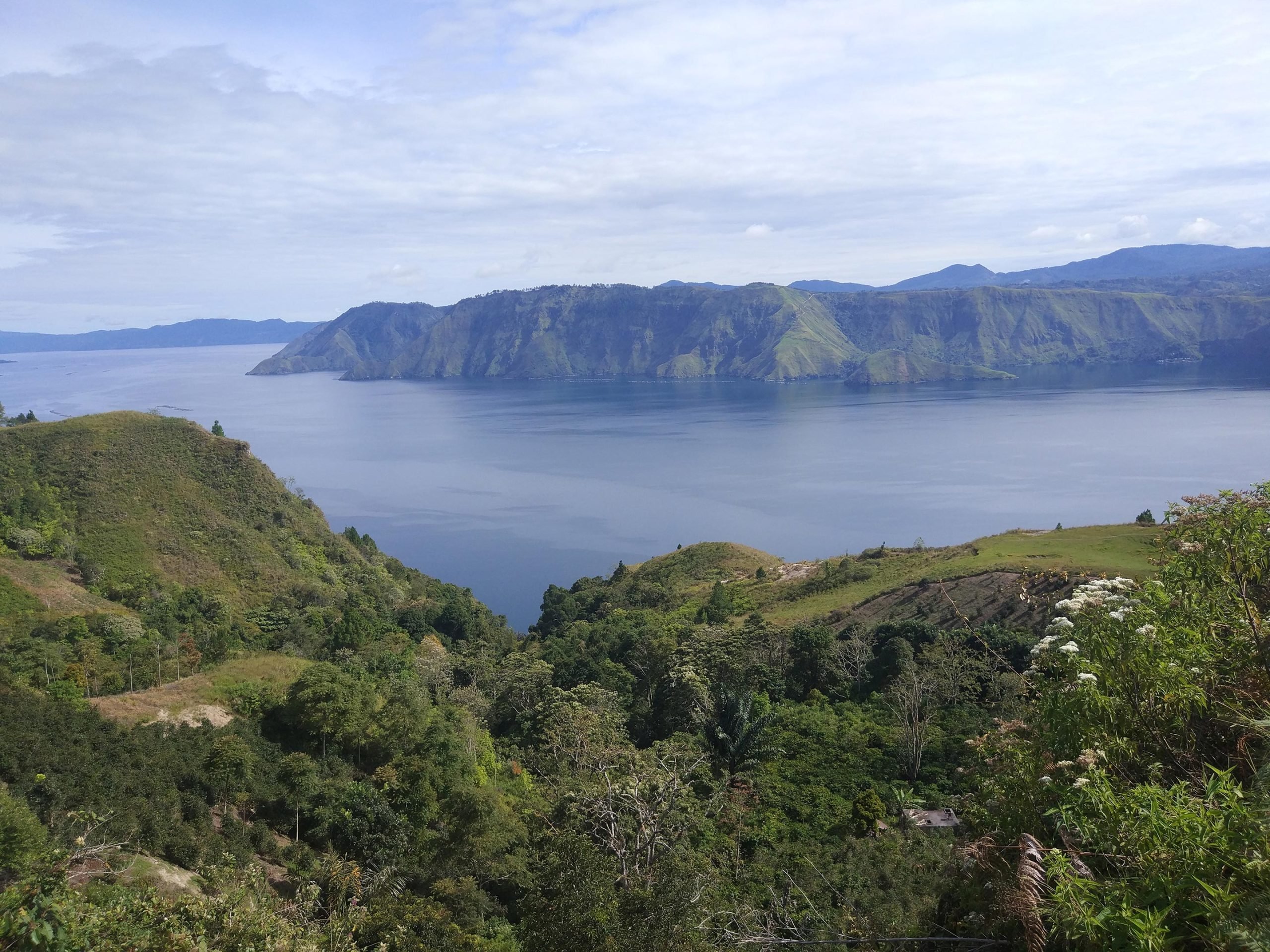
Geologists from UNIGE and Peking University are interested in the Toba volcano because there is no historical record of human response to a super-eruption of the size that it produced in the past. Such an event would affect the global climate and pose numerous problems, particularly in terms of food supply, not to mention the migration of populations. “Toba volcano forms a caldera, meaning that previous eruptions have created a large depression that is occupied today by meteoric water,” explains Luca Caricchi, professor at the Department of Earth Sciences at the UNIGE Faculty of Science and co-author of the study. At the center of the lake is an island that raised from the water because of the push of the magma injected in the subvolcanic reservoir. “We can see that this island is gradually increasing in height, indicating that the volcano is active and that magma is accumulating underneath,” says Ping-Ping Liu, a professor at the Faculty of Earth and Space Sciences of Peking University and leading author of the article. But are we close to the next super-eruption?
Measuring Uranium and Lead in Zircon
Zircon is a mineral that is found in the products of explosive volcanic eruptions. “One of its characteristics is that it takes uranium within its structure,” explains Ping-Ping Liu. Over time, the uranium decays into lead. “So by measuring the amount of uranium and lead in zircon with a mass spectrometer, we can determine its age,” says the geologist. The scientists determined the age of a large number of zircons extracted from the products of different eruptions: the youngest zircon provides information on the date of the eruption and the older zircons reveal the history of magma accumulation preceding the super-eruptions.
“The first super-eruption occurred around 840,000 years ago after 1.4 million years of magma input, whereas magma fed the second super-eruption at 75,000 years accumulated only in 600,000 years,” notes Luca Caricchi. Why was the time of magma accumulation halved even if the two super-eruptions were of the same size? “This is linked to the progressive increase of the temperature of the continental crust in which Toba’s magma reservoir is assembled,” explains Ping-Ping Liu. The input of magma has gradually heated the surrounding continental crust, which makes the magma cool slower. “This is a ‘vicious circle’ of eruptions: the more the magma heats the crust, the slower the magma cools and the faster the rate of magma accumulation becomes,” she says. The result is that super-eruptions can become more frequent in time.
Estimating the Rate of Magma Accumulation To Anticipate the Size of the Next Super-Eruption
This technique, based on zircon geochronology, can also be used to estimate the rate of magma input in a magma reservoir. “Today, we estimate that about 320 km³ (77 mi³) of magma could be ready to erupt within the reservoir of Toba volcano,” says Luca Caricchi. If such an eruption would occur now, this would be a very catastrophic event that strongly affect not only the highly populated island of Sumatra but also the global environment. Geologists have estimated that currently about 4 km3 (0.96 mi³) of eruptible magma is accumulating within Toba’s magma reservoir every thousand years and that this rate was rather stable throughout its eruptive history. “The next super-eruption of the size of the last two would therefore take place in about 600,000 years,” he continues. This does not rule out that smaller eruptions could occur in the meantime.
This innovative method can be applied to any other volcano globally and could serve to identify which volcano is closest to a super-eruption. “This is a great advance, because with few super-eruptions in the last 2 million years, it is not possible for us to obtain statistically significant values for the frequency of these catastrophic events at a global scale,” explains Ping-Ping Liu. “Our study also shows that no extreme events occur before a super-eruption. This suggests that signs of an impending super-eruption such as a significant increase in earthquakes or rapid ground uplift, might not be as obvious as pictured in disaster movies by the film industry. At Toba volcano, everything is happening silently underground, and the analysis of the zircons now gives us an idea of what is to come,” concludes Luca Caricchi.
Reference: “Growth and thermal maturation of the Toba magma reservoir” by Ping-Ping Liu, Luca Caricchi, Sun-Lin Chung, Xian-Hua Li, Qiu-Li Li, Mei-Fu Zhou, Yu-Ming Lai, Azman A. Ghani, Theodora Sihotang, Tom E. Sheldrake, and Guy Simpson, 1 November 2021, Proceedings of the National Academy of Sciences.
DOI: 10.1073/pnas.2101695118
Never miss a breakthrough: Join the SciTechDaily newsletter.
Follow us on Google and Google News.
1 Comment
This was reported on here almost exactly a year ago.