
Close Menu
    Facebook X (Twitter) Instagram
    SciTechDaily
    • Biology
    • Chemistry
    • Earth
    • Health
    • Physics
    • Science
    • Space
    • Technology
    Facebook X (Twitter) Pinterest YouTube RSS
    SciTechDaily
    Home»Health»The Sweet Achilles’ Heel of Cancer: Sugar Chains As the Key to Advanced Immunotherapy
    Health

    The Sweet Achilles’ Heel of Cancer: Sugar Chains As the Key to Advanced Immunotherapy

    By Kyoto UniversityDecember 29, 20231 Comment3 Mins Read
    Facebook Twitter Pinterest Telegram LinkedIn WhatsApp Email Reddit
    Share
    Facebook Twitter LinkedIn Pinterest Telegram Email Reddit
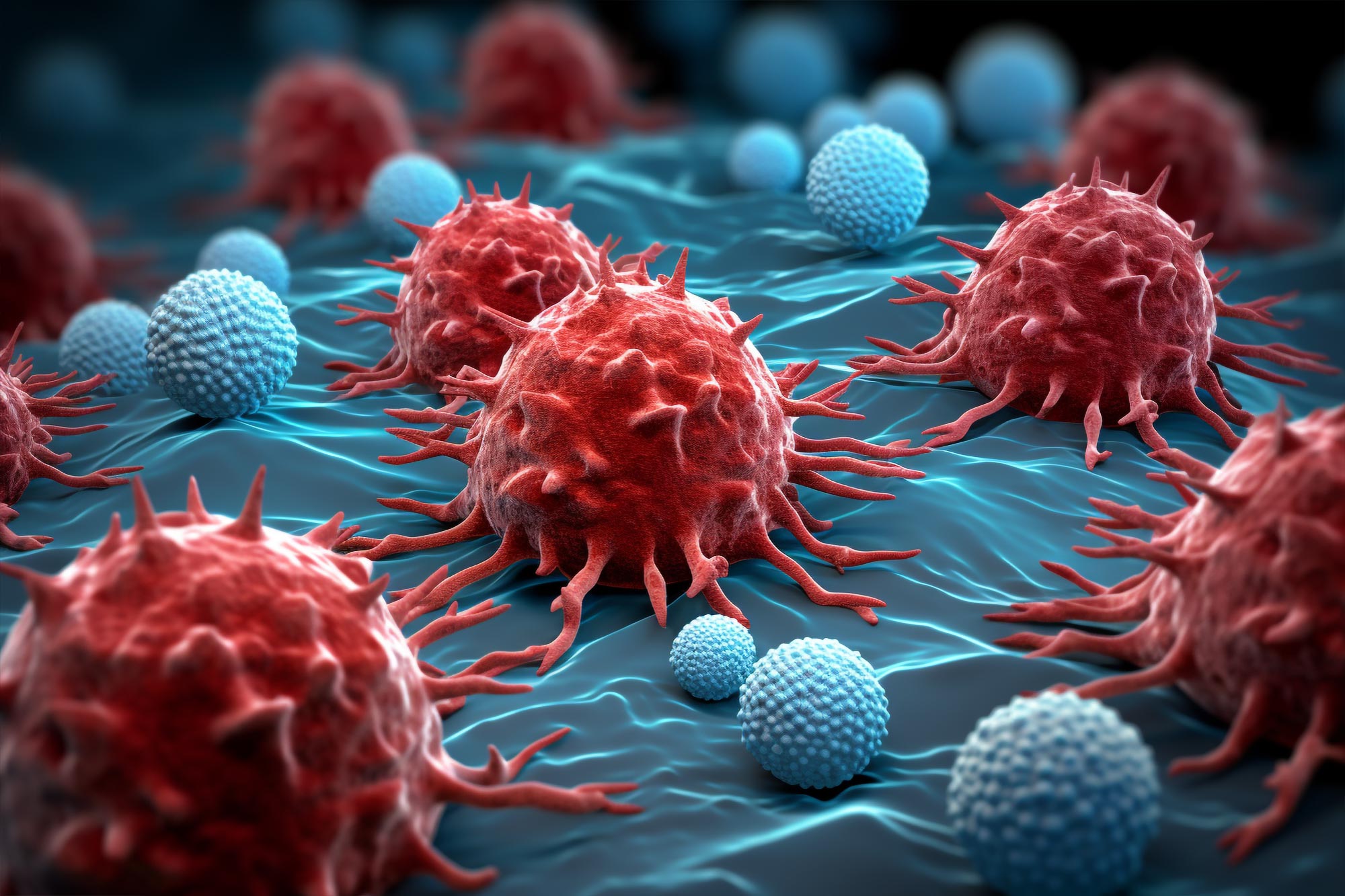
    Cancer Immunotherapy Art
    A study by Kyoto and Yokohama City University researchers reveals that the absence of B4GALT3 in mice leads to reduced tumor growth, highlighting potential new approaches in cancer immunotherapy. Credit: SciTechDaily.com

    Research shows B4GALT3 deficiency in mice slows tumor growth and alters immune responses, suggesting new cancer treatment strategies.

    An old campaign slogan for cough syrup, “It tastes awful. And it works,” seemed to imply that any sweet content might have diminished the medicinal effect.

    The Role of B4GALT3 in Cancer Progression

    Sweetness, in the case of cancer, appears as a chain of sugar molecules attached to proteins by beta1,4-galactosyltransferase-3, or B4GALT3. According to the Cancer Genome Atlas, a high expression of this enzyme is associated with noticeably shortened survival rates in several types of immunotherapy cancers, such as neuroblastoma, cervical, and bladder cancer. However, the specific role of B4GALT3 in the tumor immune microenvironment — or TIME — was still unknown.
    Cancer’s Sweet Achilles Heel
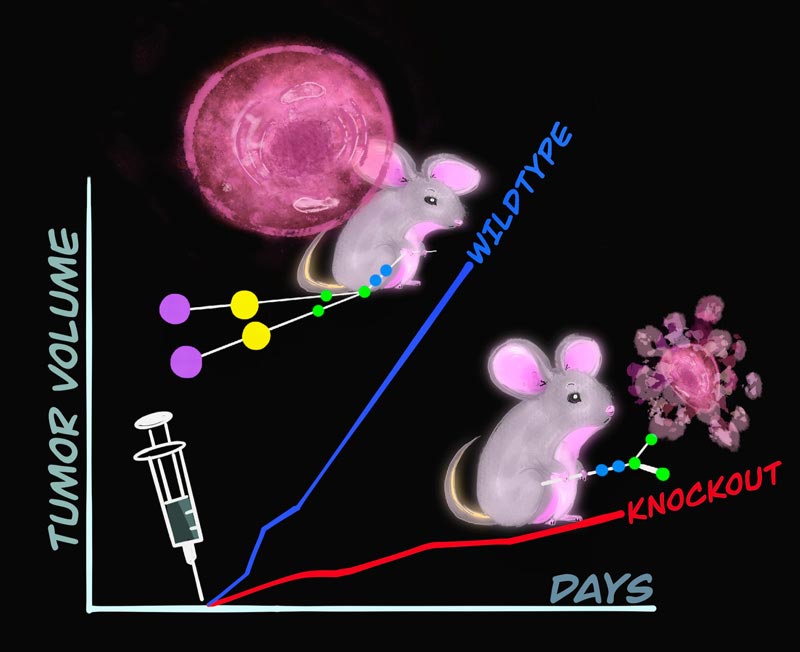
    Weakly immunogenic and strongly immunogenic tumor cells were subcutaneously transplanted into B4GALT3 knockout and wild-type mice. Tumor cell growth was significantly suppressed in knockout mice. Credit: KyotoU Jake Tobiyama/Heng Wei

    Breakthrough Study on B4GALT3 and Cancer

    Now, a team of researchers at Kyoto University and Yokohama City University has found that B4GALT3 deficiency in mice TIME inhibits tumor growth. The study shows that a significant reduction of glycosylation — a type of protein modification — on T cell surfaces correlates with increases in CD8+ immune cells infiltrating tumors.

    “In B4GALT3 knockout or KO mice, we demonstrated the potential of manipulating glycosylation of the T cell surface as a new approach to cancer immunotherapy,” says Heng Wei of Kyoto University’s Graduate School of Medicine.

    Understanding Glycans in Cancer Cells

    By purifying membrane proteins and enzymatically cleaving them to enrich glycopeptides, the team could identify the sites and structures of glycans — complex and highly branched sugar chains — and the amount of glycoproteins. The role of glycans has attracted much attention in studies on cancer cells, which proliferate and metastasize, depending on their interaction with their microenvironment.

    Experimental Findings and Future Directions

    The team subcutaneously transplanted weakly immunogenic and strongly immunogenic tumor cells into B4GALT3 knockout and wild-type mice, to examine for tumor cell growth. Only the knockout mice suppressed the growth of strongly immunogenic tumor cells.

    In addition, the increased CD8+ T cells in knockout mice secreted anti-cancer compounds Interferon-γ and Granzyme B.

    “We found that the loss of B4GALT3 caused significant fluctuations in gene expression in the immune system, a discovery which has significantly changed the direction of our next phase of research,” adds coauthor Chie Naruse.

    “We have gained insight into the role of glycans in cancer progression and immune response, inspiring possibilities of B4GALT3-centered cancer therapies,” says team leader Masahide Asano.

    Reference: “Beta-1,4-galactosyltransferase-3 deficiency suppresses the growth of immunogenic tumors in mice” by Heng Wei, Chie Naruse, Daisuke Takakura, Kazushi Sugihara, Xuchi Pan, Aki Ikeda, Nana Kawasaki and Masahide Asano, 18 September 2023, Frontiers in Immunology.
    DOI: 10.3389/fimmu.2023.1272537

    Never miss a breakthrough: Join the SciTechDaily newsletter.
    Follow us on Google and Google News.

    Cancer Immunotherapy Kyoto University Popular
    Share. Facebook Twitter Pinterest LinkedIn Email Reddit

    Related Articles

    New Yale Research Reveals Why Immunotherapy Doesn’t Work for Everybody

    Using Viruses To Turbocharge the Immune System Against Cancer

    Small Molecule Developed That Makes Immunotherapy Available to All Cancer Patients

    Failed Clinical Trial Leads to Scientific Breakthrough: Investigating Cancer Drug Toxicity Leads to Critical Discovery

    Unlocking the Mystery of Why a Plant Virus Is So Powerful at Fighting Cancer – Even Metastatic Cancer

    Omega-3 Supplementation Could Boost Immunotherapy’s Cancer-Fighting Power

    Yale Scientists “Supercharge” Tumor-Attacking T Cells To Improve Cancer Immunotherapy

    Groundbreaking Research Optimizes Body’s Own Immune System to Fight Cancer

    New Immunotherapy Agents Stimulate the Immune System to Attack Tumor Cells

    1 Comment

    1. Paul Dodd on January 5, 2024 2:25 pm

      “…several types of immunotherapy cancers, such as neuroblastoma, cervical, and bladder cancer.” What are “immunotherapy cancers”? Seems to be writing without comprehension.

      Reply
    Leave A Reply Cancel Reply

    • Facebook
    • Twitter
    • Pinterest
    • YouTube

    Don't Miss a Discovery

    Subscribe for the Latest in Science & Tech!

    Trending News

    This Copper Drug Clears Alzheimer’s Brain Toxins and Boosts Memory

    Adults Over 65 Lost Massive Amounts of Weight With Ozempic

    How Flocking Birds “Defy” One of Physics’ Most Fundamental Laws

    Physicists Create a New Kind of Schrödinger’s Cat State From Exotic Quantum Building Blocks

    Your Diet Could Be Missing the Key Ingredient for Heart Protection

    Researchers Warn Widely Prescribed Blood Pressure Drugs Could Be Harming Diabetic Kidneys

    James Webb Spots Something Strange Between Day and Night on an Alien Planet

    How Ancient People Moved a 6-Ton Stone 700 Kilometers to Stonehenge

    Follow SciTechDaily
    • Facebook
    • Twitter
    • YouTube
    • Pinterest
    • Newsletter
    • RSS
    SciTech News
    • Biology News
    • Chemistry News
    • Earth News
    • Health News
    • Physics News
    • Science News
    • Space News
    • Technology News
    Recent Posts
    • Scientists Uncover Cause of Inflammatory Bowel Disease Solving Decades-Old Mystery
    • The Surprising Reason Swimming Could Be Better for Your Heart Than Running
    • Could Vitamin C Be the Secret to Keeping Your Brain Younger?
    • The Surprising Fix for Robot Traffic Jams
    • Near Absolute Zero, This Transistor Starts Acting Like a Brain Cell
    Copyright © 1998 - 2026 SciTechDaily. All Rights Reserved.
    • Science News
    • About
    • Contact
    • Editorial Board
    • Privacy Policy
    • Terms of Use

    Type above and press Enter to search. Press Esc to cancel.