
New research reveals the initial molecular events that grant wheat immunity to stem rust.
A new study published in Science, led by Associate Professor Brande Wulff of King Abdullah University of Science and Technology (KAUST) and involving scientists from five continents, has uncovered a previously unknown molecular trigger that activates the immune response to a major wheat disease. This discovery offers new strategies for engineering wheat with enhanced resistance to infection.
As a primary food source for billions of people and a key component of animal feed, wheat is one of the world’s most critical agricultural crops. Because of its global importance, a widespread wheat disease outbreak could be even more devastating than a human pandemic.
“Climate change is causing diseases to appear in places previously unseen. We need more study of plant immunity to develop technologies that will protect valuable food crops,” said Wulff.
Like animals, plants have immune systems, but they work in very different ways. In vertebrates, including humans, immune cells circulate through the blood and release proteins that recognize and destroy pathogens. Plants, on the other hand, lack a circulatory system, so they’ve evolved a distinct but equally effective immune strategy. The key challenge lies in understanding the precise molecular reactions that allow plants to detect and eliminate invading pathogens, and ultimately survive infection.
Understanding the Threat of Stem Rust
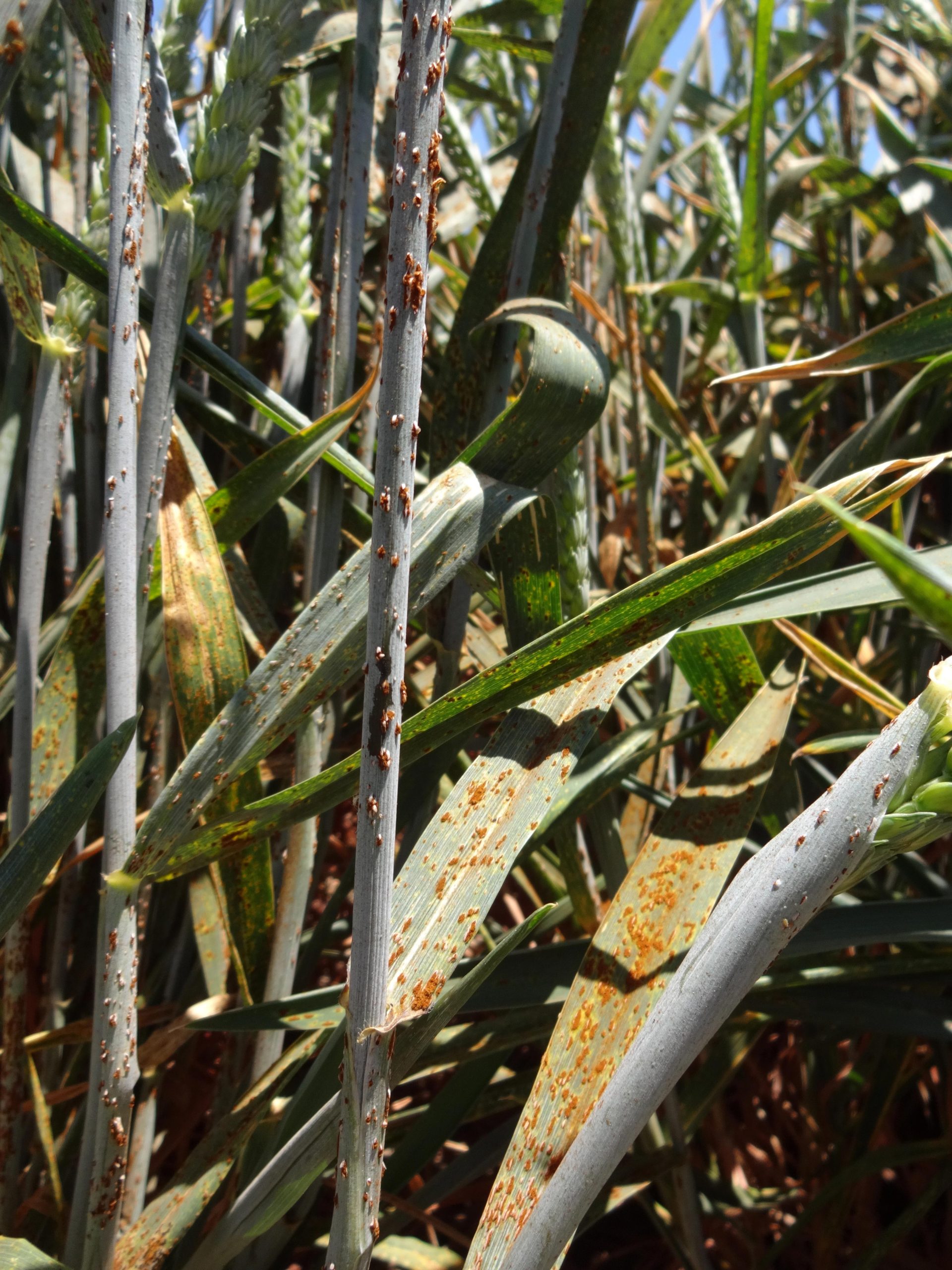
The study shows the first molecular events to occur inside plant cells in response to stem rust, a fungus given its name because infected plants show brown pustules on their stems and leaves when infected. Sometimes referred to as the “polio of wheat,” historically, stem rust has been the cause of many famines. While farming practices have produced wheat that is resistant, the unexpected spread of stem rust can wipe out harvests.
The immune reaction begins when stem rust interacts with a specific type of protein known as “tandem kinases”. Kinases are universal molecules that operate in human immunology too, as well as contribute to glucose uptake, the formation of blood vessels, neural development and more. Tandem kinases get their names because they are physically linked together. They also are known for their role in plant immunity.
While their importance in stem rust immunity does not come as a surprise, the study shows the initial molecular reactions tandem kinases conduct to achieve an immune response. This response ultimately kills the cell, denying the pathogen of the nutrients it parasitically extracts. Thus, the pathogen fails to proliferate and infect more cells, instead dying with its morbid host.
A Molecular “Unlocking” Mechanism
In the absence of the pathogen, Wulff and his colleagues found that the tandem kinases are bound to each other, almost like wearing handcuffs, keeping them inactive. However, when a pathogen binds to one of the kinases, it effectively unlocks the cuffs, freeing the other kinase to switch on the immune response. This mechanism had never been previously observed and gives insights on ways to engineer wheat that has stronger resistance against threatening disease.
Because of the evolutionary conservation of the immune mechanism across cereals and against other pathogens, the study provides a framework for strengthening cereal crops against many diseases.
“A majority of countries see wheat as critical to their food policy and food security. The more we understand how wheat reacts to pathogens the more we can sustainably secure the food supply for the world’s growing population,” said Wulff.
The ease at which it can be grown, stored, and processed, as well as its nutritional value, has made wheat the most produced and traded crop in the world. In the last ten years, more than 750 million tons have been grown annually. In contrast, rice, another major food staple, has barely exceeded 500 million tons over the same time.
Reference: “A wheat tandem kinase activates an NLR to trigger immunity” by Renjie Chen, Jian Chen, Oliver R. Powell, Megan A. Outram, Taj Arndell, Karthick Gajendiran, Yan L. Wang, Jibril Lubega, Yang Xu, Michael A. Ayliffe, Cheryl Blundell, Melania Figueroa, Jana Sperschneider, Thomas Vanhercke, Kostya Kanyuka, Dingzhong Tang, Guitao Zhong, Catherine Gardener, Guotai Yu, Spyridon Gourdoupis, Łukasz Jaremko, Oadi Matny, Brian J. Steffenson, Willem H. P. Boshoff, Wilku B. Meyer, Stefan T. Arold, Peter N. Dodds and Brande B. H. Wulff, 27 March 2025, Science.
DOI: 10.1126/science.adp5034
Never miss a breakthrough: Join the SciTechDaily newsletter.
Follow us on Google and Google News.
1 Comment
thank you for this