
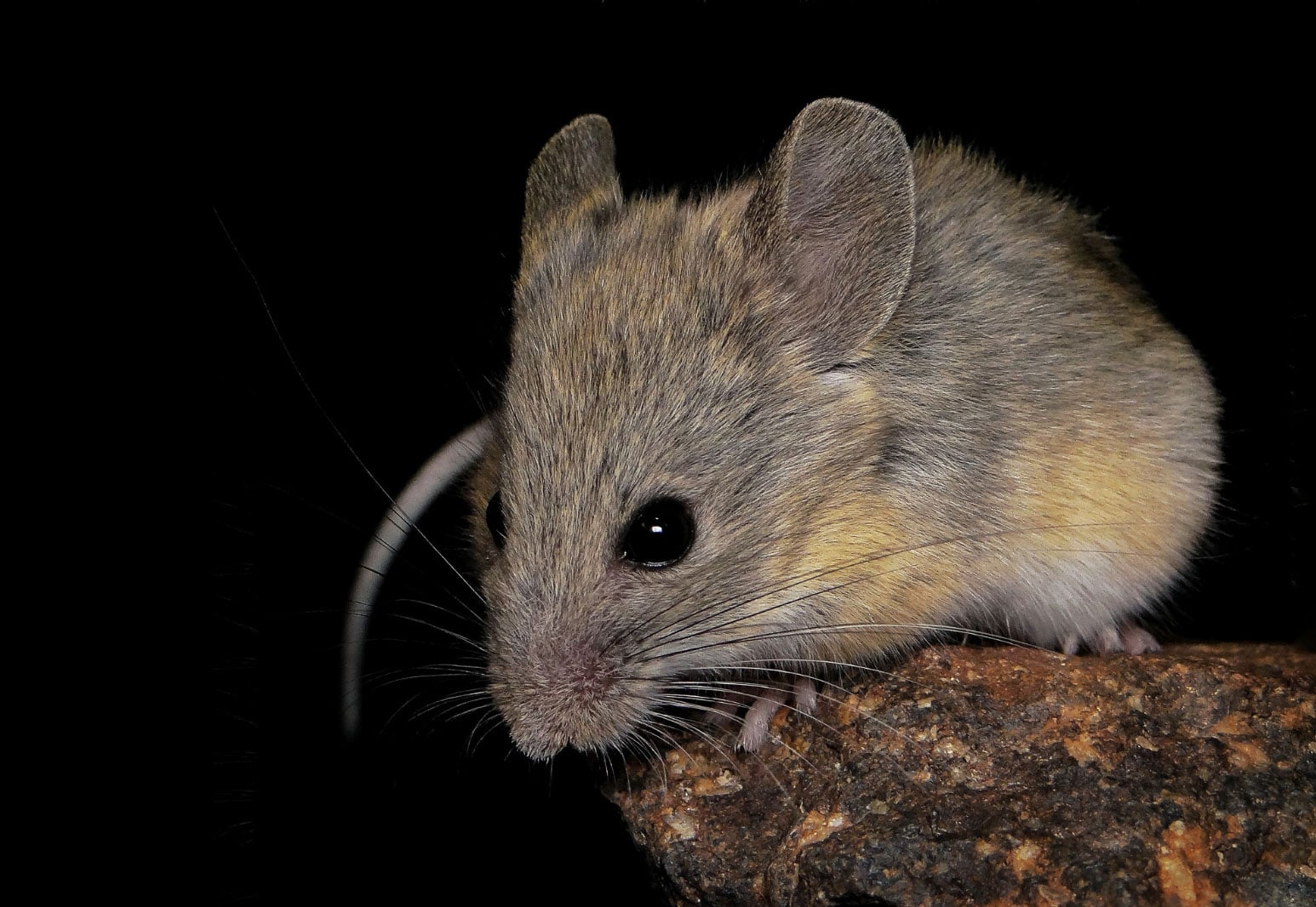
A leaf-eared mouse living more than 6,700 meters (22,000 feet) above sea level in the Andes has shattered assumptions about where mammals can survive.
Near the summit of an Andean volcano, where the air contains barely half as much oxygen as it does at sea level, scientists found something that should not have been there: a living mouse.
The Andean leaf-eared mouse, Phyllotis vaccarum, has been documented above 6,700 meters (22,000 feet), higher than any other mammal known to live. At these elevations, freezing winds sweep across a landscape with almost no vegetation, liquid water, or obvious source of food.
Its presence has overturned a long-standing assumption about the upper limit of mammalian life. Scientists once believed mammals could survive only up to about 5,500 meters (18,000 feet), roughly the elevation of the world’s highest permanent human settlements.
“It was completely unexpected. People did not think mammals could survive at these altitudes, but they’re there,” says Graham Scott, a professor in the Department of Biology who co-authored the study.
How High-Altitude Mice Survive
Now, an international research team has uncovered how these small rodents endure an environment often compared to the surface of Mars. The answer is not one extraordinary trait. The mice have evolved an entire collection of physiological and genetic changes that work together.
Scott and fellow McMaster University biologist Grant McClelland joined researchers studying mice collected along the western Andes in Chile. The species has an unusually broad range, with populations living from sea level to mountain summits more than 6,700 meters (22,000 feet) high. This natural gradient allowed the team to compare extreme highland mice with members of the same species from lower elevations, as well as with a closely related lowland species.
In controlled experiments, the researchers recreated conditions equivalent to elevations approaching 7,000 meters (23,000 feet). The highland mice maintained their ability to generate heat far more effectively than the lowland animals, even when exposed to both severe cold and oxygen scarcity.
“Evolution is a complex process,” says McClelland, a co-author of the study and a professor in the Department of Biology. “When animals encounter really challenging environments, there are a lot of different things they need to cope with, not just the obvious ones.”
Built Like Endurance Athletes
The mice are especially good at keeping their bodies warm while continuing to use oxygen efficiently. That combination is crucial because producing heat requires energy, yet the thin mountain air limits the oxygen available to release that energy.
Their muscles also operate more like those of endurance athletes than short-distance sprinters.
“They’re more like a marathon runner than a sprinter,” explains Scott. “Their muscle cells are packed with mitochondria that allow them to sustain heat-producing activity for longer periods.”
Fat Fuels Life in the Cold
Mitochondria convert nutrients into usable energy. Having more of them allows the mice to maintain heat production for longer periods without quickly exhausting their muscles.
The animals also burn more fat. Fat provides a concentrated source of energy for shivering muscles and specialized tissues that produce heat without movement, helping the mice remain warm through prolonged exposure to freezing conditions.
Yet cold and oxygen were only part of the puzzle.
An Unexpected Diet at the Summit
At such extreme elevations, finding enough food may be just as difficult as breathing. The barren volcanic slopes support little plant life, forcing the mice to eat whatever becomes available. Their diet can include lichens growing on rocks, along with seeds or insects carried upward by the wind.
Genetic evidence suggests that highland populations have adapted to process these unusual foods. Researchers identified changes in genes involved in metabolism and in the removal of potentially toxic plant chemicals. The result suggests that reaching the highest summits required the mice to evolve not only a better respiratory and heating system, but also a digestive system capable of handling an unpredictable diet.
“We were initially focused on the most obvious environmental challenges, things like low oxygen and cold, but there were important factors we didn’t expect, including how these animals deal with what they’re eating,” says Scott.
Evolution Rebuilds the Whole Body
The study, published in Science, shows that extreme survival rarely depends on a single biological breakthrough. Instead, natural selection reshaped the animals’ muscles, metabolism, heat production, fuel use, and ability to tolerate unfamiliar foods.
That complexity may help explain how the species occupies an elevational range extending from the Pacific coast to some of the highest volcanic summits in the Andes.
“Sometimes our assumptions about the most extreme environments animals can live in can be questioned,” says McClelland. “Evolution has a lot of room to experiment.”
Lessons for a Changing Climate
The findings may also offer a lesson for species confronting rapid environmental change. Temperature is only one part of the challenge. Shifting climates can alter oxygen availability, food supplies, water, predators, and competition at the same time.
“We tend to focus on temperatures as the big challenge,” says Scott. “But animals are dealing with many pressures at once, and evolution may push them in ways we don’t always anticipate.”
Reference: “Adaptation across an extreme elevational gradient in Andean leaf-eared mice, the world’s highest-dwelling mammal” by Schuyler Liphardt, Naim M. Bautista, Marcial Quiroga-Carmona, Nathanael D. Herrera, L. Moritz Blumer, Juan C. Opazo, Federico G. Hoffmann, Ranim Saleem, Derek A. Somo, Francisco Del Basto Llancaqueo, Timothy J. Thurman, Timothy B. Wheeler, Daniel E. Shaw, Hunter K. Walt, Till S. Harter, Grant B. McClelland, Graham R. Scott, Pablo Sabat, Zachary A. Cheviron, Guillermo D’Elía, Jeffrey M. Good and Jay F. Storz, 9 July 2026, Science.
DOI: 10.1126/science.aec8347
Never miss a breakthrough: Join the SciTechDaily newsletter.
Follow us on Google and Google News.
1 Comment
I thought the world’s highest living mammal was Tommy Chong.