
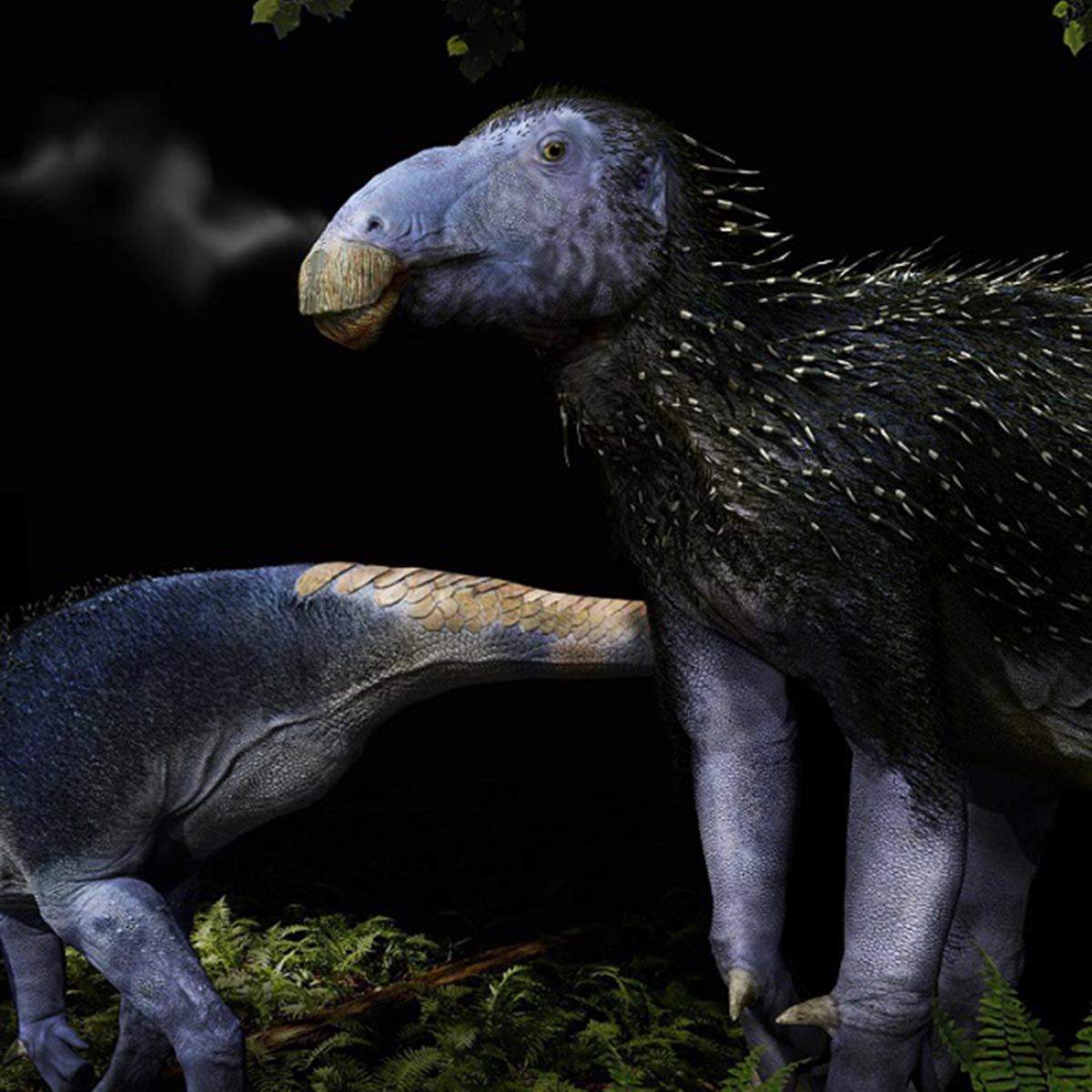
A 125-million-year-old dinosaur discovered in China had hollow, porcupine-like spikes never before seen in dinosaurs.
For more than 200 years, paleontologists have studied a major group of plant-eating dinosaurs known as Iguanodontia. These dinosaurs, including the well-known Iguanodon, were first described in the early 19th century and are recognized for their beak-like mouths and strong hind legs. Now, that long-established group has gained a surprising new species. Researchers have identified the first dinosaur ever found with a particular type of spike, unlike anything previously seen in the fossil record.
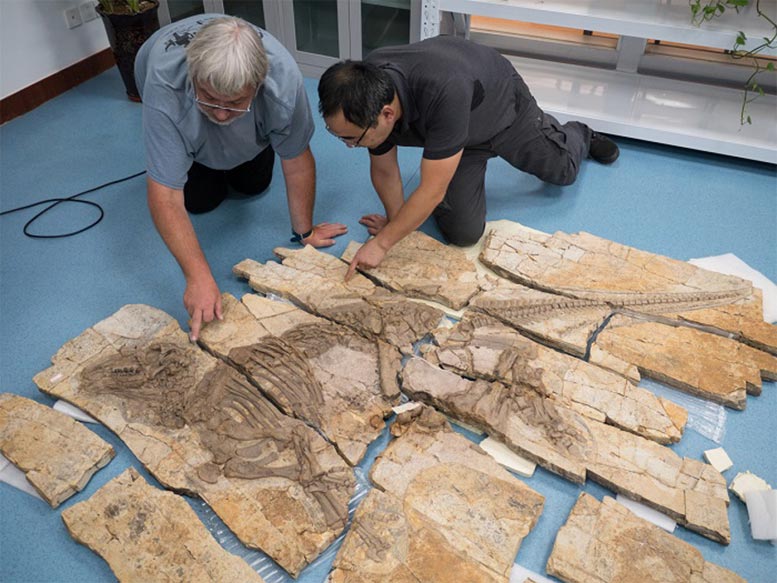
Scientists from the CNRS and their international collaborators made the discovery in China, where they unearthed the fossilized remains of an exceptionally well-preserved juvenile iguanodontian. What sets this specimen apart is not just its skeleton, but the rare preservation of its skin. Soft tissues almost never survive for millions of years, making this find especially valuable for understanding how dinosaurs actually looked in life.
Fossilized Skin Cells and Hollow Spikes
To examine the fossil in detail, researchers used X-ray imaging and high-resolution histological sections. Histology is the study of microscopic tissue structure, and in this case it allowed scientists to analyze extremely thin slices of the fossilized skin. Remarkably, they were able to observe individual skin cells that had been preserved for about 125 million years.
These analyses revealed that much of the dinosaur’s body was covered in hollow, cutaneous spikes. The term cutaneous means that the structures originated in the skin rather than in bone. Unlike horns or solid bony plates, these spikes were hollow inside, a feature never before documented in any dinosaur species. The team named the new species Haolong dongi in honor of Dong Zhiming, a pioneering figure in Chinese paleontology whose work greatly advanced the study of dinosaurs in China.
Defense, Thermoregulation, and Sensory Functions
Haolong dongi was a herbivore, meaning it fed on plants. During the Early Cretaceous period, when it lived, ecosystems also included small carnivorous dinosaurs that likely preyed on young plant eaters. The hollow spikes may have acted as a deterrent, similar in function to the quills of a porcupine, making the animal less appealing or more difficult to attack.
Researchers also suggest the spikes could have served additional purposes. One possibility is thermoregulation, the process by which animals control their body temperature. Structures that increase surface area can help release excess heat or retain warmth. Another idea is that the spikes may have had a sensory role, allowing the dinosaur to detect touch or movement in its environment.
A First in Dinosaur Evolution
Until this discovery, there was no evidence that dinosaurs possessed hollow skin-based spines of this kind. Because the fossil represents a juvenile individual, scientists cannot yet determine whether adult members of the species also had the same structures or if they changed as the animal matured.
The findings were published in Nature Ecology & Evolution on February 6, 2026. This discovery not only adds a new species to the Iguanodontia group, but also highlights how much remains to be learned about dinosaur skin, body coverings, and evolutionary innovation.
Watch the interview (in French with English subtitles) with Ninon Robin, CNRS researcher and Paleontologist at the Laboratoire Géosciences Rennes (CNRS/Université de Rennes):
Reference: “Cellular-level preservation of cutaneous spikes in an Early Cretaceous iguanodontian dinosaur” by Jiandong Huang, Wenhao Wu, Lei Mao, Filippo Bertozzo, Danielle Dhouailly, Ninon Robin, Michael Pittman, Thomas G. Kaye, Fabio Manucci, Xuezhi He, Xuri Wang and Pascal Godefroit, 6 February 2026, Nature Ecology & Evolution.
DOI: 10.1038/s41559-025-02960-9
Never miss a breakthrough: Join the SciTechDaily newsletter.
Follow us on Google and Google News.
3 Comments
Baloney. You can tell these fossils were buried rapidly, since they are fully intact like many others from a world wide flood about forty-five hundred years ago. Since the earth is only six-thousand years old, the “millions of years” theory has been blown away, with the discoveries by paleontologists of red blood cells and soft tissue in many fossils the last twenty years. Phd paleontologists are dumbfounded as previous thought was red blood cells and soft tissue would never last “millions of years.” This suggests that fossils like this are much younger, perhaps only thousands of years old. From accurate information go to answersingenisis.org.
For God. What are you blabbing about??? 6 thousand years, are you ok?
What kind of threat were they protection against? Maybe animals with teeth that were much shorter than the quills, but maybe they were also venomous.