
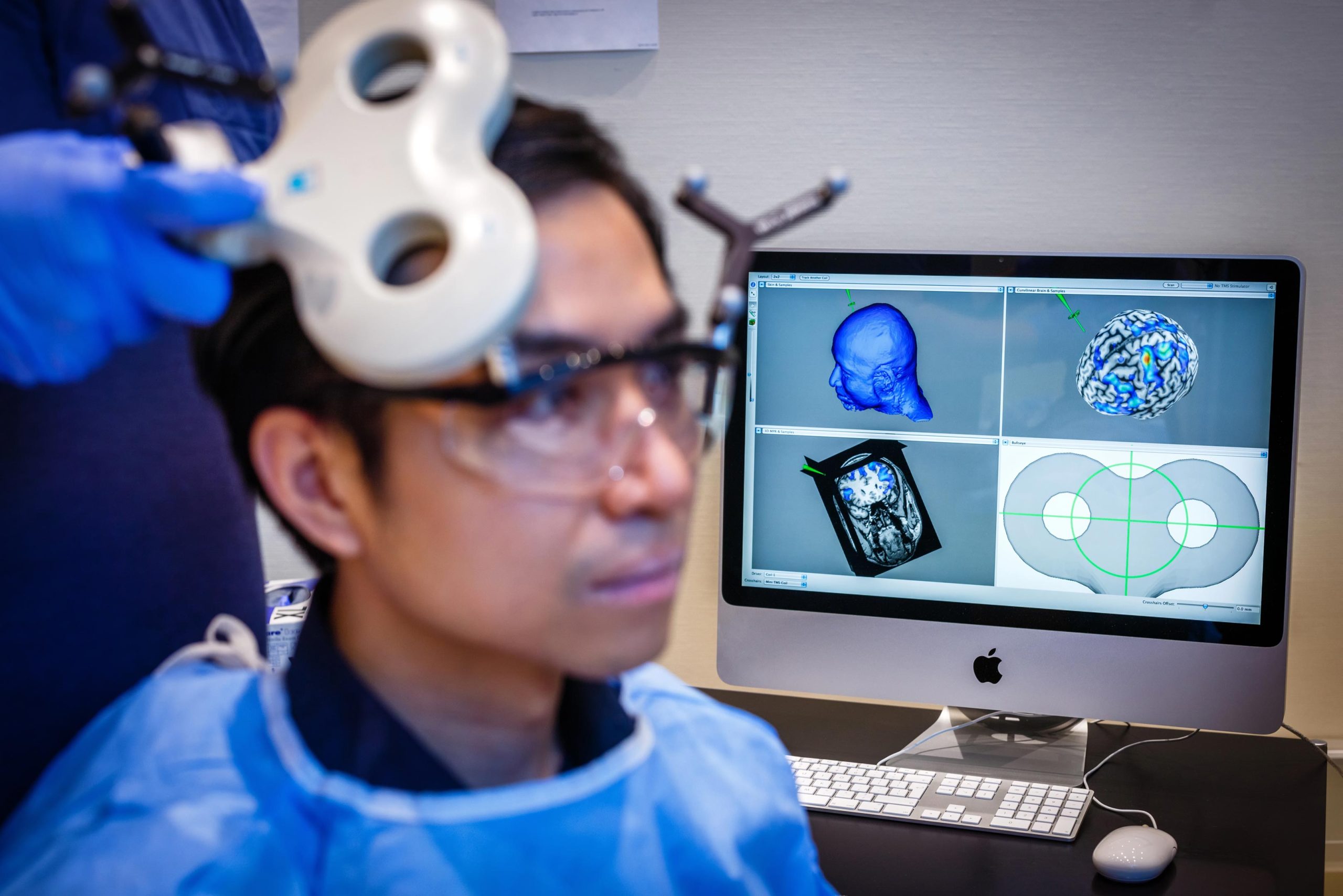
Scientists found that synchronizing activity between two brain regions made people more generous.
A new study suggests that synchronizing activity in specific parts of the brain can make people more likely to act generously. Research published today (February 10) in the open-access journal PLOS Biology reports that stimulating two brain regions in a coordinated way increased altruistic behavior. The study was led by Jie Hu of East China Normal University in China, working with colleagues from the University of Zurich in Switzerland.
Why Some People Are More Altruistic Than Others
Parents often try to teach children to share, show kindness, and consider the needs of others. These traits play a key role in keeping societies cooperative and functional. Yet people differ widely in how altruistic they become as adults, with some consistently prioritizing others while others focus more on themselves. Scientists still do not fully understand what drives these differences.
Testing Generosity in the Lab
To explore the brain mechanisms behind altruism, the researchers recruited 44 participants and asked them to make 540 decisions in a Dictator Game—offering to split a sum of money with another person while keeping the remainder for themselves. In each round, the amounts varied, and participants could end up with more or less money than their partner.
While participants made these choices, the research team applied transcranial alternating current stimulation to the frontal and parietal lobes of the brain. This non-invasive stimulation was designed to encourage neurons in those areas to fire together in repeating patterns, either in gamma or alpha oscillation rhythms.
How Brain Synchrony Changed Decisions
The researchers found that when the stimulation specifically increased synchrony in gamma oscillations between the frontal and parietal lobes, participants became slightly more generous. They were more likely to offer higher amounts of money to others, even in situations where doing so meant earning less than their partner.
Using a computational model, the team showed that this brain stimulation shifted how participants evaluated their choices. After stimulation, people placed more weight on their partner’s outcome when deciding how to divide the money. The authors point out that they did not directly measure brain activity during the experiment, so future studies combining brain stimulation with electroencephalography will be needed to confirm exactly how neural activity changed. Even so, the findings suggest that altruistic decisions may be rooted in synchronized activity between the frontal and parietal regions of the brain.
What the Researchers Say
Coauthor Christian Ruff explains, “We identified a pattern of communication between brain regions that is tied to altruistic choices. This improves our basic understanding of how the brain supports social decisions, and it sets the stage for future research on cooperation—especially in situations where success depends on people working together.”
Coauthor Jie Hu adds, “What’s new here is evidence of cause and effect: when we altered communication in a specific brain network using targeted, non-invasive stimulation, people’s sharing decisions changed in a consistent way—shifting how they balanced their own interests against others’.”
Coauthor Marius Moisa concludes, “We were struck by how boosting coordination between two brain areas led to more altruistic choices. When we increased synchrony between frontal and parietal regions, participants were more likely to help others, even when it came at a personal cost.”
Reference: “Augmentation of frontoparietal gamma-band phase coupling enhances human altruistic behavior” by Jie Hu, Marius Moisa and Christian C. Ruff, 10 February 2026, PLOS Biology.
DOI: 10.1371/journal.pbio.3003602
Never miss a breakthrough: Join the SciTechDaily newsletter.
Follow us on Google and Google News.
1 Comment
This possibly could treat people with psychopathy or at least point us to the right direction.