
Ovarian cancer spreads fast by recruiting the body’s own protective cells to clear the way—and that secret alliance may finally be its undoing.
Ovarian cancer causes more deaths than any other gynecological cancer. A major reason is that most patients are diagnosed only after the disease has already spread widely throughout the abdomen. For years, doctors and researchers have known how quickly ovarian cancer advances, but they did not fully understand what drives that rapid spread.
A Hidden Cellular Partnership Behind Rapid Spread
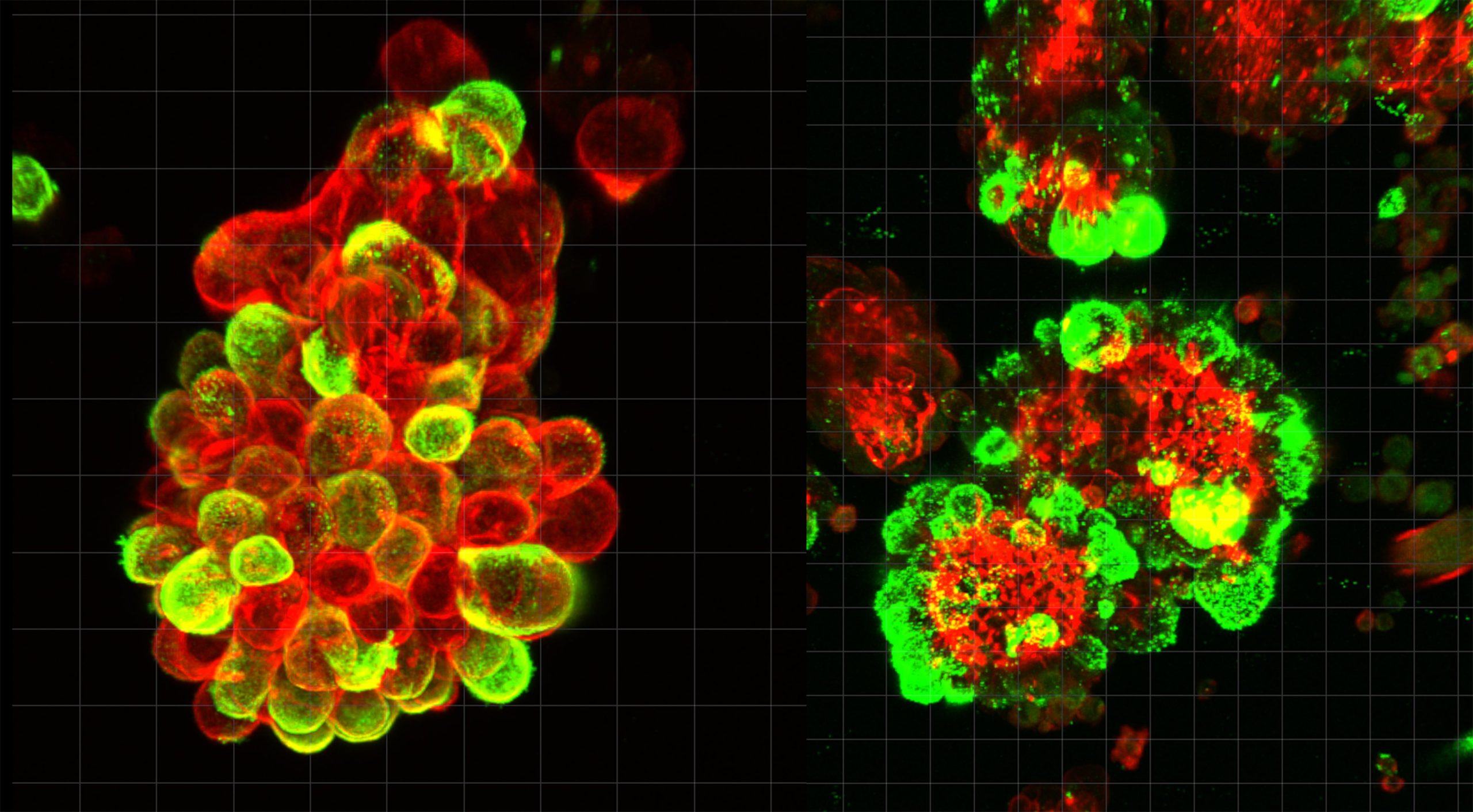
A new study led by Nagoya University now offers a clear explanation. Published today (February 6) in Science Advances, the research reveals that ovarian cancer cells do not spread on their own. Instead, they recruit mesothelial cells, which normally form a protective lining inside the abdominal cavity. These healthy cells take the lead during invasion, while cancer cells follow the paths they create. Together, the paired cells form hybrid clusters that are more resistant to chemotherapy than cancer cells alone.
Cancer Cells Do Not Travel Alone
When researchers analyzed abdominal fluid from ovarian cancer patients, they uncovered an unexpected pattern. Cancer cells were rarely floating by themselves. Instead, they frequently attached to mesothelial cells, forming compact spherical clusters. The team found that about 60% of these cancer spheres contained mesothelial cells that had been recruited into the group.
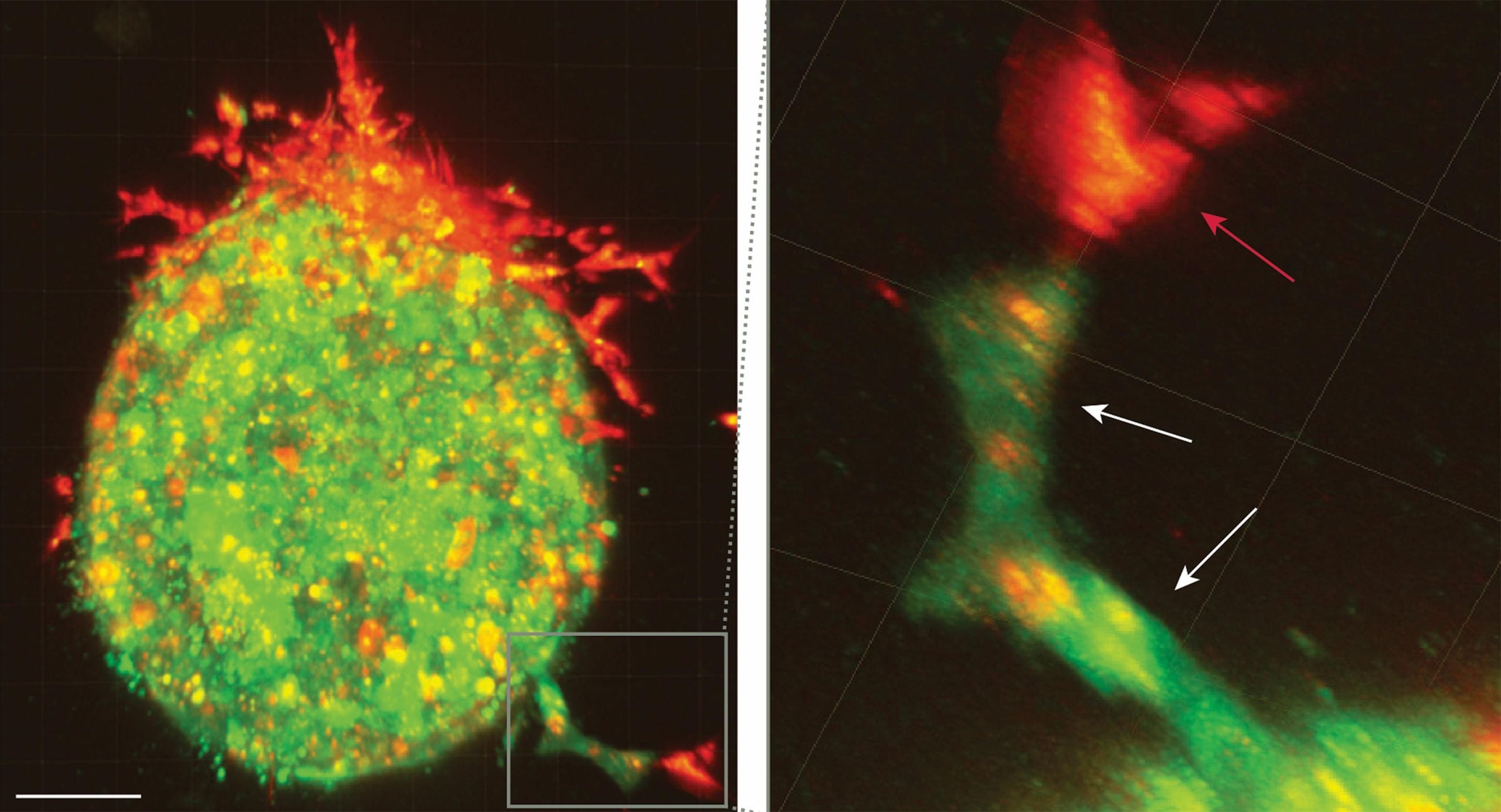
The cancer cells release a signaling protein called TGF-β1, which alters the mesothelial cells. This signal causes the mesothelial cells to develop sharp, spike-like structures that can cut into surrounding tissue and clear a path for invasion.
How Ovarian Cancer Spreads Through Abdominal Fluid
As ovarian cancer grows, some cancer cells break away from the original tumor and enter the fluid inside the abdomen. This fluid moves constantly as a person breathes and shifts position, carrying cancer cells to many different locations.
This process is very different from how most other cancers spread. In cancers such as breast or lung cancer, cells enter blood vessels and travel through the bloodstream to distant organs. Because blood flows through well-defined vessels, doctors can sometimes detect these cancers using blood-based tests.
Ovarian cancer cells largely avoid blood vessels. Instead, they drift through abdominal fluid that has no fixed direction. This floating phase occurs before the cells attach to new organs, and until now, scientists did not fully understand how cancer cells survived this stage or spread so efficiently during it.
Invadopodia Do the Digging for Cancer
The research team discovered that during this floating stage, cancer cells actively recruit mesothelial cells that have shed from the abdominal lining. Once connected, the two cell types form hybrid spheres. The mesothelial cells then produce invadopodia, which are spike-like structures that drill into nearby tissue.
These hybrid clusters are especially dangerous. They invade new tissue more quickly once they reach an organ and are better at surviving chemotherapy drugs than cancer cells on their own.
Watching Cancer Spread in Real Time
To observe this process directly, the researchers used advanced microscopy to study abdominal fluid from ovarian cancer patients. They confirmed their findings through experiments in mouse models and by analyzing individual cells using single-cell genetic techniques.
Lead author Dr. Kaname Uno, a former PhD student and current Visiting Researcher at Nagoya University’s Graduate School of Medicine, explained that the cancer cells themselves do not need to become more aggressive. “They manipulate mesothelial cells to do the tissue invasion work. They undergo minimal genetic and molecular changes and just migrate through the openings that mesothelial cells create.”
A Personal Motivation Behind the Research
Before entering research, Dr. Uno worked as a gynecologist for eight years. One patient left a lasting impression on him. She had received normal screening results just three months before doctors discovered advanced ovarian cancer. Existing medical tools failed to detect the disease early enough to save her life. That experience motivated Dr. Uno to investigate why ovarian cancer spreads so quickly and so silently.
New Paths for Treatment and Monitoring
The findings point to new treatment strategies. Current chemotherapy focuses on killing cancer cells but does not target the mesothelial cells that assist in invasion. Future therapies could interrupt the TGF-β1 signal or prevent cancer cells from forming these harmful partnerships.
The research also suggests a potential new way to monitor the disease. By tracking hybrid cell clusters in abdominal fluid, doctors may be able to better predict how ovarian cancer will progress and how well a patient is responding to treatment.
Reference: “Mesothelial cells promote peritoneal invasion and metastasis of ascites-derived ovarian cancer cells through spheroid formation” by Kaname Uno, Masato Yoshihara, Yoshihiko Yamakita, Kazuhisa Kitami, Shohei Iyoshi, Mai Sugiyama, Yoshihiro Koya, Tomihiro Kanayama, Haruhito Sahara, Satoshi Nomura, Kazumasa Mogi, Emiri Miyamoto, Hiroki Fujimoto, Kosuke Yoshida, Satoshi Tamauchi, Akira Yokoi, Nobuhisa Yoshikawa, Kaoru Niimi, Yukihiro Shiraki, Jonas Sjölund, Hidenori Oguchi, Kristian Pietras, Atsushi Enomoto, Akihiro Nawa, Hiroyuki Tomita and Hiroaki Kajiyama, 6 February 2026, Science Advances.
DOI: 10.1126/sciadv.adu5944
Never miss a breakthrough: Join the SciTechDaily newsletter.
Follow us on Google and Google News.
1 Comment
Thanks to the researchers for doing this advancement. I hope they can find in a short time ways to block this partnership between cancer cells and mesothelial cells and develop tests that allow detection of this awful illness before symptoms occur.