
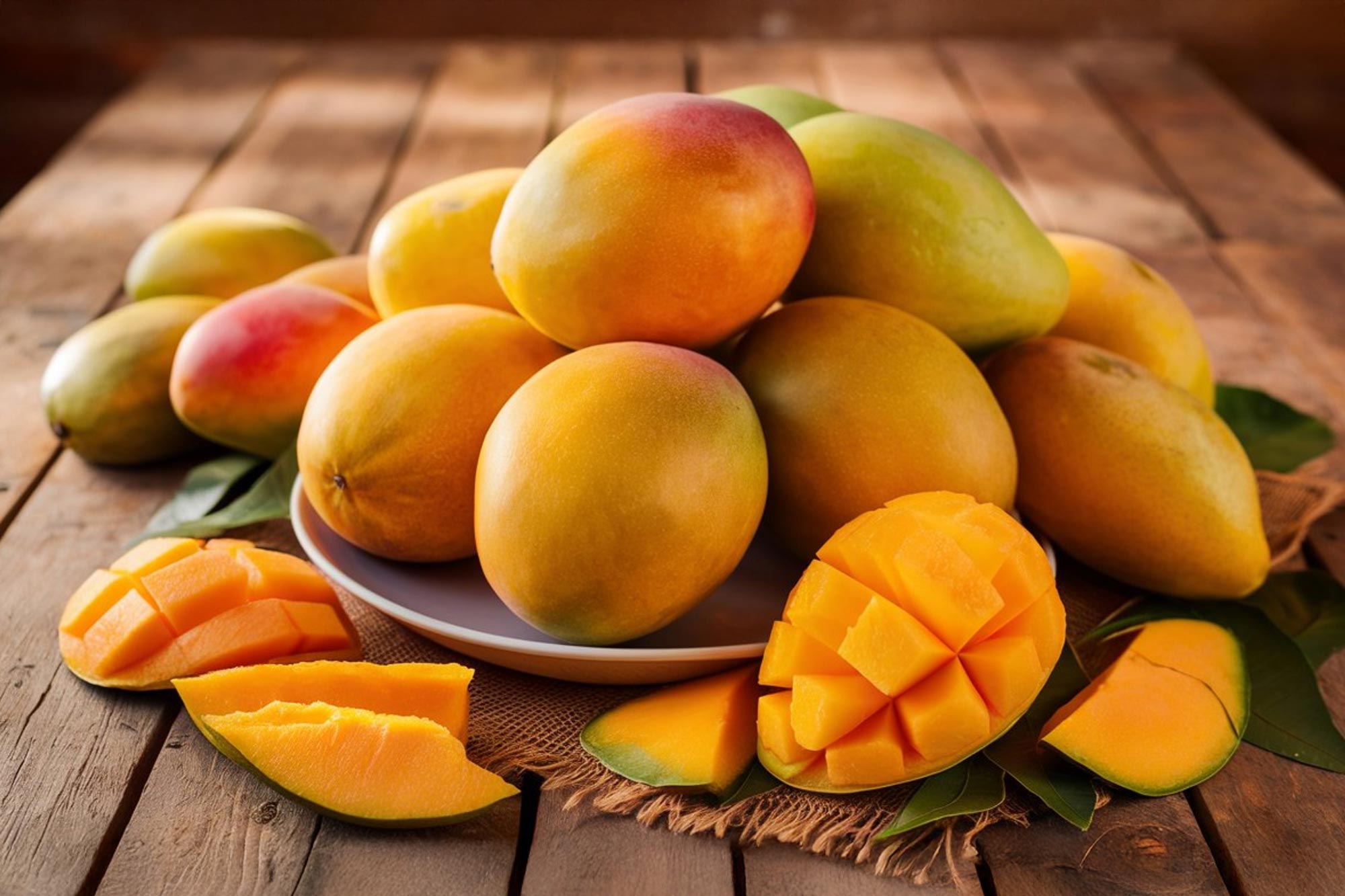
Mangoes might soon last far longer on shelves and in fridges, thanks to a breakthrough from Edith Cowan University researchers.
By dipping the fruit in ozonated water for just 10 minutes, scientists extended the cold storage life of mangoes up to 28 days while drastically reducing spoilage caused by chilling injury.
Ozonated Water Gives Mangoes a Shelf-Life Boost
If you love mangoes, there’s promising news. Researchers at Edith Cowan University (ECU) have found a way to keep the tropical fruit fresh for much longer.
According to a study led by Dr. Mekhala Vithana from ECU’s School of Science, soaking mangoes in ozonated water (a process known as aqueous ozonation) for just 10 minutes before cold storage helped extend their shelf life by as much as two weeks. This method also greatly reduced the risk of chilling injury, a common issue that affects fruit quality during refrigeration.
“Increasing storage life of mangoes is incredibly important for both growers and traders, as it reduces food loss during storage and offers a longer market window,” Dr. Vithana said.
Mango Demand Surges—So Does Food Waste
As global consumption of fresh fruits and vegetables continues to climb, mango production has surged to meet demand.
But with that growth comes a problem: large amounts of mangoes spoil before they ever reach consumers. Their tendency to ripen quickly and spoil easily contributes to significant waste.
“It is estimated that about 20 percent of the total Australian mango production is lost or wasted, and horticultural produce is responsible for about 50 percent of the total food waste in Australia,” Dr. Vithana said.
“Therefore, it is important to explore eco-friendly and cost-effective technologies to minimize post-harvest losses of mangoes.”
Chilling Injury: A Cold Storage Dilemma
Typically, mangoes are picked at the mature green stage and stored at 13 degrees Celsius for up to 14 days, however this is not cold enough for extended storage.
“Being a tropical fruit, unripe mangoes should not be stored below 12.5 degrees due to their high sensitivity to cold temperatures,” Dr. Vithana said. “Prolonged storage of mango below this temperature causes a physiological disorder known as chilling injury, which damages the fruit skin and leads to decreased marketability and significant food waste.
“Therefore, susceptibility to chilling injury is the key limitation for exploiting cold storage technology to its maximum capacity for lengthening the storage life of mangoes.”
Testing a Chilling-Safe Mango Hack
The study, carried out on Australia’s most widely produced variety of mango, Kensington Pride, tested aqueous ozonation technology to improve chilling tolerance during cold storage.
By dipping the mango in the ozonated water for 10 minutes prior to cold storage at 5 degrees Celsius, researchers found that they could keep the mangoes for longer with much less chilling injury.
“Generally, Kensington Pride mango can only be stored for about two weeks without ripening at 13 degrees. However, aqueous ozonation extends the storage and shelf life of these mangoes up to 28 days, with 40 percent less chilling injury than untreated mangoes,” Dr. Vithana said.
Aqueous Ozonation: Safe, Scalable, and Promising
“The aqueous ozonation seems to be highly feasible technology for improving chilling tolerance and quality of Kensington Pride mango fruit.”
Dr. Vithana said ozonation can be controlled on-site, is cost-effective, and considered safe for workers at a threshold level due to its faster breakdown into oxygen.
“Aqueous ozonation is bubbling ozone into water through an ozone generator,” she said. “Ozone is a compound widely used to sanitise fruits and vegetables on a commercial scale.
“The ozonation can be combined with the hydrocooling step after quarantine heat treatment in export mangoes or separately as a sanitisation step just after harvesting, depending upon the convenience of the grower, but this needs further optimisation under commercial settings.”
What’s Next: Expanding the Mango Lifespan Revolution
Dr. Vithana said ECU researchers are hoping to do further research on other varieties of mangoes to test their responsiveness and to achieve further reduction in chilling injury for extended cold storage.
Reference: “Postharvest aqueous ozonation alleviates chilling injury by upregulating ascorbate-glutathione (AsA-GSH) cycle and associated antioxidant enzymes in cold-stored ‘kensington pride’ mango fruit” by Mekhala Dinushi Kananke Vithana, Mahmood Ul Hasan, Hafiz Muhammad Shoaib Shah and Zora Singh, 1 July 2025, Plant Growth Regulation.
DOI: 10.1007/s10725-025-01358-8
Never miss a breakthrough: Join the SciTechDaily newsletter.
Follow us on Google and Google News.
1 Comment
The Egyptian family line were onto it .They too used water for shifting heavy things .Preserving the way you have demonstrated is the way forward
Keep up the good work kia kaha kia toa .