
Researchers have discovered that a little-known by-product of sunflower oil production could dramatically improve the nutritional value of bread.
As more people look for healthier options beyond traditional wheat products, researchers are exploring ingredients that can improve nutrition without sacrificing practicality. One promising candidate is partially defatted sunflower seed flour (SF) – a by-product of industrial sunflower oil extraction – which may help enrich bread with protein, fiber, and antioxidant compounds.
“Our aim was to optimize the reuse of sunflower seed flour considering its high protein and chlorogenic acid content,” says biologist Leonardo Mendes de Souza Mesquita, currently at the Institute of Biosciences of the University of São Paulo (IB-USP) in Brazil. He is the lead author of the study published in ACS Food Science & Technology.
Testing Sunflower Flour in Bread Recipes
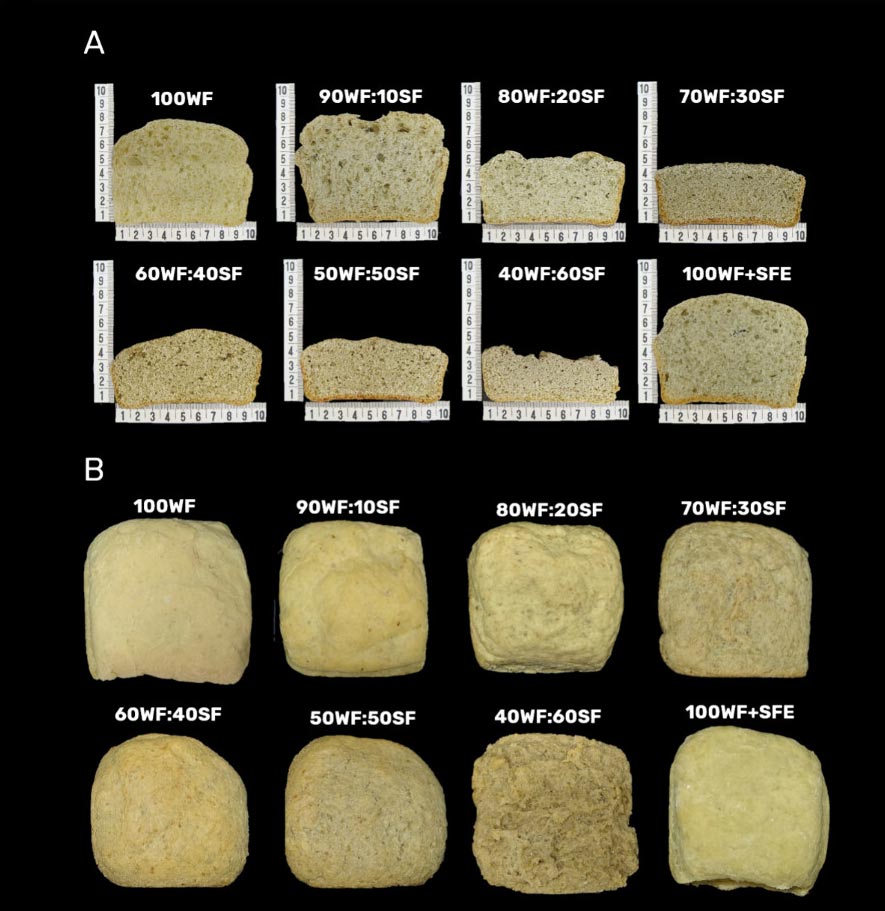
To evaluate its performance, researchers replaced wheat flour (WF) with sunflower seed flour (SF) at levels ranging from 10% to 60% in bread recipes. Each variation was analyzed for chemical composition, dough behavior, and finished loaf characteristics. The team examined rheological parameters (which describe how the material deforms and flows when subjected to external forces) as well as the physical qualities of the final bread.
“Sunflower seed flour has been shown to contain a very high percentage of protein, from 40% to 66%, as well as dietary fiber, iron, calcium, and high levels of chlorogenic acid, a phenolic compound associated with antioxidant, anti-inflammatory, and hypoglycemic effects. Reusing this by-product adds nutritional value to bread and reduces the environmental impact of the sunflower oil industry. In addition, sunflower seed flour is an extremely cheap raw material, which the oil industry sells just to avoid disposing of it as waste,” explains Mesquita.
Protein and Antioxidant Levels Surge
The nutritional impact was substantial. Bread made with sunflower seed flour contained significantly more protein and fiber than standard wheat bread. At the highest substitution level, the loaf reached 27.16% protein, compared with 8.27% in conventional bread. Antioxidant levels also increased in proportion to the amount of sunflower flour added.
Researchers measured antioxidant activity using Trolox, a water-soluble analog of vitamin E commonly used as a benchmark in testing. Bread made with sunflower flour showed much higher values than bread made with 100% WF.
“The result reinforces the potential of sunflower seed flour to promote health benefits associated with reducing oxidative stress. In addition, we observed significant inhibitory activity against the enzymes α-amylase (92.81%) and pancreatic lipase (25.6%), indicating that breads with SF or SFE can contribute to modulating the digestion of starches and fats,” says Mesquita.
Chemical-Free Processing Adds Appeal
Another important factor is how sunflower oil is produced. Industrial extraction relies on pressing rather than chemical solvents. Because of this, the leftover flour is free from processing contaminants aside from residues remaining from agricultural sunflower cultivation.
Texture Challenges at Higher Levels
Although the health benefits were clear, higher amounts of sunflower flour affected bread texture. Once the substitution reached 20% SF or more, loaves became denser. Researchers observed reduced specific volume, firmer crust and crumb, and changes in alveolar structure – resulting in bread that was less soft than traditional wheat loaves.
“However, adding the aqueous extract [SFE] managed to preserve the structure and texture of the breads, keeping them close to those of traditional wheat bread. This indicates that adding SFE is an effective strategy for maximizing the nutritional benefits and minimizing the adverse sensory effects of sunflower seed flour,” argues Mesquita.
The aqueous extract is produced by dissolving SF in water and filtering it, without additional physical or chemical processing. According to Mesquita, future research could explore whether SFE can fully replace SF or be blended in different ratios. Commercial bakeries could then determine the most effective formulation.
Sustainable Innovation and the Circular Economy
The research fits into a broader effort to repurpose industrial by-products. “Transforming waste into products is a fundamental strategy for promoting a circular economy and reducing resource waste. As well as being a cheap raw material, partially defatted sunflower seed flour contributes to human health and environmental sustainability. It therefore covers the three pillars of the circular economy: economic, social, and environmental,” says Mesquita.
The circular economy model aims to move away from the traditional “extract, produce, discard” system. Instead, it focuses on keeping resources in use for as long as possible, maximizing their value, and regenerating them at the end of each life cycle. In this case, a previously underused industrial by-product becomes a functional food ingredient that enhances bread nutrition while reducing waste.
Reference: “Repurposing Sunflower Seed Flour for Nutritional and Functional High-Protein Breads within a Circular Economy Framework” by Leonardo Mendes de Souza Mesquita, Etiene Valeria Aguiar, Letícia S. Contieri, Vitoria B. Togni, Beatriz Carolina A. Forli, Vitor L. Sanches, Fernanda G. Santos, Luiz Guilherme Salvino da Silva, Dercílio Marcelo Fernandes, Vanessa D. Capriles and Mauricio Rostagno, 9 April 2025, ACS Food Science & Technology.
DOI: 10.1021/acsfoodscitech.4c01008
The project involved researchers from the Multidisciplinary Laboratory of Food and Health (LabMAS) at the School of Applied Sciences of the State University of Campinas (FCA-UNICAMP) in Limeira and the Laboratory of Food Technology and Nutrition at the Federal University of São Paulo (UNIFESP) at its Baixada Santista campus. The study received funding from FAPESP through six projects (13/04304-4, 20/15774-5, 18/14582-5, 20/08421-9, 15/00658-1, and 19/13496-0). Mesquita later received a Young Researcher Grant for the project “Sustainable Innovations: The Biorefinery Revolution through the Valorization of Macroalgae Using Renewable Solvents Toward a (Green/Blue) Economy.”
Never miss a breakthrough: Join the SciTechDaily newsletter.
Follow us on Google and Google News.
3 Comments
It is such an obvious oversight that is kind of disappointing. Why target only bread ? Should at least do the same using PASTA .. which would have applied to Asian’s common staple of NOODLES .. It now seems that when money is super tight, the world has discovered the law of the Ramen Noodle packages .. And its consumers need, desperately, the nutrition pickup this paper is all about !
Why target only bread? Adding variables would make the experimental data overly complicated and more difficult to get meaningful results. They can target other foods now that the concepts seems promising.
Biscuits and crackers seem the obvious chose.