
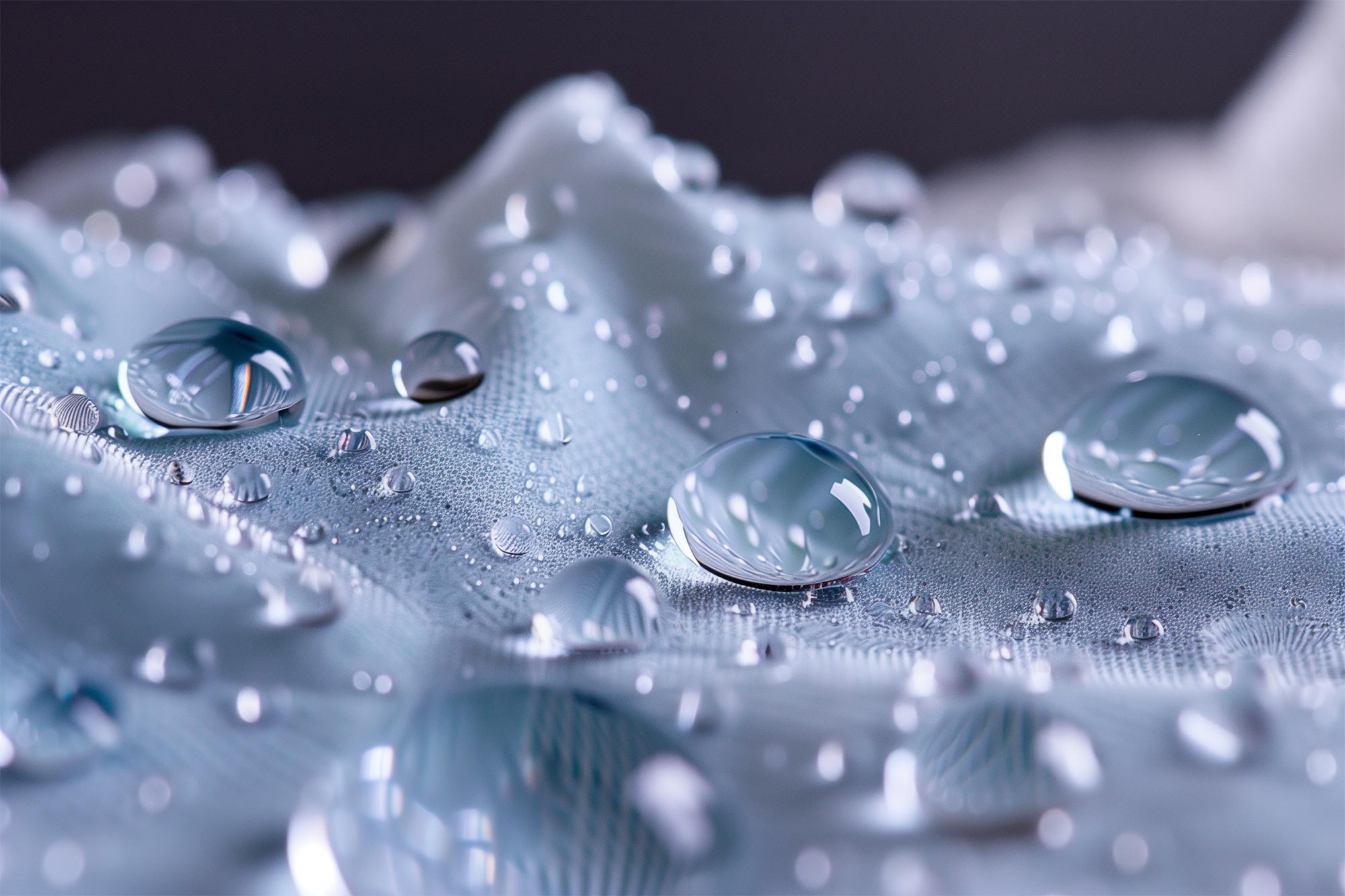
A groundbreaking study showcases the creation of sustainable hydrophobic paper, enhanced by cellulose nanofibres and peptides, presenting a biodegradable alternative to petroleum-based materials, with potential uses in packaging and biomedical devices.
Researchers aimed to develop hydrophobic paper by leveraging the strength and water resistance of cellulose nanofibers, creating a sustainable, high-performance material suitable for packaging and biomedical applications. This innovative approach involved integrating short protein chains, known as peptide sequences, without chemically altering the cellulose nanofibers. The result is a potential alternative to petroleum-based materials, with significant environmental benefits.
The study, titled “Nanocellulose-short peptide self-assembly for improved mechanical strength and barrier performance,” was recently featured on the cover of the Journal of Materials Chemistry B. The research was conducted by the “Giulio Natta” Department of Chemistry, Materials, and Chemical Engineering at Politecnico di Milano, in collaboration with Aalto University, the VTT-Technical Research Centre of Finland, and the SCITEC Institute of the CNR.

Enhancing Cellulose with Peptides
Cellulose nanofibers (CNFs) are natural fibers derived from cellulose — a renewable and biodegradable source — and are well known for their strength and versatility. In the study, the researchers from the SupraBioNanoLab of the “Giulio Natta” Department of the Politecnico di Milano showed how it is possible to greatly improve the properties of cellulose nanofibers without chemically modifying them, instead adding small proteins known as peptides.
“Our supramolecular approach involved adding small sequences of peptides, which bind onto the nanofibers and so improve their mechanical performance and water-resistance. Elisa Marelli, co-author of the study, explained the methodology: “The results of the study showed that even minimal quantities of peptides (less than 0.1%) can significantly increase the mechanical properties of the hybrid materials produced, giving them greater resistance to stress.”
Breakthroughs in Biocompatible Materials
Finally, the researchers assessed the impact of adding fluorine atoms in the peptide sequences. This made it possible to create a structured hydrophobic film on the material, providing even greater water resistance while still preserving its biocompatible and sustainable characteristics.
As Pierangelo Metrangolo, co-author of the study, pointed out: “This advance opens up new opportunities for creating biomaterials that can compete with petroleum-derived materials in terms of performance, achieving the same quality and efficiency while reducing environmental impact. These hybrid materials are very suitable for sustainable packaging, where resistance to moisture is vital, and also for use in biomedical devices, thanks to their biocompatibility.”
Reference: “Nanocellulose-short peptide self-assembly for improved mechanical strength and barrier performance” by Alessandro Marchetti, Elisa Marelli, Greta Bergamaschi, Panu Lahtinen, Arja Paananen, Markus Linder, Claudia Pigliacelli and Pierangelo Metrangolo, 19 August 2024, Journal of Materials Chemistry B.
DOI: 10.1039/D4TB01359J
Never miss a breakthrough: Join the SciTechDaily newsletter.
Follow us on Google and Google News.
10 Comments
It could revolutionize pollution too. Like tenfold.
Explain. How do we know you have made a good point?
Just think of the amount of chemicals that is gonna be used to treat the paper in the described fashion if that process is ever brought up to scale. Too many chemicals already go into making of common paper as it is.
And if that resistance to water proves permanent, it’s gonna be just like plastic but with inferior properties in terms of utility. So it’s gonna get discarded more often.
This is intriguing- cellulose is the most common biopolymer on our planet and deserves consideration for a return to a central role in a circular, sustainable economy. Peptides are promising also. I suggest great caution with industrial use of fluorinated peptides however. Fluorinated organic compounds don’t all play nice with biosystems or ecosystems. Anyone suggesting fluorinated peptide paper should provide extensive data on toxicity and environmental impact before any commercial development.
Biodegradable a definite step in the right direction. We must eliminate all petroleum based plastic or be forever sickened by it if it’s not to late already!
This could vastly reduce plastic laminates as well .
I truly wonder if a “solid acid nano sponge”. This sounds like the start of “The Blob”. Just think trillions of these little fidgets rummaging through the World. Holy heck man. This freaks me out man..!
The incorporation of fluorine suggests the presence of PFAS components, which are currently called “forever chemicals” that are harmful to health even at low parts-per-trillion levels. I would like to see some reporting about this. If these products contain PFAS molecules then this could be a 1000-fold + increase in pollution.
Why do we need so much packaging?
Because most of humanity is still overdoing everything and still couldn’t learn moderation. Why do they need a huge truck, just to travel a few miles alone? For something a small car would be suitable. I think it all boils down to greed. We can have the best scientists, won’t fix the greedy nature of human.