
Close Menu
    Facebook X (Twitter) Instagram
    SciTechDaily
    • Biology
    • Chemistry
    • Earth
    • Health
    • Physics
    • Science
    • Space
    • Technology
    Facebook X (Twitter) Pinterest YouTube RSS
    SciTechDaily
    Home»Space»This Week @NASA: Artemis I Moon Mission, Cosmic Cannibalism, Hypersonic Inflatable Aeroshell
    Space

    This Week @NASA: Artemis I Moon Mission, Cosmic Cannibalism, Hypersonic Inflatable Aeroshell

    By NASAJune 19, 2022No Comments4 Mins Read
    Facebook Twitter Pinterest Telegram LinkedIn WhatsApp Email Reddit
    Share
    Facebook Twitter LinkedIn Pinterest Telegram Email Reddit
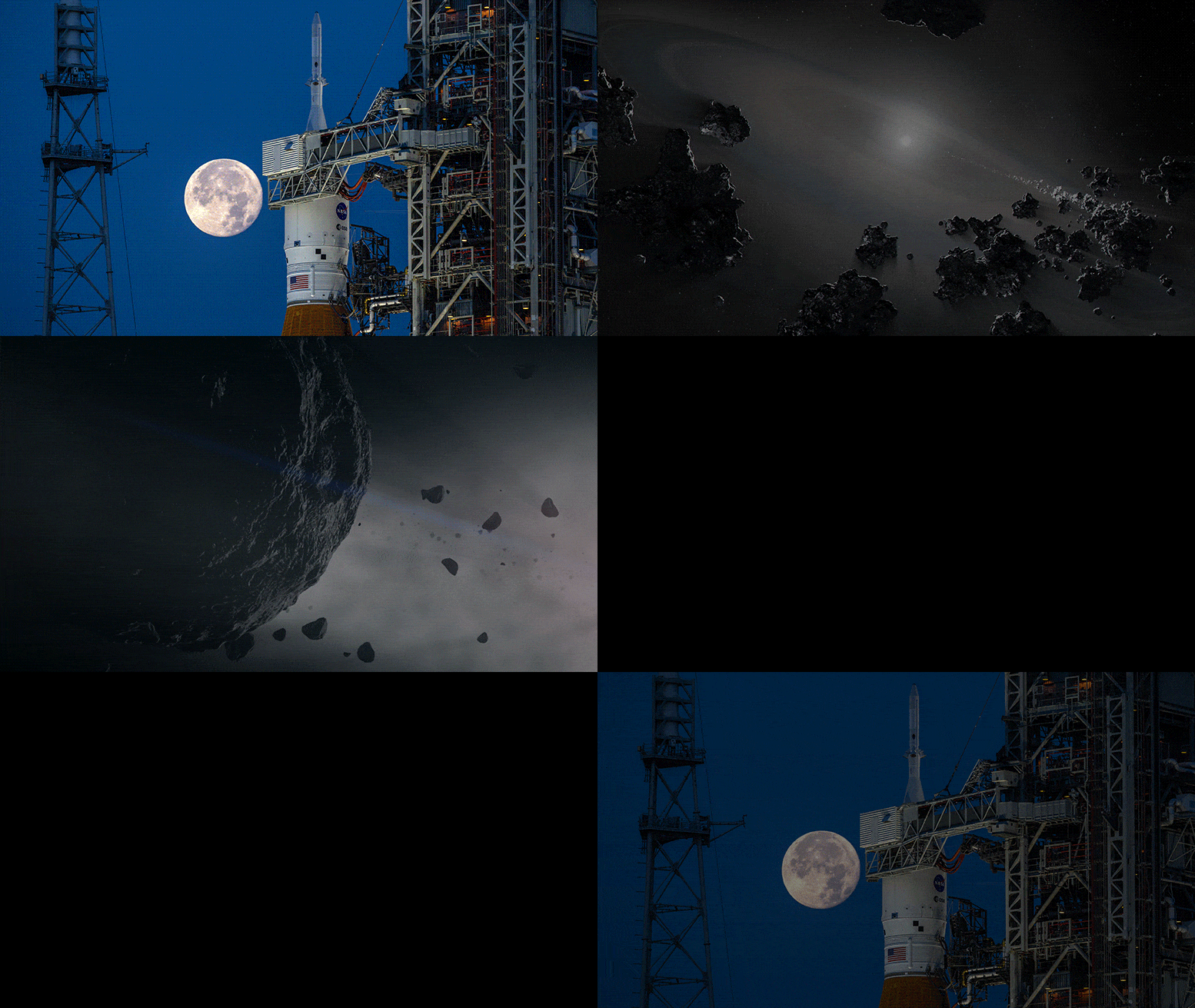
    Artemis I Moon Mission Cosmic Cannibalism Hypersonic Inflatable Aeroshell
    The next prelaunch rehearsal before the launch of the Artemis I Moon mission, news about some NASA astronomy missions, and a critical milestone for an Earth-observing satellite are just a few of the stories to tell you about this week at NASA!

    The next prelaunch rehearsal before launch of our Artemis I Moon mission …

    News about some NASA astronomy missions …

    And a critical milestone for an Earth-observing satellite …

    A few of the stories to tell you about – This Week at NASA!

    The Next Prelaunch Rehearsal Test for Artemis I Moon Mission

    NASA is targeting June 18th for the start of the next wet dress rehearsal test with our Space Launch System rocket and Orion spacecraft at the Kennedy Space Center in Florida.

    The rehearsal is the final test needed before the launch of the uncrewed Artemis I mission around the Moon.

    The test includes an approximately two-day countdown, during which the launch teams will practice the operations, timelines, and procedures that they will follow for the actual launch.
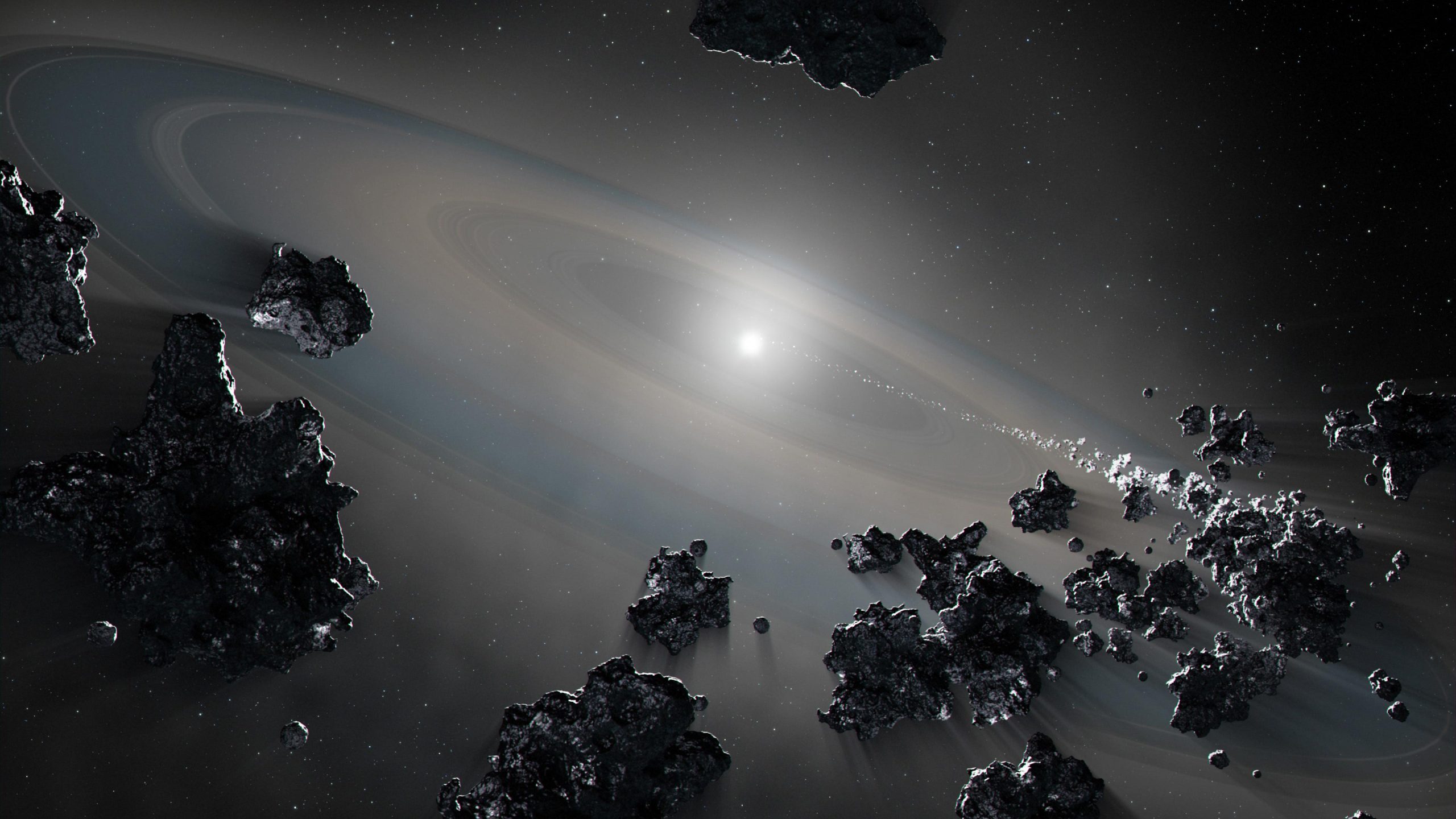
    White Dwarf Star Siphoning Off Debris
    This illustration shows a white dwarf star siphoning off debris from shattered objects in a planetary system. The Hubble Space Telescope detects the spectral signature of the vaporized debris that revealed a combination of rocky-metallic and icy material, the ingredients of planets. The findings help describe the violent nature of evolved planetary systems and the composition of their disintegrating bodies. Credit: NASA, ESA, Joseph Olmsted (STScI)

    NASA News at American Astronomical Society Meeting

    News about NASA missions at the 240th meeting of the American Astronomical Society included astronomers using data from our Hubble Space Telescope and other NASA observatories to see, for the first time, a dead star called a white dwarf consuming both rocky-metallic and icy material, the ingredients of planets.

    This instance of cosmic cannibalism can help astronomers learn more about the makeup of newly forming systems.

    Also discussed, the potential of NASA’s Nancy Grace Roman Space Telescope. The telescope’s unprecedented field of view will make it possible to study stellar streams in a large number of galaxies for the first time.

    Astronomers can use these observations to better understand how galaxies grow and the nature of dark matter.

    NOAA-21 JPSS-2 Satellite
    An artist’s rendering of the JPSS-2 satellite, which will be renamed NOAA-21 once in orbit. Credit: NOAA

    NASA Completes Critical Testing for Earth Observing Satellite

    The Joint Polar Satellite System-2 satellite, or JPSS-2 that NASA is building for the National Oceanic and Atmospheric Administration (NOAA) recently completed its thermal vacuum testing.

    The critical test is meant to show that the spacecraft and its instruments can perform successfully in the harsh environment of space.

    JPSS-2 is targeted for launch on November 1st from Vandenberg Space Force Base in California.

    The satellite will provide data to help improve our understanding of extreme weather and climate change.
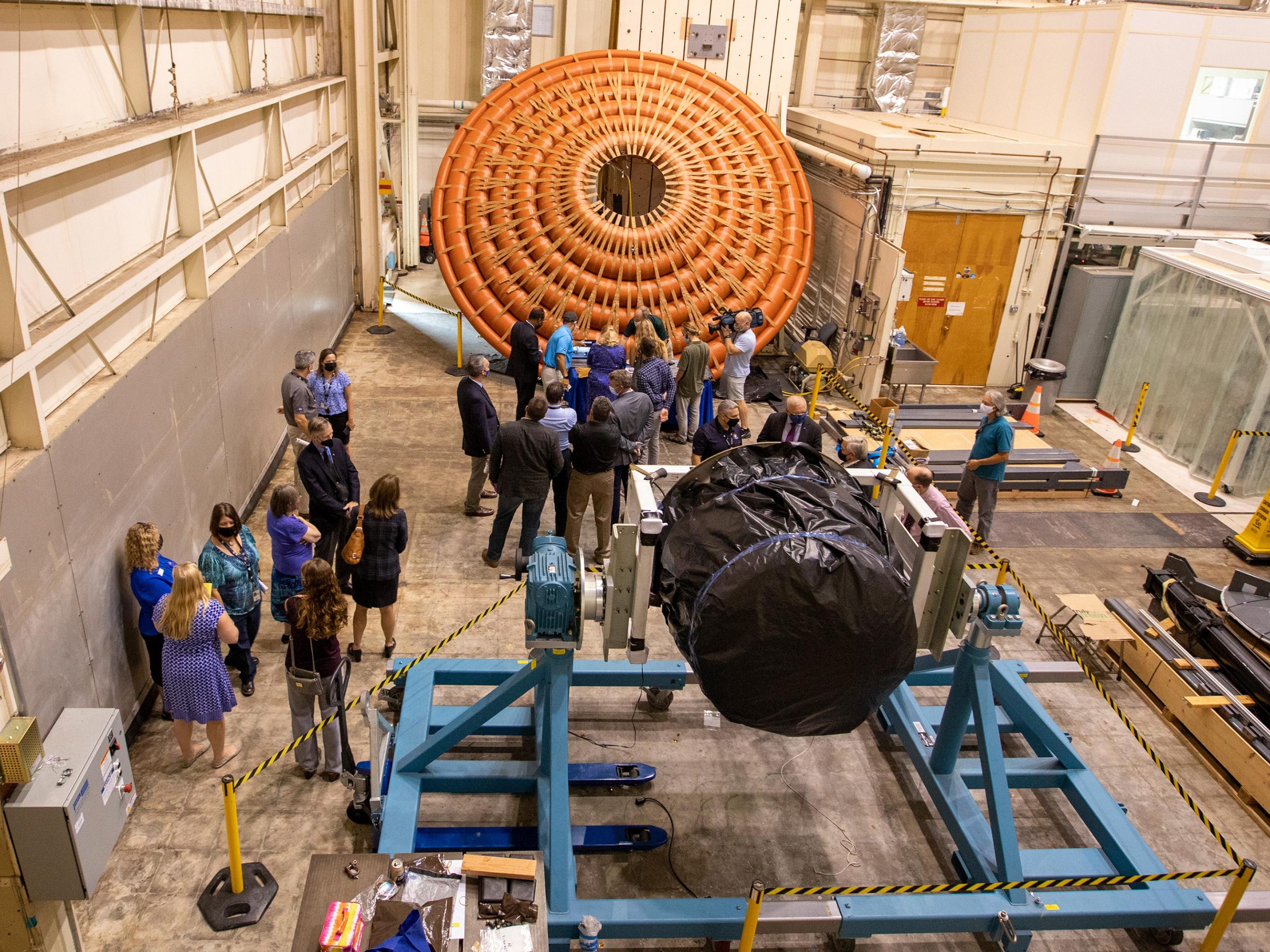
    LOFTID Full Scale Model
    A full-scale model of the inflated aeroshell for NASA’s Low-Earth Orbit Flight Test of an Inflatable Decelerator (LOFTID) is displayed at NASA’s Langley Research Center in Hampton, Virginia. Credit: NASA/David C. Bowman

    NASA Showcases Inflatable Heat Shield Before Spaceflight Demo

    NASA’s Low-Earth Orbit Flight Test of an Inflatable Decelerator, or LOFTID will ride to space on the JPSS-2 launch as a secondary payload.

    LOFTID is a demonstration of a hypersonic inflatable aeroshell that could one day help land humans on Mars.

    Our Langley Research Center in Hampton, Virginia, recently hosted an event for the media to learn more about the technology.

    Following its launch to low-Earth orbit, LOFTID will inflate and descend back to Earth to demonstrate how it can slow down a spacecraft and help it survive the trip down through a planet’s atmosphere.

    NASA Astronaut Hall of Fame
    U.S. Astronaut Hall of Fame outside Kennedy Space Center Visitor Complex. Credit: NASA

    2022 Astronaut Hall of Fame Induction Ceremony

    Congratulations to former NASA astronauts Dave Leestma, Sandy Magnus, and Chris Ferguson. They are the newest inductees to the U.S. Astronaut Hall of Fame.

    They were inducted as the Hall of Fame’s class of 2022 during a June 11th ceremony at the Kennedy Space Center Visitor Complex.

    That’s what’s up this week @NASA …

    Never miss a breakthrough: Join the SciTechDaily newsletter.
    Follow us on Google and Google News.

    NASA Popular
    Share. Facebook Twitter Pinterest LinkedIn Email Reddit

    Related Articles

    Solving the Baffling Mysteries of Invisible Frost and Dust Avalanches on Mars

    “Blood Moon” – What You Need To Know About the Lunar Eclipse

    Watch the Official Trailer: NASA’s Psyche Mission to a Metal World

    This Week @NASA: Webb Telescope Mission, Historic Black Hole Image, Monster Quake on Mars

    Don’t Miss: Total “Blood Moon” Lunar Eclipse

    NASA’s InSight Records Monster Quake on Mars – The Largest Ever Detected on Another Planet

    Incredibly Sharp Webb Space Telescope Test Images Hint at New Possibilities for Science

    NASA’s Ingenuity Mars Helicopter in Contact With Perseverance Rover After Communications Dropout

    NASA’s Ingenuity Mars Helicopter Scouts Ridgeline for Perseverance Science Team

    Leave A Reply Cancel Reply

    • Facebook
    • Twitter
    • Pinterest
    • YouTube

    Don't Miss a Discovery

    Subscribe for the Latest in Science & Tech!

    Trending News

    289-Million-Year-Old Reptile Mummy Reveals Origin of Human Breathing System

    New Brain Discovery Challenges Long-Held Theory of Teenage Brain Development

    Scientists Discover Plants “Scream” – We Just Couldn’t Hear Them Until Now

    Scientists Discover a Surprising Reason Intermittent Fasting Extends Life

    This Simple Fruit Wash Could Make Produce Safer and Last Days Longer

    Scientists Say Adding This Unusual Seafood to Your Diet Could Reverse Signs of Aging

    Scientists Say a Hidden Structure May Exist Inside Earth’s Core

    Doctors Surprised by the Power of a Simple Drug Against Colon Cancer

    Follow SciTechDaily
    • Facebook
    • Twitter
    • YouTube
    • Pinterest
    • Newsletter
    • RSS
    SciTech News
    • Biology News
    • Chemistry News
    • Earth News
    • Health News
    • Physics News
    • Science News
    • Space News
    • Technology News
    Recent Posts
    • Hidden Parasite Found in Popular Portuguese Lake Raises Health Concerns
    • This Simple Trick Can Boost Your Workout Endurance by 20%
    • This Popular Supplement May Interfere With Cancer Treatment, Scientists Warn
    • Scientists Propose Radical New Way To Detect Alien Life – Without Traditional Biosignatures
    • Scientists Just Discovered Light Can Actually Slow Plant Growth
    Copyright © 1998 - 2026 SciTechDaily. All Rights Reserved.
    • Science News
    • About
    • Contact
    • Editorial Board
    • Privacy Policy
    • Terms of Use

    Type above and press Enter to search. Press Esc to cancel.