
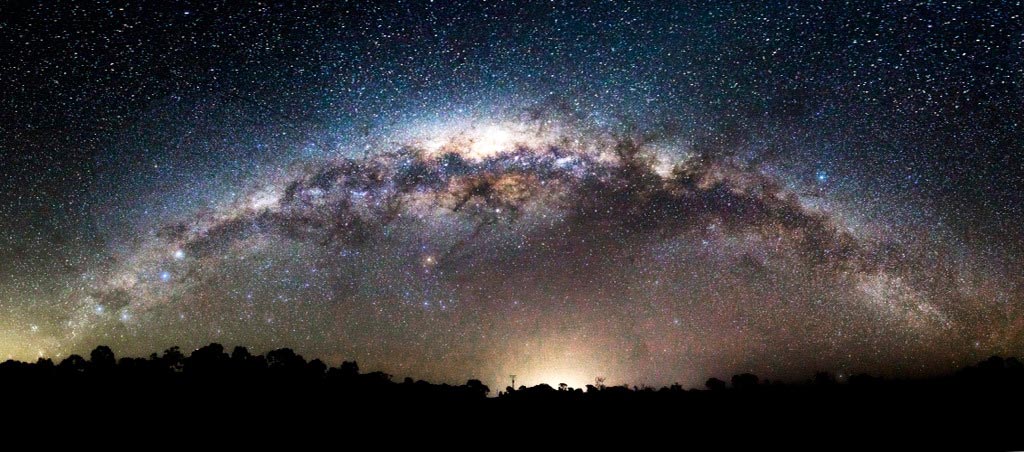
New studies show that metal-rich stars, while still evolving into red giants and white dwarfs, will eventually stop releasing heavy elements into the universe, locking them within the white dwarf remnants.
Stars are giant factories that produce most of the elements in the Universe – including the elements in us, and in the Earth’s metal deposits. But what stars produce changes over time.
Two new papers published in MNRAS shed light on how the youngest generation of stars will eventually stop contributing metals back to the universe.
The authors are all members of ASTRO 3D, the ARC Centre of Excellence for All Sky Astrophysics in 3 Dimensions. They are based at Monash University, the Australian National University (ANU), and the Space Telescope Science Institute.
Metal Production in Stars
“We know the first two elements of the periodic table – hydrogen and helium – were created in the Big Bang,” says Amanda Karakas, first author of a paper studying metal-rich stars.[1]
“Over time, the stars that came after the Big Bang produce heavier elements.”
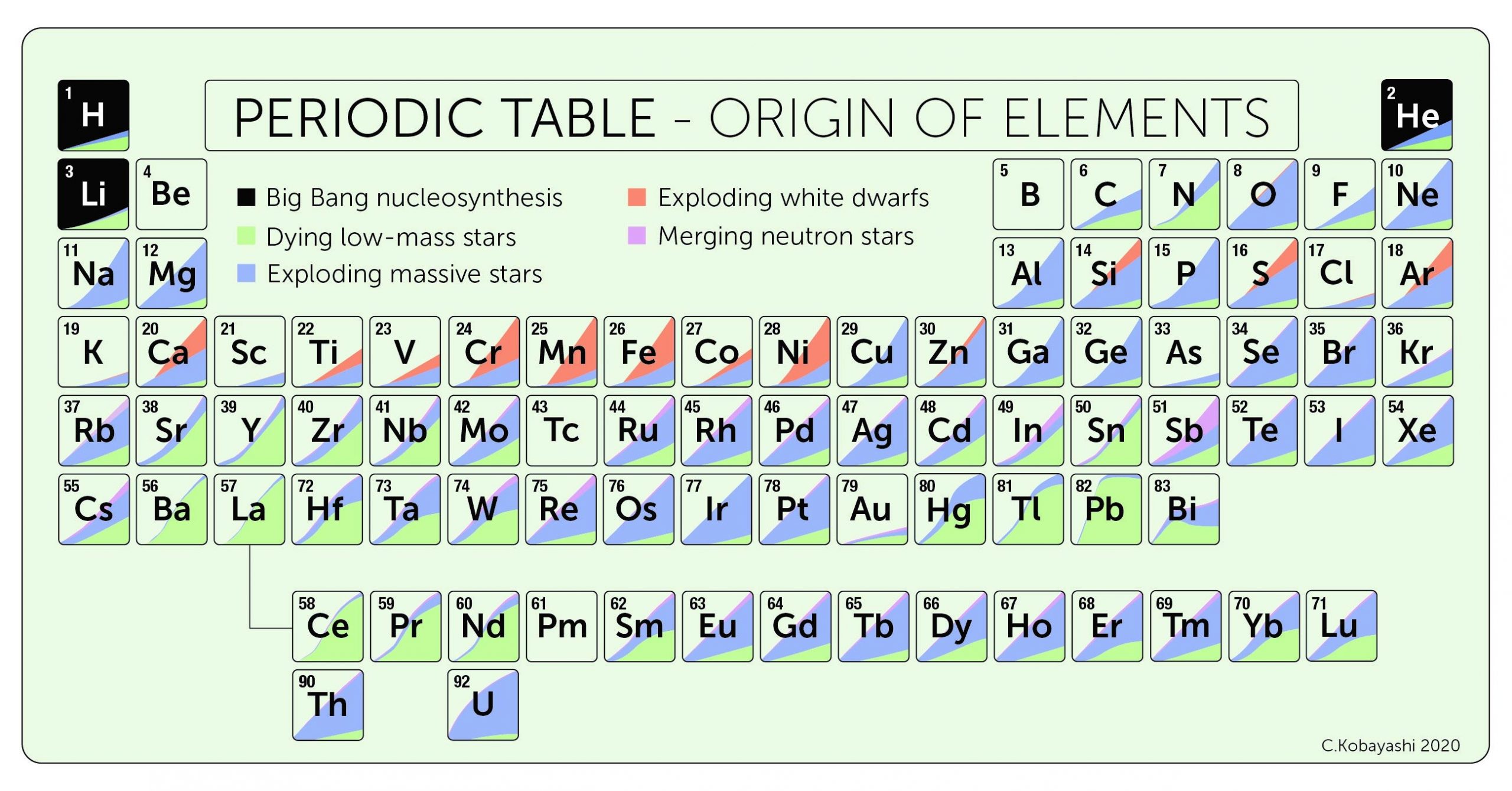
These “metal-rich” stars, like our Sun, spew out their products into space, enriching the composition of the galaxy over time.
These objects affect us directly as around half of the carbon and all elements heavier than iron are synthesized by stars like our Sun.
About 90 percent of all the lead on Earth, for example, was made in low-mass stars which also produce elements such as strontium and barium.
Impact of Metal Content on Star Evolution
But this ability to produce more metals changes depending on the composition of a star at its birth. “Introducing just a tiny bit more metal into the stars’ gas has really large implications on their evolution,” says Giulia Cinquegrana. Her paper[2] uses modeling from the earlier paper to study the chemical output of metal-rich stars.
“We discovered that, at a certain threshold of initial metal content in the gas, stars will stop sending more metals into the Universe over their lifetime,” Cinquegrana says.
The Sun, born about 4.5 billion years ago, is a typical “middle-aged” star. It is “metal-rich” compared to the first stellar generations and has a heavy element content similar to many other stars in the center of the Milky Way.
“Our papers predict the evolution of younger stars (most recent generations) which are up to seven times more metal-rich than the Sun,” says Karakas.
Changing Behavior of Metal-Rich Stars
“My simulations show that this really high level of chemical enrichment causes these stars to act quite weirdly, compared to what we believe is happening in the Sun,” says Cinquegrana.
“Our models of super metal-rich stars show that they still expand to become red giants and go on to end their lives as white dwarfs, but by that time they are not expelling any heavy elements. The metals get locked up in the white dwarf remnant,” she says.
“But the process of stars constantly adding elements to the Universe means that the make-up of the Universe is always changing. In the far distant future, the distribution of elements will look very different to what we see now in our Solar System,” says Karakas.
References:
” The most metal-rich asymptotic giant branch stars Get access Arrow” by Amanda I Karakas, Giulia Cinquegrana and Meridith Joyce, 9 November 2021, Monthly Notices of the Royal Astronomical Society.
DOI: 10.1093/mnras/stab3205
” The most metal-rich stars in the universe: chemical contributions of low- and intermediate-mass asymptotic giant branch stars with metallicities within 0.04 ≤ Z ≤ 0.10″ by Giulia C Cinquegrana and Amanda I Karakas, 24 November 2021, Monthly Notices of the Royal Astronomical Society.
DOI: 10.1093/mnras/stab3379
Never miss a breakthrough: Join the SciTechDaily newsletter.
Follow us on Google and Google News.