
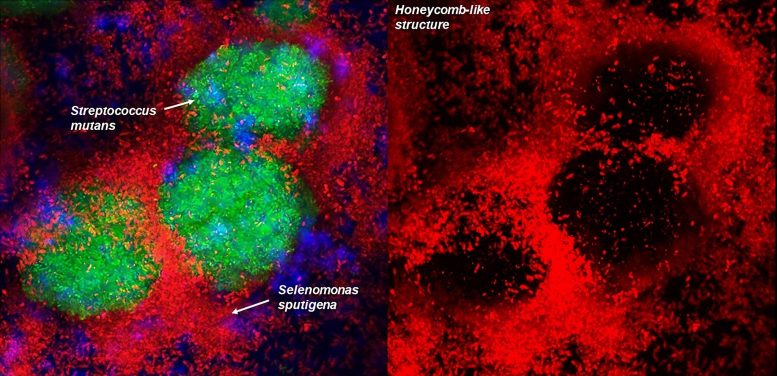
A large study in children reveals Selenomonas sputigena’s crucial role as a collaborative partner of Streptococcus in the development of dental cavities.
A collaborative study by scientists from the University of Pennsylvania School of Dental Medicine and the Adams School of Dentistry and the Gillings School of Global Public Health at the University of North Carolina has found that the bacterial species Selenomonas sputigena can play a significant role in causing tooth decay.
For a long time, Streptococcus mutans, a bacteria known for forming plaque and producing acid, has been identified as the chief contributor to tooth decay, or cavities. However, the recent study, recently published in the journal Nature Communications, revealed that S. sputigena, a bacteria previously only linked to gum disease, can significantly boost the cavity-creating capacity of S. mutans by working in synergy with it.
“This was an unexpected finding that gives us new insights into the development of caries, highlights potential future targets for cavity prevention, and reveals novel mechanisms of bacterial biofilm formation that may be relevant in other clinical contexts,” said study co-senior author Hyun (Michel) Koo DDS, Ph.D., a professor in the Department of Orthodontics and Divisions of Pediatrics and Community Oral Health and Co-Director of the Center for Innovation & Precision Dentistry at Penn Dental Medicine.
The other two co-senior authors of the study were Kimon Divaris, Ph.D., DDS, professor at UNC’s Adams School of Dentistry, and Di Wu, Ph.D., associate professor at the Adams School and at the UNC Gillings School of Global Public Health.
“This was a perfect example of collaborative science that couldn’t have been done without the complementary expertise of many groups and individual investigators and trainees,” Divaris said.
Caries is considered the most common chronic disease in children and adults in the U.S. and worldwide. It arises when S. mutans and other acid-making bacteria are insufficiently removed by teeth-brushing and other oral care methods, and end up forming a protective biofilm, or “plaque,” on teeth. Within plaque, these bacteria consume sugars from drinks or food, converting them to acids. If the plaque is left in place for too long, these acids start to erode the enamel of affected teeth, in time creating cavities.
Scientists in past studies of plaque bacterial contents have identified a variety of other species in addition to S. mutans. These include species of Selenomonas, an “anaerobic,” non-oxygen-requiring group of bacteria that are more commonly found beneath the gum in cases of gum disease. But the new study is the first to identify a cavity-causing role for a specific Selenomonas species.
The UNC researchers took samples of plaque from the teeth of 300 children aged 3-5 years, half of whom had caries, and, with key assistance from Koo’s laboratory, analyzed the samples using an array of advanced tests. The tests included sequencing of bacterial gene activity in the samples, analyses of the biological pathways implied by this bacterial activity, and even direct microscopic imaging. The researchers then validated their findings on a further set of 116 plaque samples from 3 to 5-year-olds.
How S. Sputigena and S. Mutans Form Destructive Superstructures
The data showed that although S. sputigena is only one of several caries-linked bacterial species in plaque besides S. mutans, and does not cause caries on its own, it has a striking ability to partner with S. mutans to boost the caries process.
S. mutans is known to use available sugar to build sticky constructions called glucans that are part of the protective plaque environment. The researchers observed that S. sputigena, which possesses small appendages allowing it to move across surfaces, can become trapped by these glucans. Once trapped, S. sputigena proliferates rapidly, using its own cells to make honeycomb-shaped “superstructures” that encapsulate and protect S. mutans. The result of this unexpected partnership, as the researchers showed using animal models, is a greatly increased and concentrated production of acid, which significantly worsens caries severity.
The findings, Koo said, show a more complex microbial interaction than was thought to occur, and provide a better understanding of how childhood cavities develop—an understanding that could lead to better ways of preventing cavities.
Potential Strategies for Cavity Prevention
“Disrupting these protective S. sputigena superstructures using specific enzymes or more precise and effective methods of tooth-brushing could be one approach,” Koo said.
The researchers now plan to study in more detail how this anaerobic motile bacterium ends up in the aerobic environment of the tooth surface.
“This phenomenon in which a bacterium from one type of environment moves into a new environment and interacts with the bacteria living there, building these remarkable superstructures, should be of broad interest to microbiologists,” Koo said.
Reference: “Selenomonas sputigena acts as a pathobiont mediating spatial structure and biofilm virulence in early childhood caries” by Hunyong Cho, Zhi Ren, Kimon Divaris, Jeffrey Roach, Bridget M. Lin, Chuwen Liu, M. Andrea Azcarate-Peril, Miguel A. Simancas-Pallares, Poojan Shrestha, Alena Orlenko, Jeannie Ginnis, Kari E. North, Andrea G. Ferreira Zandona, Apoena Aguiar Ribeiro, Di Wu and Hyun Koo, 22 May 2023, Nature Communications.
DOI: 10.1038/s41467-023-38346-3
The study was partially funded by the National Institutes of Health.
Never miss a breakthrough: Join the SciTechDaily newsletter.
Follow us on Google and Google News.