
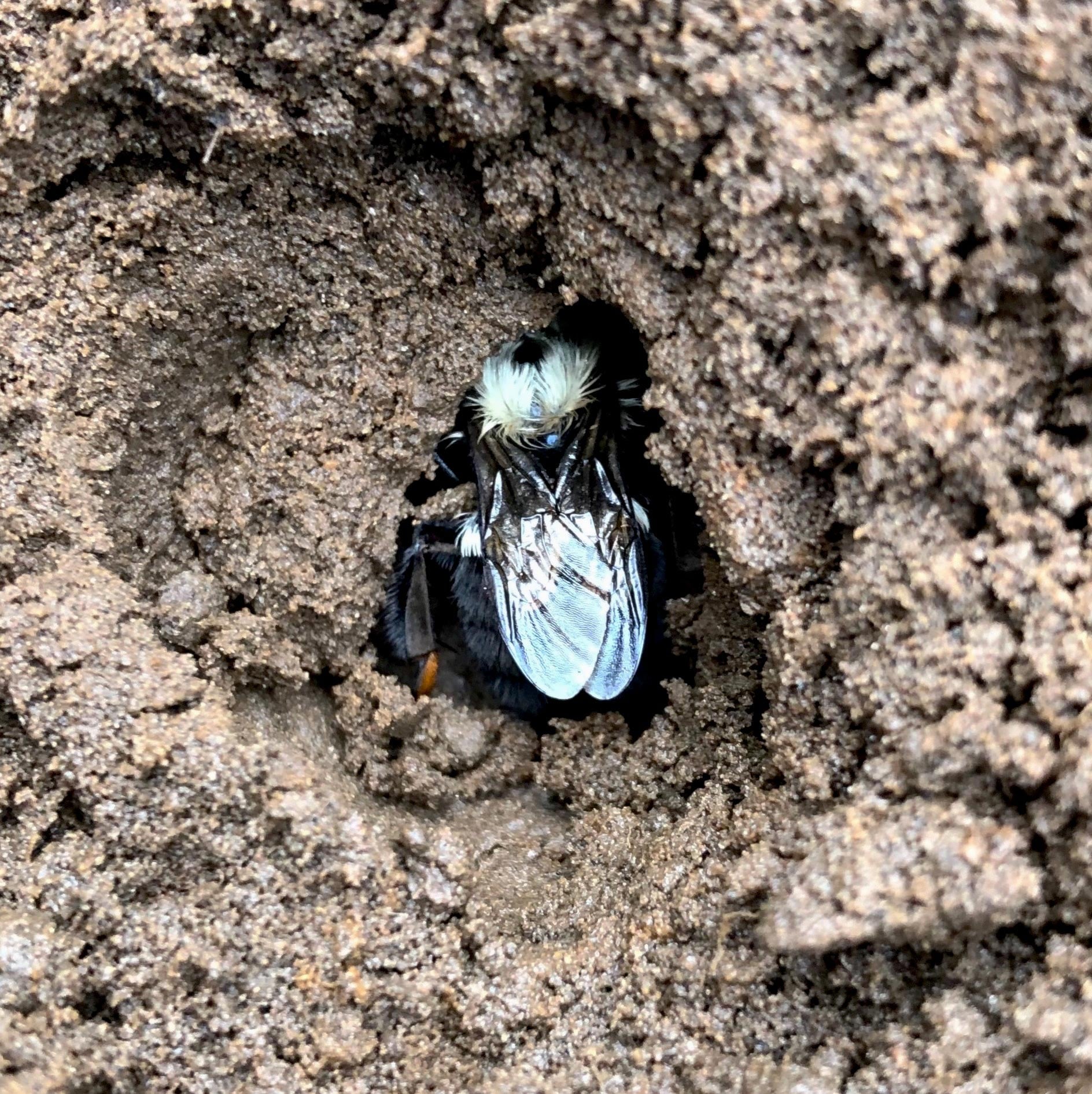
Researchers discovered that bumblebee queens prefer hibernating in pesticide-contaminated soil, a surprising behavior that could endanger their colonies.
This preference, shown in controlled experiments, suggests that pesticides might alter soil properties or that queens develop a liking for these environments, though the exact reasons are unclear.
Bumblebee Hibernation and Pesticide Exposure
An “alarming” discovery by researchers at the University of Guelph has raised concerns about the health, survival, and reproduction of bumblebees.
Environmental scientists Drs. Nigel Raine and Sabrina Rondeau found that bumblebee queens are more likely to hibernate in pesticide-contaminated soil rather than clean soil—a behavior they still don’t fully understand.
“Some bee behaviors are not well understood, and we wanted to see if these bumblebee queens exhibited avoidance behavior that might reduce their risk of harm from pesticide exposure in the field,” Raine explains. “But these results were alarming.”

Unexpected Findings in Field Experiments
In their field experiments, the team allowed newly emerged queens of the common eastern bumblebee (Bombus impatiens) to fly freely in outdoor enclosures. After mating, the queens could choose where to hibernate for the winter: in clean soil or soil contaminated with common pesticides.
The choice was between clean soil or soil contaminated with one of five common pesticides, including insecticides and fungicides, across different concentrations.
The School of Environmental Sciences researchers then carefully searched through the soils for hibernating bumblebee queens. They found queens avoided the pesticide-free soil and, in fact, were about twice as likely to be drawn to the pesticide-contaminated soil.

Implications for Bumblebee Colonies
Most bees in the study survived, but other consequences for the colony are highlighted in the study, recently published in Science of the Total Environment.
The findings surprised both Raine and Rondeau, who is now a post-doctoral researcher at the University of Ottawa. The study was part of Rondeau’s PhD research in U of G’s Ontario Agricultural College.
“This raises serious concerns for bumblebee health,” says Raine, “especially as this group of important insect pollinators already face many challenges.”

Bumblebee queens typically hibernate underground during winter before emerging in spring to start new colonies. Researchers wanted to investigate how bees respond to contaminants at this key but vulnerable life stage.
Previous studies showed that pesticides on crops can either attract or repel bees, depending on the type, the environmental situation and the concentration used. Raine and Rondeau initially speculated that bumblebee queens would simply choose to avoid pesticide residues in soil.
“We were not expecting this result,” Rondeau says. “It suggests that queens could actually prefer these contaminated soils, though we don’t yet fully understand why.”
Theories on Pesticide Attraction
One possible explanation is that pesticides altered the soil properties and made it more appealing to the queens.
For example, the fungicides used in the study could have killed soil fungi and nematodes, and queens might avoid soils with fungi because they can be harmful during hibernation.
Another possibility is that the queens could have developed an “acquired taste” for pesticides, as researchers put it, due to prior exposure in their environment.
They might also be looking for something new, as novelty-seeking behavior is common for bees and often leads the colony to discover new resources.
More research is needed to fully understand the mechanisms behind this unexpected queen behavior. However, the findings suggest the need to reconsider how pesticides are used and managed in agricultural settings.

Call for Enhanced Environmental Risk Assessments
Exposure to pesticides is contributing to a worldwide decline of insects.
In addition to sometimes being fatal, exposure to pesticides can impair bees’ movements and their ability to collect and feed on nectar and pollen. These effects could have dire consequences for our global food system.
Questions remain about whether bumblebee queens would be attracted to contaminated soil in wider spaces than those used in the experiments, where real-world scents and field characteristics might mask the presence of pesticides. Further research is also needed to determine if these findings apply to other bee species.
Current pesticide risk assessments do not take into account soil as a key route of exposure for bees. The study calls for improvement to such assessments so that they consider this newly discovered behavior.
“As we move forward, it’s crucial to investigate how agricultural practices – like the types of pesticides used, the methods of application, and the management of vegetation – impact the accumulation of pesticide residues in soils where queens are likely to hibernate,” Rondeau says.
“By better understanding how pesticide residues accumulate in soils and how they affect bees, we can find ways to protect these essential pollinators.”
Reference: “Bumblebee (Bombus impatiens) queens prefer pesticide-contaminated soils when selecting underground hibernation sites” by Sabrina Rondeau and Nigel E. Raine, 25 September 2024, Science of The Total Environment.
DOI: 10.1016/j.scitotenv.2024.176534
This work was supported by the Ontario Ministry of Environment and Climate Change (MOECC) Best in Science grant, Natural Sciences and Engineering Research Council (NSERC), and the Food from Thought: Agricultural Systems for a Healthy Planet Initiative, by the Canada First Research Excellence Fund.
Rondeau was supported by graduate scholarships from The Arrell Food Institute, the Fonds de recherche du Québec – Nature et technologies (FRQNT) and the Ontario Agricultural College (OAC). Raine is supported as the Rebanks Family Chair in Pollinator Conservation by the Weston Family Foundation.
Never miss a breakthrough: Join the SciTechDaily newsletter.
Follow us on Google and Google News.
1 Comment
Just a guess, but say the bees have been around contaminated soil long enough to begin adapting. Perhaps the queen knows the soil is toxic and avoids ingestion or prolonged contact while using that same toxicity to ward off potential threats and predators?
That or the flavor/feeling of bee-ing around those chemicals tricks the bee in a bad way, like a kid huffing paint fumes.