
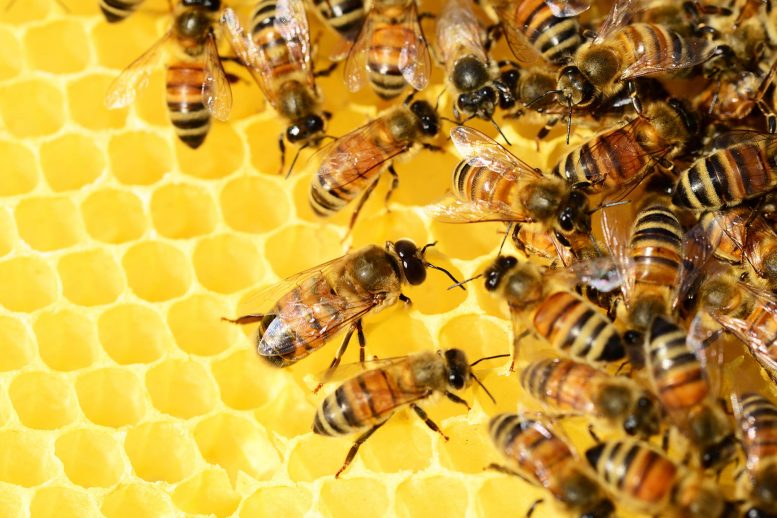
Colony losses and lower honey production in recent decades could be explained by a drop in longevity for lab-kept honey bees.
The lifespan for individual honey bees kept in a controlled, laboratory environment is 50% shorter than it was in the 1970s according to a new study by University of Maryland entomologists. When scientists modeled the effect of today’s shorter lifespans, the results corresponded with the reduced honey production trends and increased colony loss seen by U.S. beekeepers in recent decades.
Bee colonies naturally age and die off, making colony turnover an accepted factor in the beekeeping business. However, U.S. beekeepers have reported high loss rates over the past decade, which has meant having to replace more colonies to keep operations viable. In an effort to understand why, researchers have focused on pesticide exposure, environmental stressors, parasites, diseases, and nutrition.
Evidence Suggests Possible Genetic Factors
This is the first study to show an overall decline in honey bee lifespan potentially independent of environmental stressors, hinting that genetics may be influencing the broader trends seen in the beekeeping industry. The study will be published today (November 14, 2022) in the journal Scientific Reports.
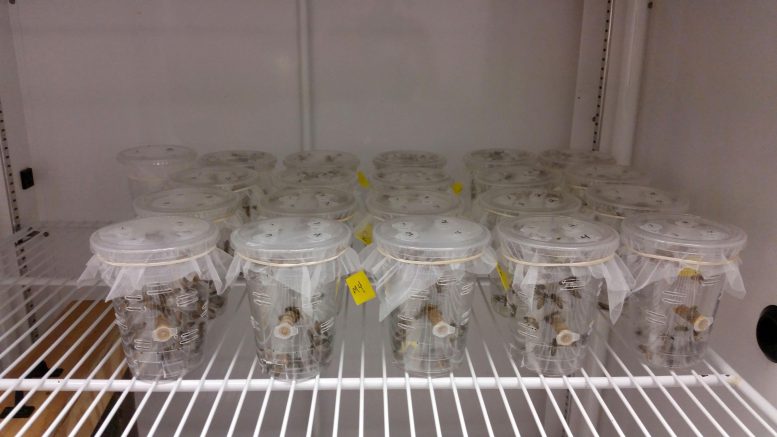
“We’re isolating bees from the colony life just before they emerge as adults, so whatever is reducing their lifespan is happening before that point,” said Anthony Nearman, a Ph.D. student in the Department of Entomology and lead author of the study. “This introduces the idea of a genetic component. If this hypothesis is right, it also points to a possible solution. If we can isolate some genetic factors, then maybe we can breed for longer-lived honey bees.”
Nearman first noticed the decline in lifespan while conducting a study with entomology associate professor Dennis van Engelsdorp on standardized protocols for rearing adult bees in the laboratory. Replicating earlier studies, the researchers collected bee pupae from honey bee hives when the pupae were within 24 hours of emerging from the wax cells they are reared in. The collected bees finished growing in an incubator and were then kept as adults in special cages.
Nearman was evaluating the effect of supplementing the caged bees’ sugar water diet with plain water to better mimic natural conditions when he noticed that, regardless of diet, the median lifespan of his caged bees was half that of caged bees in similar experiments in the 1970s. (17.7 days today versus 34.3 days in the 1970s.) This prompted a deeper review of published laboratory studies over the past 50 years.
“When I plotted the lifespans over time, I realized, wow, there’s actually this huge time effect going on,” Nearman said. “Standardized protocols for rearing honey bees in the lab weren’t really formalized until the 2000s, so you would think that lifespans would be longer or unchanged, because we’re getting better at this, right? Instead, we saw a doubling of mortality rate.”
Real-World Impact on Beekeeping
Although a laboratory environment is very different from a colony, historical records of lab-kept bees suggest a similar lifespan to colony bees, and scientists generally assume that isolated factors that reduce lifespan in one environment will also reduce it in another. Previous studies had also shown that in the real world, shorter honey bee lifespans corresponded to less foraging time and lower honey production. This is the first study to connect those factors to colony turnover rates.
When the team modeled the effect of a 50% reduction in lifespan on a beekeeping operation, where lost colonies are replaced annually, the resulting loss rates were around 33%. This is very similar to the average overwinter and annual loss rates of 30% and 40% reported by beekeepers over the past 14 years.
Nearman and vanEngelsdorp noted that their lab-kept bees could be experiencing some sort of low-level viral contamination or pesticide exposure during their larval stage, when they’re brooding in the hive and worker bees are feeding them. But the bees have not shown overt symptoms of those exposures and a genetic component to longevity has been shown in other insects such as fruit flies.
The next steps for the researchers will be to compare trends in honey bee lifespans across the U.S. and in other countries. If they find differences in longevity, they can isolate and compare potential contributing factors such as genetics, pesticide use, and the presence of viruses in the local bee stocks.
Reference: “Water Provisioning Increases Caged Worker bee Lifespan and Caged Worker bees Living Half as Long as Observed 50 Years Ago” by Anthony Nearman and Dennis vanEngelsdorp, 14 November 2022, Scientific Reports.
DOI: 10.1038/s41598-022-21401-2
Never miss a breakthrough: Join the SciTechDaily newsletter.
Follow us on Google and Google News.
5 Comments
I would suggest that the environment of lab bees discounts the effects of a natural hive on longevity. The group dynamics in hives is much different, i.e. physical activity, long flights, infrared light effects, etc.
Depends on the queen’s upbringing is she being fed well during her larval stage. What pollen is collected, does it have contamination.
Lack of flowers and timeing late frost or early plus pesticide spraying takes a toll on health of population of bee hives it’s to bad
Hogwash! Bees are dying because of a lack of nectar because God forbid we have a field of dandelions! Dear Merciful God in heaven no spray poisons all over your yard killing everything and then run off to college where they teach you how to study “genetic components” to bees dying off. Hello it’s the pesticides & lack of nectar! DUH
It’s auto Pollution & human overpopulation. We can’t sustain 8 billion people. We’ll need more hybrid cars. Lower emissions, less people, higher gas mileage.