
Close Menu
    Facebook X (Twitter) Instagram
    SciTechDaily
    • Biology
    • Chemistry
    • Earth
    • Health
    • Physics
    • Science
    • Space
    • Technology
    Facebook X (Twitter) Pinterest YouTube RSS
    SciTechDaily
    Home»Biology»Triple Surprise: Researchers Discover New Native Species of Mouse in Australia
    Biology

    Triple Surprise: Researchers Discover New Native Species of Mouse in Australia

    By Australian National UniversityMarch 3, 2024No Comments3 Mins Read
    Facebook Twitter Pinterest Telegram LinkedIn WhatsApp Email Reddit
    Share
    Facebook Twitter LinkedIn Pinterest Telegram Email Reddit
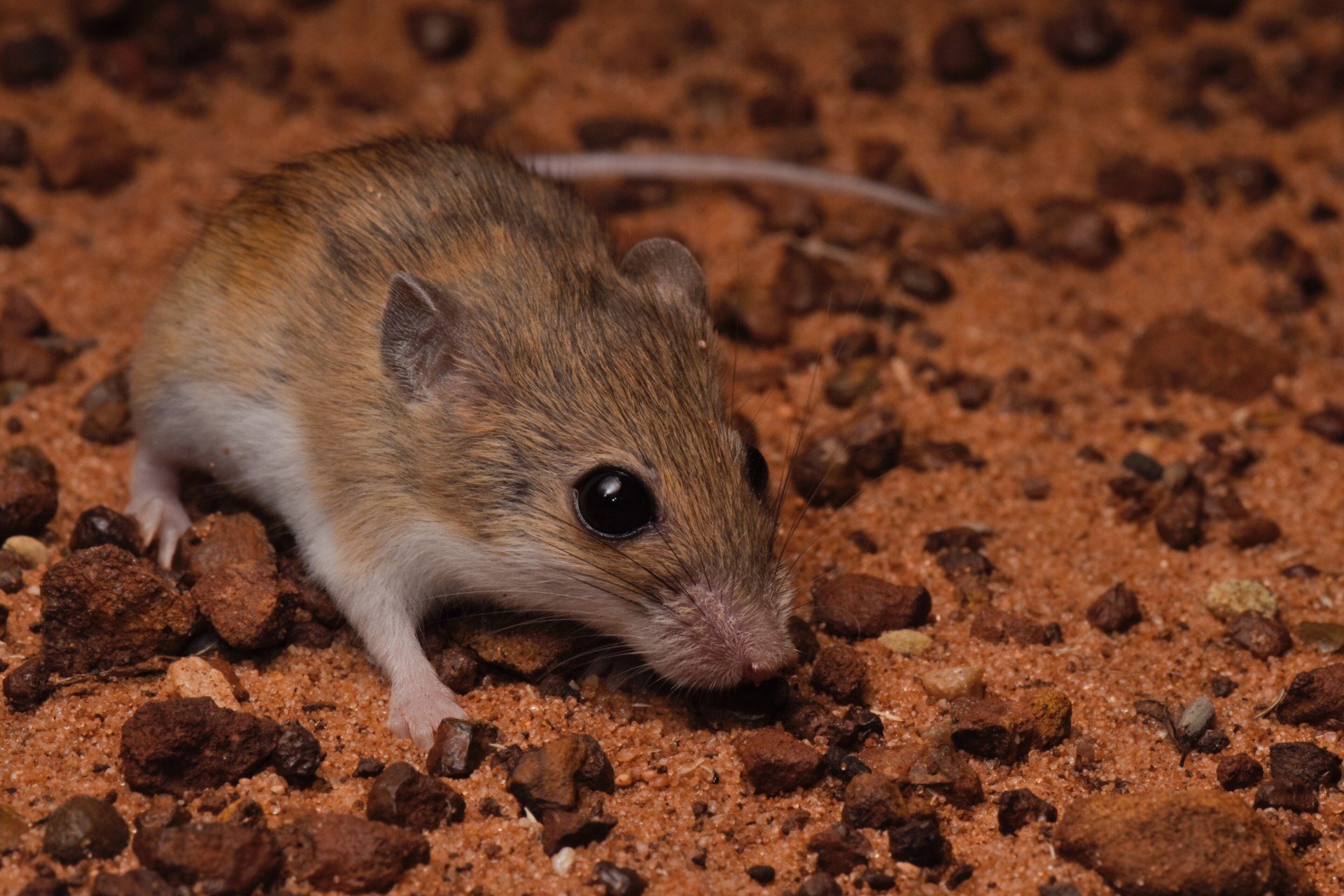
    Pseudomys pilbarensis
    Two new species of the delicate mouse have been discovered in Australia, thanks to genetic research by ANU and CSIRO, underscoring the need for specific conservation efforts and highlighting the species’ unique ecological role. Above is a picture of Pseudomys pilbarensis. Credit: Ian Bool

    Australia can lay claim to two new species of native rodent thanks to a study from The Australian National University (ANU).

    The aptly named delicate mouse was previously thought to be a single species spanning a massive stretch of the country from the Pilbara in Western Australia, across parts of the Northern Territory, and through Queensland down to the New South Wales border.

    But researchers at ANU and CSIRO thought there might be more to the story.

    Lead author Dr Emily Roycroft, from ANU, said we now know there are actually three distinct species.

    “Thanks to new genetic technology, we’ve confirmed the delicate mouse is three species, not one. Identifying undescribed species and giving them official names goes a long way to making sure they’re properly looked after.”

    Dr Roycroft said while it might be difficult for the untrained eye to tell the species apart, the discovery is significant for the future of the tiny mouse.

    Conservation Implications

    “The two new species haven’t had any conservation or research attention, because we didn’t know they were there,” Dr Roycroft said. “We don’t know, for example, if population declines have gone undetected as a result of all three species being assessed as a single unit. The delicate mouse has not been a conservation priority — but that’s because it was thought to have a distribution three times larger than it actually does. This will allow us to reassess.”

    Dr Roycroft said the delicate mouse differs from the mice you might come across in your home or backyard in a few important ways.

    “House mice, black rats, and brown rats are invasive species brought to Australia since European colonization. They’re very different to native rodents, both evolutionary and ecologically. They compete with our native species for resources,” she said. “Delicate mice are part of a group of native rodents that have been evolving in Australia for the last five million years. They’re a crucial part of Australia’s natural environment and ecosystems. Delicate mice are our smallest Australian rodent – they can weigh as little as six grams, so they’re really tiny.”

    The study also found delicate mice are excellent adaptors to their environment, whether that be arid desert or forest.

    The three species will now go by common names that point to their location: the western delicate mouse or Pilbara delicate mouse, eastern delicate mouse, and northern delicate mouse.

    Reference: “Speciation across biomes: Rapid diversification with reproductive isolation in the Australian delicate mice” by Emily Roycroft, Fred Ford, Till Ramm, Rhiannon Schembri, William G. Breed, Phoebe A. Burns, Kevin C. Rowe and Craig Moritz, 22 February 2024, Molecular Ecology.
    DOI: 10.1111/mec.17301

    The study was funded by Bioplatforms Australia.

    Never miss a breakthrough: Join the SciTechDaily newsletter.
    Follow us on Google and Google News.

    Australian National University Ecology New Species
    Share. Facebook Twitter Pinterest LinkedIn Email Reddit

    Related Articles

    Hidden in Plain Sight: Biologists Have Finally Solved “Michener’s Mystery”

    Tiny Terror: World’s Smallest “Fanged” Frogs Found in Indonesia

    “Margarita Snails” – Scientists Discover New Species of Bright Yellow Snail in Florida

    Scientists Discover Five Thousand New Species in the Pacific Ocean – But They Are at Risk

    New Tropical Kelp Forest Discovered in the Galapagos Islands

    “Alien” Species of Predatory Hammerhead Worms Identified in Europe and Africa

    Three New Species of Hand-Standing Spotted Skunks Discovered

    Remarkable New Species of Snake Found Hidden in a Biodiversity Collection – Occupies Its Own Branch on Snake Tree of Life

    Lock Up Your Pet Cat, It’s a Killing Machine

    Leave A Reply Cancel Reply

    • Facebook
    • Twitter
    • Pinterest
    • YouTube

    Don't Miss a Discovery

    Subscribe for the Latest in Science & Tech!

    Trending News

    Why Popular Diabetes Drugs Like Ozempic Don’t Work for Everyone: The “Genetic Glitch”

    Scientists Stunned After Finding Plant Thought Extinct for 60 Years

    Scientists Discover Tiny New Spider That Hunts Prey 6x Its Size

    Natural Component From Licorice Shows Promise for Treating Inflammatory Bowel Disease

    Scientists Warn: Popular Sweetener Linked to Dangerous Metabolic Effects

    Monster Storms on Jupiter Unleash Lightning Beyond Anything on Earth

    Scientists Create “Liquid Gears” That Spin Without Touching

    The Simple Habit That Could Help Prevent Cancer

    Follow SciTechDaily
    • Facebook
    • Twitter
    • YouTube
    • Pinterest
    • Newsletter
    • RSS
    SciTech News
    • Biology News
    • Chemistry News
    • Earth News
    • Health News
    • Physics News
    • Science News
    • Space News
    • Technology News
    Recent Posts
    • Breakthrough Crystal Lets Scientists “Write” Nanoscale Patterns With Light
    • Pomegranate Compound Could Help Protect Against Heart Disease
    • Your Blood Test Might Already Show Alzheimer’s Risk
    • Common Pregnancy Medications Linked to Higher Autism Risk in Massive U.S. Study
    • Scientists Teach AI To Think Like a Professional Chemist
    Copyright © 1998 - 2026 SciTechDaily. All Rights Reserved.
    • Science News
    • About
    • Contact
    • Editorial Board
    • Privacy Policy
    • Terms of Use

    Type above and press Enter to search. Press Esc to cancel.