
Recent research shows that global warming may convert tundras from carbon sinks into sources, intensifying climate change. The study highlights the need for detailed climate models and further investigation into geographic and temporal variations in ecosystem responses.
According to a recent study published in Nature, the rising temperatures are altering the dynamics of tundra ecosystems, causing them to release stored carbon. This transformation could turn tundras from carbon absorbers into carbon emitters, intensifying the impacts of climate change.
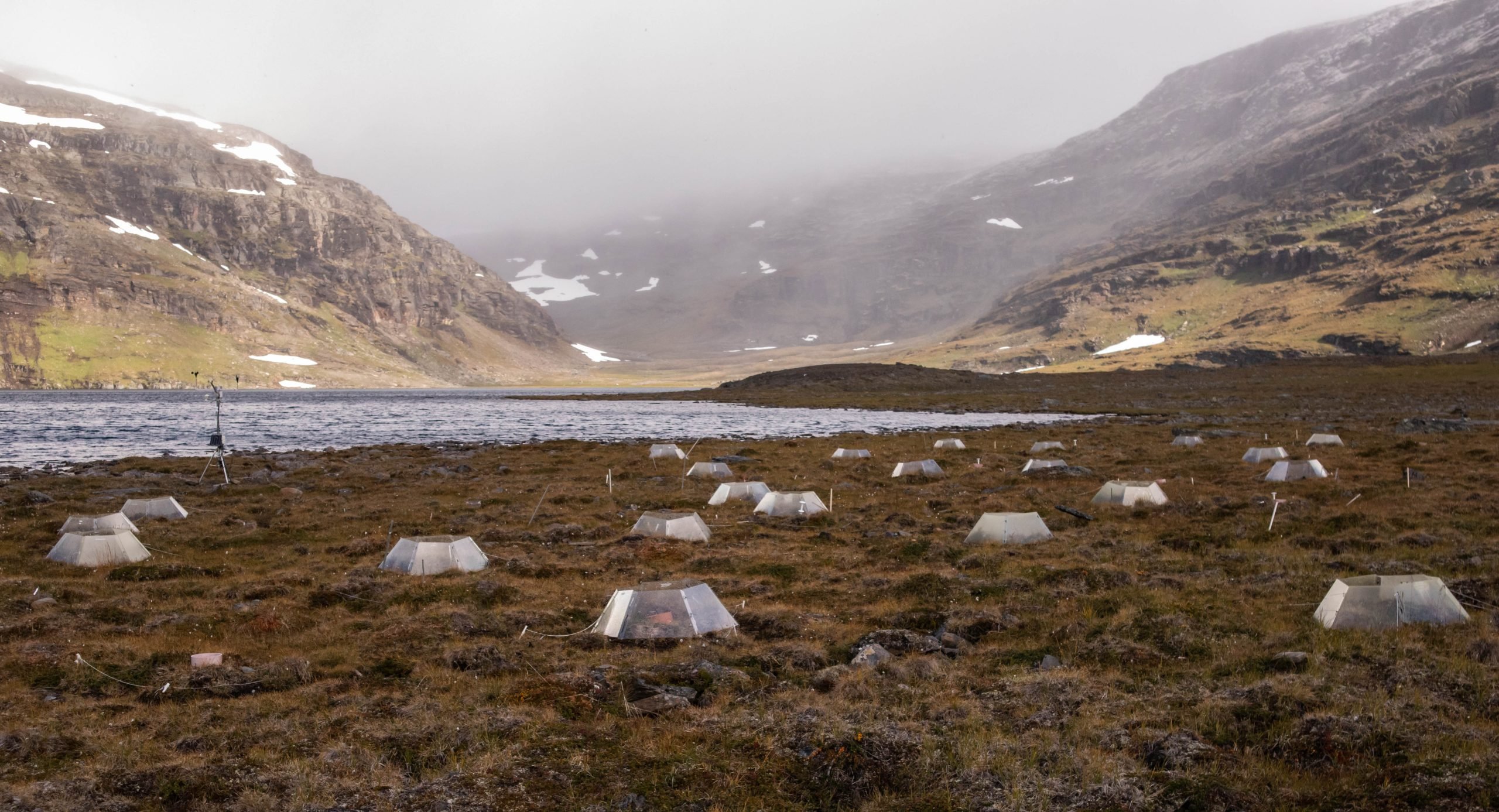
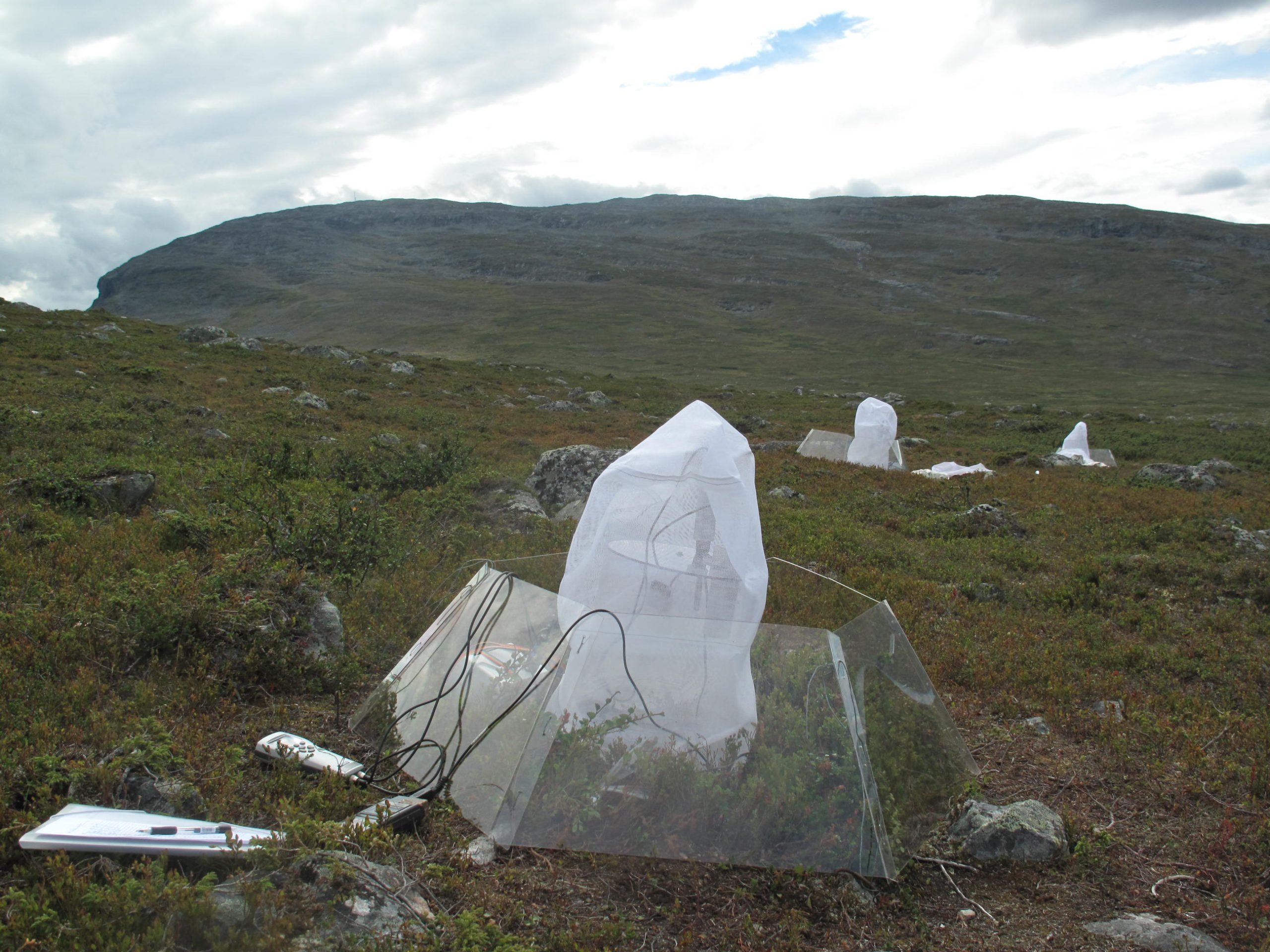
A team of over 70 scientists from different countries used so-called open-top chambers (OTCs) to experimentally simulate the effects of warming on 28 tundra sites around the world. OTCs basically serve as mini-greenhouses, blocking wind and trapping heat to create local warming.
The warming experiments led to a 1.4 degrees Celsius increase in air temperature and a 0.4 degrees increase in soil temperature, along with a 1.6 percent drop in soil moisture. These changes boosted ecosystem respiration by 30 percent during the growing season, causing more carbon to be released because of increased metabolic activity in soil and plants. The changes persisted for at least 25 years after the start of the experimental warming – which earlier studies hadn’t revealed.
“We knew from earlier studies that we were likely to find an increase in respiration with warming, but we found a remarkable increase – nearly four times greater than previously estimated, though it varied with time and location,” says Sybryn Maes of Umeå University, the study’s lead author.
Geographic Variability and Research Implications
The increase in ecosystem respiration also varied with local soil conditions, such as nitrogen and pH levels. This means that differences in soil conditions and other factors lead to geographic differences in the response – some regions will see more carbon release than others. Understanding the links between soil conditions and respiration in response to warming is important for creating better climate models.
“Our work represents the first assessment of ecosystem respiration response to experimental warming across such a broad environmental gradient in the tundra, incorporating a comprehensive set of environmental drivers,” says Associate Professor Ellen Dorrepaal of Umeå University.
The study also offers a broader perspective on Arctic and alpine regions by predicting increases in respiration across the whole tundra area together with more detailed information about variations in the sensitivity of the response.
“We see that some areas, particularly parts of Siberia and Canada, exhibit greater sensitivity to warming,” says Professor Matti Kummu of Aalto University. “We anticipate an increase in respiration across the whole Arctic and alpine tundra, but more in situ data, particularly on the local soil conditions, is key to addressing the outstanding uncertainties and refining our predictions.”
Understanding how ecosystems shift in response to climate change and how these changes feed back into the climate is vital to getting an accurate picture of how our world will change. These findings serve as an important baseline for improved climate models, but the researchers plan to refine them further by analyzing how the experimental sites change over time and expand the experiment’s scope to include new sites.
Reference: “Environmental drivers of increased ecosystem respiration in a warming tundra” by S. L. Maes, J. Dietrich, G. Midolo, S. Schwieger, M. Kummu, V. Vandvik, R. Aerts, I. H. J. Althuizen, C. Biasi, R. G. Björk, H. Böhner, M. Carbognani, G. Chiari, C. T. Christiansen, K. E. Clemmensen, E. J. Cooper, J. H. C. Cornelissen, B. Elberling, P. Faubert, N. Fetcher, T. G. W. Forte, J. Gaudard, K. Gavazov, Z. Guan, J. Guðmundsson, R. Gya, S. Hallin, B. B. Hansen, S. V. Haugum, J.-S. He, C. Hicks Pries, M. J. Hovenden, M. Jalava, I. S. Jónsdóttir, J. Juhanson, J. Y. Jung, E. Kaarlejärvi, M. J. Kwon, R. E. Lamprecht, M. Le Moullec, H. Lee, M. E. Marushchak, A. Michelsen, T. M. Munir, E. M. Myrsky, C. S. Nielsen, M. Nyberg, J. Olofsson, H. Óskarsson, T. C. Parker, E. P. Pedersen, M. Petit Bon, A. Petraglia, K. Raundrup, N. M. R. Ravn, R. Rinnan, H. Rodenhizer, I. Ryde, N. M. Schmidt, E. A. G. Schuur, S. Sjögersten, S. Stark, M. Strack, J. Tang, A. Tolvanen, J. P. Töpper, M. K. Väisänen, R. S. P. van Logtestijn, C. Voigt, J. Walz, J. T. Weedon, Y. Yang, H. Ylänne, M. P. Björkman, J. M. Sarneel and E. Dorrepaal, 17 April 2024, Nature.
DOI: 10.1038/s41586-024-07274-7
Never miss a breakthrough: Join the SciTechDaily newsletter.
Follow us on Google and Google News.