
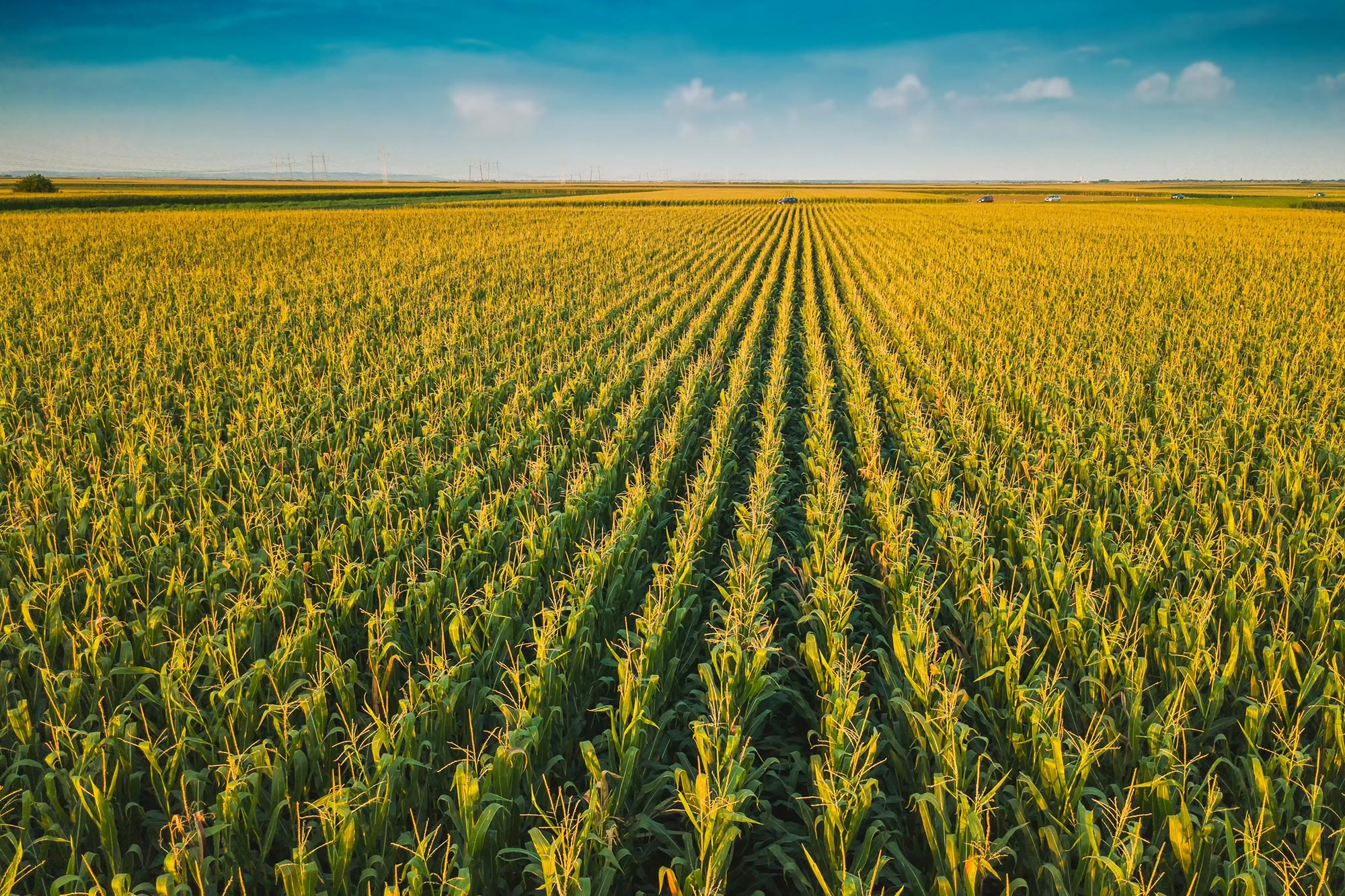
Intensive farming practices and the use of shallow groundwater influence precipitation patterns.
Land use changes and extensive irrigation in the U.S. Corn Belt, coupled with the influence of shallow groundwater in the region, have substantially reshaped local precipitation patterns, according to new research.
The study, published in the Proceedings of the National Academy of Sciences, examines “precipitation recycling”—a process where moisture from plants, soil, lakes, and other landscape features is released into the atmosphere and returns as rainfall in the same area.
Using advanced computer models, researchers found that the interaction between agricultural practices and shallow groundwater increases the precipitation recycling ratio by nearly 30%, significantly enhancing rainfall during the growing season.
Seasonal and Annual Variations in Precipitation Recycling
The role of precipitation recycling varies from month to month and year to year, the research found. It peaks in summer months with the maturing of the corn crop, and in dry years when little moisture arrives from other regions.
“This research shows how agricultural practices can modify regional climate, with implications for food and water security,” said lead author Zhe Zhang, a scientist with the U.S. National Science Foundation National Center for Atmospheric Research (NSF NCAR). “In an agricultural region like the U.S. Corn Belt where rainfall is critical, it’s important for both farmers and water resource managers to understand where the rain comes from.”
Learning more about the extent of precipitation recycling can help improve future rainfall predictions for the Corn Belt and provide more information for planting strategies and water resource allocations.
The study was co-authored by other scientists at NSF NCAR, as well as scientists at the Hong Kong University of Science and Technology and the University of Santiago de Compostela in Spain. It was funded by NSF.
Altered land surface
The U.S. Corn Belt spans a dozen states in the Midwest and Great Plains, ranging from Ohio in the east to Nebraska in the west. The land surface, which had been a mix of tallgrass prairie and woodlands prior to European settlement, is now characterized by croplands with extensive irrigation.
Previous research has shown that the region has become increasingly humid, with more rainfall. But Zhang and his colleagues wanted to quantify the impact of precipitation recycling.
Taking advantage of advanced computer modeling techniques, the scientists turned to the NSF NCAR–based Weather Research and Forecasting (WRF) model, which can simulate the atmosphere at a very high resolution of four kilometers (about 2.5 miles). They also used another NSF NCAR–based computer model, known as Noah-MP, which allows specific analysis of the interactive system of groundwater, crop growth, and irrigation. They applied a physically realistic algorithm to trace the movement of water vapor in the simulations.
To tease out the roles of agriculture and the shallow groundwater that’s a natural feature in the region, the scientists compared simulations that included crops, irrigation, and groundwater with other simulations that lacked one or more of those factors. They ran the models at the NSF NCAR–Wyoming Supercomputing Center.
The results showed the precipitation recycling ratio — or fraction of precipitation that fell as a result of local processes — reached 18% because of the combination of shallow groundwater that fed moisture to the surface, leafy corn plants that released moisture to the atmosphere, and evaporation from irrigation systems. Without such factors, the modeling showed the precipitation recycling ratio would be just 14%, or about 29% less.
The scientists focused their simulations on three years: 2010 (which was unusually wet), 2011 (average precipitation), and 2012 (a dry year). They found that the fraction of recycled precipitation was highest in 2012, when less moisture arrived from other regions such as the Gulf of Mexico.
“We were able to truly distinguish how different processes contribute to changes in precipitation,” Zhang said. “Since agriculture relies on rainfall, this understanding can inform agricultural management as well as lead to better understanding of freshwater availability.”
He and his collaborators are planning subsequent research to look into how the changing precipitation can affect agricultural productivity.
Reference: “US Corn Belt enhances regional precipitation recycling” by Zhe Zhang, Cenlin He, Fei Chen, Gonzalo Miguez-Macho, Changhai Liu and Roy Rasmussen, 30 December 2024, Proceedings of the National Academy of Sciences.
DOI: 10.1073/pnas.2402656121
This material is based upon work supported by the NSF National Center for Atmospheric Research, a major facility sponsored by the U.S. National Science Foundation and managed by the University Corporation for Atmospheric Research.
Never miss a breakthrough: Join the SciTechDaily newsletter.
Follow us on Google and Google News.
4 Comments
I thought that knew all that for at least the last 20 years; there’s a virus that lives on the leaves of sugar cane that acts as a seed for water droplet production, thus altering the climate by increasing rainfall production; too bad that we couldn’t get something of sort going on, on other plants; the East coast is very prone to draughts; how much worse would it be without the corn to West; for as long we or something else has to eat, perhaps, some climate change would serve us well.
Re: “precipitation recycling ratio — or fraction of precipitation that fell as a result of local processes — reached 18% …… Without such factors, the modeling showed the precipitation recycling ratio would be just 14%, or about 29% less..”
29% less? Less than what? This research only compares the precipitation cycle in monoculture corn to what? To no crop at all! This is not a realistic comparison! This research is heavily weighted to promote the continuation of the corn monoculture.
If the fields were reforested and re-prairied, back into the original flora, the “precipitation recylcling ratio” comparison between corn and native flora would favor native flora and DIVERSIFICATION!
14% is 29% less than 18%. There is a worthless statistic if I’ve ever seen one!
More ethanol please?