
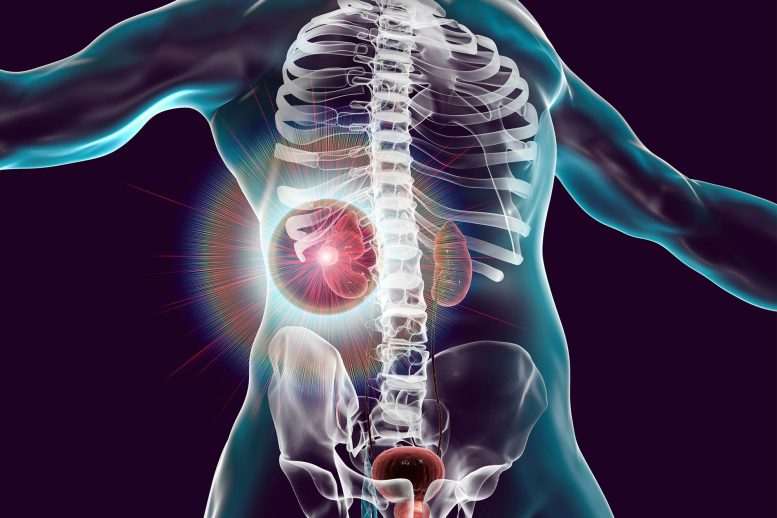
In another step forward for personalized medicine, scientists at University of California, Los Angeles (UCLA) have classified kidney cancer into several unique subtypes that will help tailor individual cancer treatment.
Researchers with UCLA’s Institute of Urologic Oncology and department of urology have classified kidney cancer into several unique subtypes, a breakthrough that will help physicians tailor treatment to individual kidney cancer patients, moving cancer care one step closer to personalized medicine.
Their findings are the result of 10 years of UCLA research on kidney cancers at the genetic and molecular levels, with scientists conducting chromosomal analyses in an effort to identify what mutations may be causing and affecting the behavior of the malignancies. Thousands of tumors removed at UCLA have been studied, said Dr. Allan Pantuck, a professor of urology and director of genitourinary oncology at UCLA’s Jonsson Comprehensive Cancer Center.
Traditionally, pathologists study tumors under the microscope and attempt to predict their behavior by the way they look. However, tumors that appear the same often behave differently, and oncologists need to know which are lower risk, which are more aggressive, and which are more likely to spread, making the cancer much more difficult to treat.
“Pathologists can give us some important information, but similar-appearing tumors often can and do behave differently,” said Pantuck, the senior author of the study. “Our findings have us heading further in the direction of personalized medicine based on the molecular signature of an individual’s tumor. We still have a lot to learn, but we’re now a step closer.”
The study appears on April 16 in the early online edition of Cancer, a peer-reviewed journal of the American Cancer Society.
The study findings were made in a type of kidney cancer called clear cell renal carcinoma. The researchers identified two new subtypes of this cancer: one in which there is the deletion of the short arm of chromosome 3 (known as 3p) and one in which both the short arm of chromosome 3 and the long arm of chromosome 14 (known as 14q) are deleted.
This is significant because the short arm 3p harbors a tumor-suppressor gene. In the case of 14q, its deletion results in the additional loss of a hypoxia-inducible factor 1 (HIF1) alpha gene, which lessens the effects of hypoxia, the state of low oxygen concentration, on the cell; tumors need oxygen so they can grow and spread.
The researchers found that the loss of 3p was associated with improved survival, meaning patients with this subtype of cancer might not need to be treated as aggressively as those with tumors that still have 3p. In elderly patients with this subtype, tumors could perhaps be monitored aggressively for evidence of progression in lieu of immediate treatment, the researchers said. The study authors are not yet sure why the loss of the tumor-suppressor gene associated with 3p does not correlate with worse outcomes.
Patients with tumors in which both 3p and 14q were deleted had much worse outcomes.
“The results of this study support the hypothesis that the HIF1 alpha gene functions as another important tumor-suppressor gene,” Pantuck said. “With this finding, we can now decide to treat these patients with more aggressive therapies.”
Going forward, Pantuck and his team will work to identify more subtypes of kidney cancer. The findings of this study come from a single center, so they will also need to be reproduced by other scientists in other locations, he said.
This year alone, kidney cancer will strike more than 65,000 Americans, killing more than 13,000. Finding new and more effective therapies is vital to reducing the number of deaths.
Dr. Arie Belldegrun, director of UCLA’s Institute of Urologic Oncology, characterized the finding as significant.
“Kidney cancer is not a single disease, and it can now be further subdivided based on a clearly defined molecular profile. These researchers have identified unique molecular patterns in patients with various stages of the disease,” he said. “These findings have important implications to the surgical and medical treatment of kidney cancer. It is one important step to individualize kidney cancer therapy and move away from the ‘one size fits all’ approach.”
Reference: “Deletions of chromosomes 3p and 14q molecularly subclassify clear cell renal cell carcinoma” by Nils Kroeger MD, Tobias Klatte MD, Karim Chamie MD, P. Nagesh Rao PhD, Frédéric D. Birkhäuser MD, Geoffrey A. Sonn MD, Joseph Riss PhD, Fairooz F. Kabbinavar MD, Arie S. Belldegrun MD and Allan J. Pantuck MD, 18 January 2013, Cancer.
DOI: 10.1002/cncr.27947
Never miss a breakthrough: Join the SciTechDaily newsletter.
Follow us on Google and Google News.