
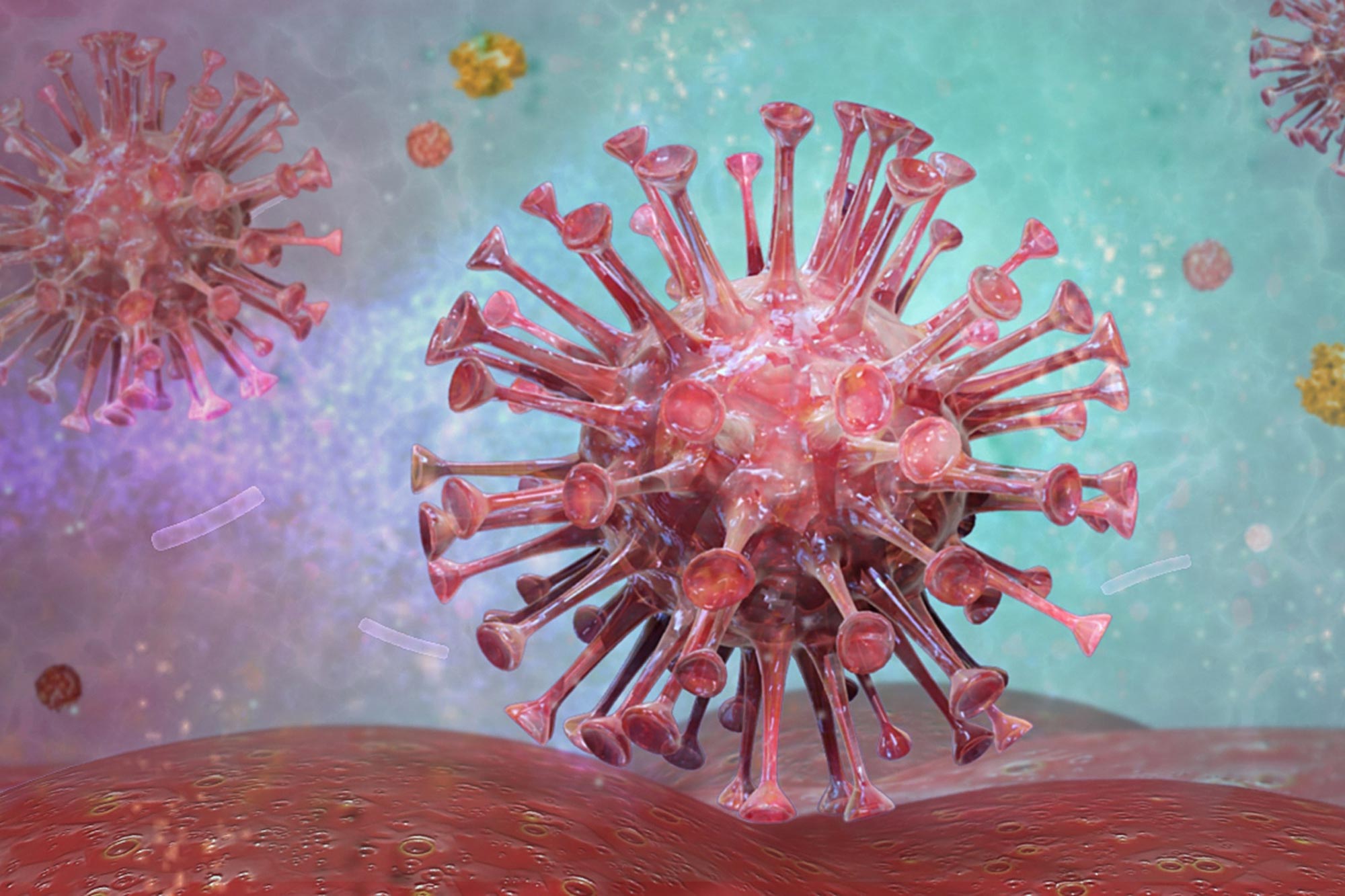
The drug may eliminate the virus from concealed regions in the brain by focusing on infected cells, addressing a significant hurdle in HIV treatment.
According to a new study by Tulane University, an experimental drug initially developed for cancer treatment may help clear HIV from infected cells in the brain.
For the first time, researchers at Tulane National Primate Research Center found that a cancer drug significantly reduced levels of SIV, the nonhuman primate equivalent of HIV, in the brain by targeting and depleting certain immune cells that harbor the virus.
Published in the journal Brain, this discovery marks a significant step toward eliminating HIV from hard-to-reach reservoirs where the virus evades otherwise effective treatment.
“This research is an important step in tackling brain-related issues caused by HIV, which still affect people even when they are on effective HIV medication,” said lead study author Woong-Ki Kim, PhD, associate director for research at Tulane National Primate Research Center. “By specifically targeting the infected cells in the brain, we may be able to clear the virus from these hidden areas, which has been a major challenge in HIV treatment.”
Limitations of Current HIV Treatments
Antiretroviral therapy (ART) is an essential component of successful HIV treatment, maintaining the virus at undetectable levels in the blood and transforming HIV from a terminal illness into a manageable condition. However, ART does not completely eradicate HIV, necessitating lifelong treatment. The virus persists in “viral reservoirs” in the brain, liver, and lymph nodes, where it remains out of reach of ART.
The brain has been a particularly challenging area for treatment due to the blood-brain barrier—a protective membrane that shields it from harmful substances but also blocks treatments, allowing the virus to persist. In addition, cells in the brain known as macrophages are extremely long-lived, making them difficult to eradicate once they become infected.
Infection of macrophages is thought to contribute to neurocognitive dysfunction, experienced by nearly half of those living with HIV. Eradicating the virus from the brain is critical for comprehensive HIV treatment and could significantly improve the quality of life for those with HIV-related neurocognitive problems.
Researchers focused on macrophages, a type of white blood cell that harbors HIV in the brain. By using a small molecule inhibitor to block a receptor that increases in HIV-infected macrophages, the team successfully reduced the viral load in the brain. This approach essentially cleared the virus from brain tissue, providing a potential new treatment avenue for HIV.
Potential of BLZ945 in HIV Treatment
The small molecule inhibitor used, BLZ945, has previously been studied for therapeutic use in amyotrophic lateral sclerosis (ALS) and brain cancer, but never before in the context of clearing HIV from the brain.
The study, which took place at the Tulane National Primate Research Center, utilized three groups to model human HIV infection and treatment: an untreated control group, and two groups treated with either a low or high dose of the small molecule inhibitor for 30 days. The high-dose treatment led to a notable reduction in cells expressing HIV receptor sites, as well as a 95-99% decrease in viral DNA loads in the brain.
In addition to reducing viral loads, the treatment did not significantly impact microglia, the brain’s resident immune cells, which are essential for maintaining a healthy neuroimmune environment. It also did not show signs of liver toxicity at the doses tested.
The next step for the research team is to test this therapy in conjunction with ART to assess its efficacy in a combined treatment approach. This could pave the way for more comprehensive strategies to eradicate HIV from the body entirely.
Reference: “CSF1R inhibition depletes brain macrophages and reduces brain virus burden in SIV-infected macaques” by Diana G Bohannon, Laurent D Zablocki-Thomas, Evan S Leung, Jinbum K Dupont, Julian B Hattler, Jolanta Kowalewska, Miaoyun Zhao, Jiangtao Luo, Marco Salemi, Angela M Amedee, Qingsheng Li, Marcelo J Kuroda and Woong-Ki Kim, 25 July 2024, Brain.
DOI: 10.1093/brain/awae153
This research was funded by the National Institutes of Health, including grants from the National Institute of Mental Health and the National Institute of Neurological Disorders and Stroke, and was supported with resources from the Tulane National Primate Research Center base grant of the National Institutes of Health, P51 OD011104.
Never miss a breakthrough: Join the SciTechDaily newsletter.
Follow us on Google and Google News.