
Close Menu
    Facebook X (Twitter) Instagram
    SciTechDaily
    • Biology
    • Chemistry
    • Earth
    • Health
    • Physics
    • Science
    • Space
    • Technology
    Facebook X (Twitter) Pinterest YouTube RSS
    SciTechDaily
    Home»Health»Unlocking Effective Weight Loss: Investigating the Impact of “Hyper-Palatable” Foods Across Four Diets
    Health

    Unlocking Effective Weight Loss: Investigating the Impact of “Hyper-Palatable” Foods Across Four Diets

    By University of KansasFebruary 19, 2023No Comments4 Mins Read
    Facebook Twitter Pinterest Telegram LinkedIn WhatsApp Email Reddit
    Share
    Facebook Twitter LinkedIn Pinterest Telegram Email Reddit
    Donuts Burgers Junk Food
    By analyzing data from previous studies, researchers sought to identify key meal characteristics that influenced the number of calories consumed. The results showed that three particular characteristics consistently led to higher calorie intake across four different dietary patterns: meal energy density (i.e., calories per gram of food), the presence of “hyper-palatable” foods, and the speed at which the meals were consumed. While the protein content of the meals also had an impact on calorie intake, its effect was found to be more variable.

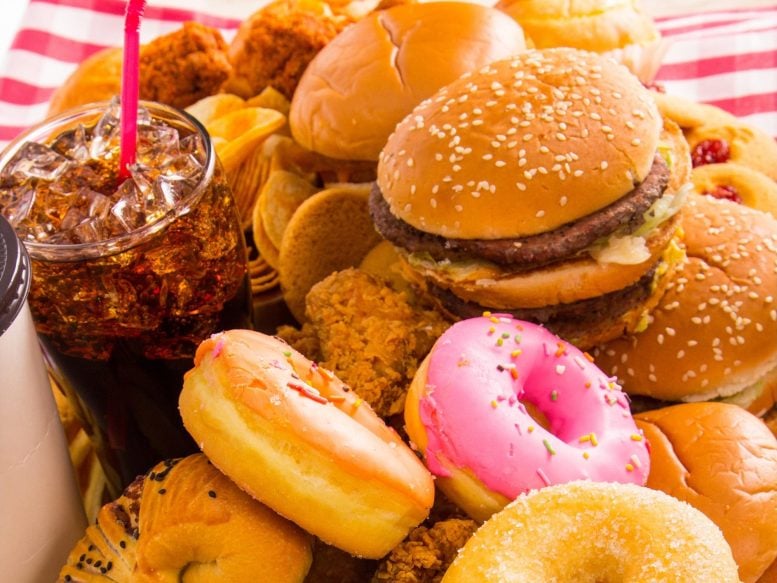
    Hyper-palatable foods, characterized by combinations of fat, sugar, and sodium, drive overeating regardless of diet type. Recognizing and avoiding these foods can aid in reducing calorie intake and managing weight.

    If losing weight was among your 2023 resolutions, findings by researchers from the University of Kansas and the National Institutes of Health (NIH) may provide clearer guidance about the food you put on your plate.

    Using previous study data, researchers sought to determine what characteristics of meals were important for determining how many calories were eaten. They found that three meal characteristics consistently led to increased calorie intake across four different dietary patterns: meal energy density (i.e., calories per gram of food), the amount of “hyper-palatable” foods, and how quickly the meals were eaten. Protein content of the meals also contributed to calorie intake, but its effect was more variable.

    First described by KU scientist Tera Fazzino in 2019, hyper-palatable foods have specific combinations of fat, sugar sodium, and carbohydrates—think of potato chips—that make them artificially rewarding to eat and harder to stop consuming.

    “We wanted to know how hyper-palatable characteristics of foods, in combination with other factors, influenced how many calories a person consumed in a meal,” said Fazzino, who is associate director of the Cofrin Logan Center for Addiction Research and Treatment at the KU Life Span Institute, and assistant professor in the KU Department of Psychology.

    Fazzino, together with researchers from the NIH’s National Institute of Diabetes and Digestive and Kidney Diseases, wrote in the journal Nature Food that hyper-palatability increased the amount of energy consumed across four diet patterns: low-carbohydrate, low-fat, a diet based on unprocessed foods and one based on ultra-processed foods. 

    Diet recommendations for weight management could be informed by understanding how some foods result in people eating fewer calories without making them hungry. People are often advised to avoid energy-dense foods, such as cookies or cheese, that can lead to passive overeating. Instead, foods low in energy density — like spinach, carrots, and apples — are often advised. But foods characterized as hyper-palatable may be less familiar to people, and they may be unknowingly adding them to their plates.

    Raising Awareness About Hyper-Palatable Foods

    While hyper-palatable foods are sometimes also energy dense, the new study suggests that these hyper-palatable foods independently contribute to meal calorie intake. Fazzino said the findings add to a growing body of research that shows that hyper-palatability plays a role in the food choices that people make and in their weight.

    “We hope to get the information about hyper-palatable foods out there for individuals to consider as they make dietary choices, and we hope that scientists continue to examine hyper-palatable characteristics as a potential factor influencing energy intake,” she said.

    Reference: “Ad libitum meal energy intake is positively influenced by energy density, eating rate and hyper-palatable food across four dietary patterns” by Tera L. Fazzino, Amber B. Courville, Juen Guo and Kevin D. Hall, 30 January 2023, Nature Food.
    DOI: 10.1038/s43016-022-00688-4

    Fazzino co-authored the findings in Nature Food with researchers Kevin Hall, Amber Courville and Jen Guo of the Who funds National Institute of Diabetes and Digestive and Kidney Diseases (NIDDK).

    Never miss a breakthrough: Join the SciTechDaily newsletter.
    Follow us on Google and Google News.

    Food Science National Institutes of Health Nutrition Popular University of Kansas
    Share. Facebook Twitter Pinterest LinkedIn Email Reddit

    Related Articles

    Highly Processed Foods Harm Memory in the Aging Brain – But Omega-3 Supplements May Help

    New Nutrient Profiling System: Ranking Healthfulness of Foods From First to Worst

    Small Changes in Diet Could Help You Live Much Healthier and More Sustainably

    Anti-nutrients? They’re Part of a Normal Diet and Not As Scary as They Sound

    Low-Fat, Plant-Based Diet Compared to Low-Carb, Animal-Based Diet in Clinical Trial – Here Are the Results

    Study Finds Eating Mangoes Reduces Women’s Facial Wrinkles

    Can Vitamin D Supplements Prevent COVID-19 or Reduce Symptoms?

    Researchers Warn: Common Food Additive – Banned in France but Allowed in the U.S. – Causes Adverse Health Effects in Mice

    Study Links Diet Soda With Depression in Older Adults

    Leave A Reply Cancel Reply

    • Facebook
    • Twitter
    • Pinterest
    • YouTube

    Don't Miss a Discovery

    Subscribe for the Latest in Science & Tech!

    Trending News

    Your Blood Pressure Reading Could Be Wrong Because of One Simple Mistake

    Astronomers Stunned by Ancient Galaxy With No Spin

    Physicists May Be on the Verge of Discovering “New Physics” at CERN

    Scientists Solve 320-Million-Year Mystery of Reptile Skin Armor

    Scientists Say This Daily Walking Habit May Be the Secret to Keeping Weight Off After Dieting

    New Therapy Rewires the Brain To Restore Joy in Depression Patients

    Giant Squid Detected off Western Australia in Stunning Deep-Sea Discovery

    Popular Sugar-Free Sweetener Linked to Liver Disease, Study Warns

    Follow SciTechDaily
    • Facebook
    • Twitter
    • YouTube
    • Pinterest
    • Newsletter
    • RSS
    SciTech News
    • Biology News
    • Chemistry News
    • Earth News
    • Health News
    • Physics News
    • Science News
    • Space News
    • Technology News
    Recent Posts
    • Hidden Warm Water Beneath Antarctica Could Rapidly Raise Global Sea Levels
    • Scientists Revive Ancient Chemistry Trick To Engineer Next-Generation Glass
    • Scientists Use AI To Supercharge Ultrafast Laser Simulations by More Than 250x
    • Scientists Just Found a Surprising Way To Destroy “Forever Chemicals”
    • Popular Supplement Ingredient Linked to Shorter Lifespan in Men
    Copyright © 1998 - 2026 SciTechDaily. All Rights Reserved.
    • Science News
    • About
    • Contact
    • Editorial Board
    • Privacy Policy
    • Terms of Use

    Type above and press Enter to search. Press Esc to cancel.