
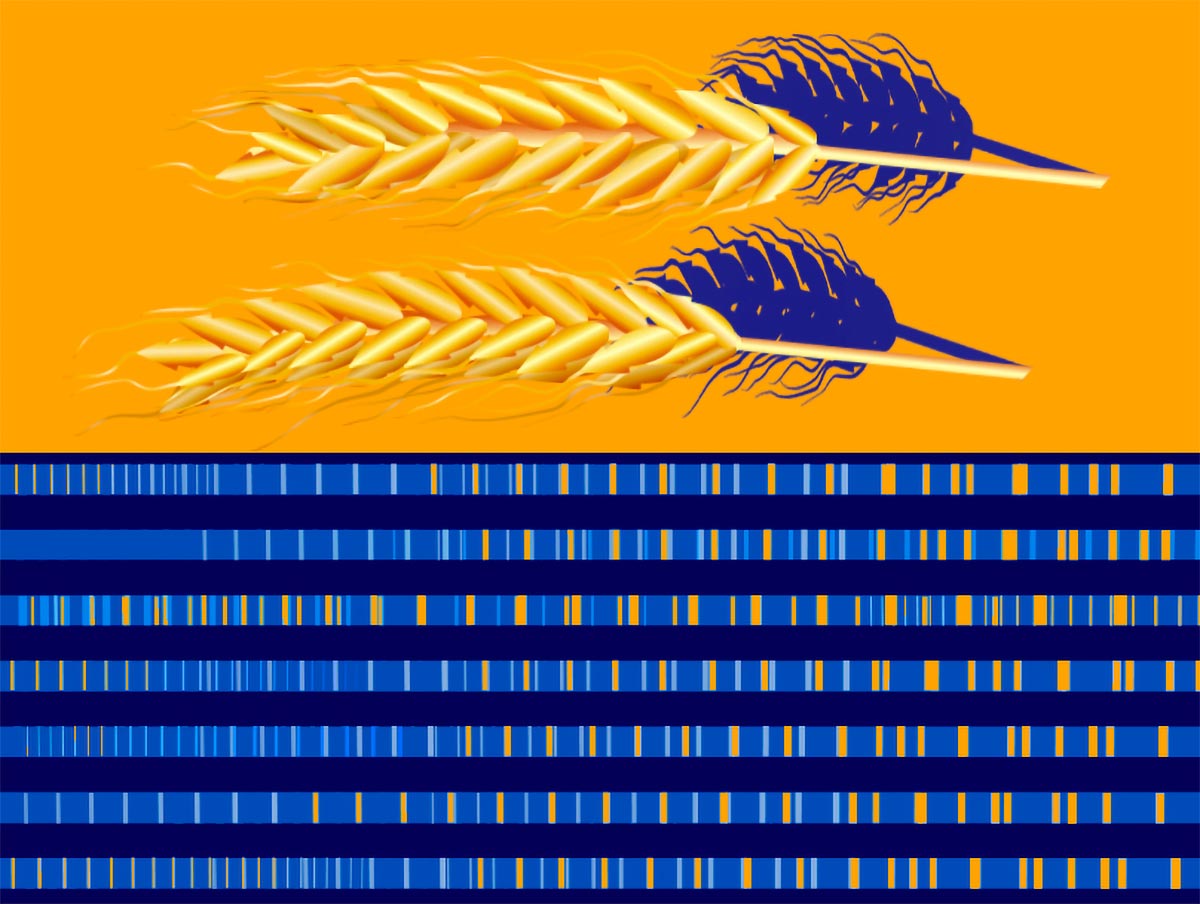
Research indicates that our capacity to process starches, crucial for consuming foods like bread, originated over 800,000 years ago, with early humans having multiple AMY1 gene copies. This genetic adaptation, present even in Neanderthals, has significantly shaped human dietary evolution and metabolic health.
If you find it hard to cut back on carbs, ancient DNA may be the reason.
Scientists have known for some time that humans possess multiple copies of a gene that helps start the breakdown of complex carbohydrates in the mouth, an essential first step in metabolizing starchy foods like bread and pasta. Pinpointing exactly how and when these gene copies increased has been a significant challenge for researchers. A recent study by The University of Buffalo (UB) and The Jackson Laboratory (JAX) reveals that early duplications of this gene paved the way for the genetic diversity we see today, which affects how well humans can digest starchy foods.
The study’s findings, reported today in the October 17 advanced online issue of Science, reveal that the duplication of this gene—known as the salivary amylase gene (AMY1) —may not only have helped shape human adaptation to starchy foods, but may have occurred as far back as more than 800,000 years ago, long before the advent of farming.
“The idea is that the more amylase genes you have, the more amylase you can produce and the more starch you can digest effectively,” said the study’s corresponding author, Omer Gokcumen, PhD, professor in the Department of Biological Sciences, within the UB College of Arts and Sciences. Amylase, the researchers explained, is an enzyme that not only breaks down starch into glucose, but also gives bread its taste.
Breakthroughs in Genetic Mapping
Gokcumen and his colleagues, including co-senior author, Charles Lee, professor and Robert Alvine Family Endowed Chair at JAX, used optical genome mapping and long-read sequencing, a methodological breakthrough crucial to mapping the AMY1 gene region in extraordinary detail. Traditional short-read sequencing methods struggle to accurately distinguish between gene copies in this region due to their near-identical sequence. However, long-read sequencing allowed Gokcumen and Lee to overcome this challenge in present-day humans, providing a clearer picture of how AMY1 duplications evolved.
Ancient Hunter-Gatherers and Neanderthals
Analyzing the genomes of 68 ancient humans, including a 45,000-year-old sample from Siberia, the research team found that pre-agricultural hunter-gatherers already had an average of four to eight AMY1 copies per diploid cell, suggesting that humans were already walking around Eurasia with a wide variety of high AMY1 copy numbers well before they started domesticating plants and eating excess amounts of starch.
The study also found that AMY1 gene duplications occurred in Neanderthals and Denisovans. “This suggests that the AMY1 gene may have first duplicated more than 800,000 years ago, well before humans split from Neanderthals and much further back than previously thought,” said Kwondo Kim, one of the lead authors on this study from the Lee Lab at JAX.
Early Adaptations to Starchy Diets
“The initial duplications in our genomes laid the groundwork for significant variation in the amylase region, allowing humans to adapt to shifting diets as starch consumption rose dramatically with the advent of new technologies and lifestyles,” said Gokcumen.
The initial duplication of AMY1 was like the first ripple in a pond, creating a genetic opportunity that later shaped our species. As humans spread across different environments, the flexibility in the number of AMY1 copies provided an advantage for adapting to new diets, particularly those rich in starch.
“Following the initial duplication, leading to three AMY1 copies in a cell, the amylase locus became unstable and began creating new variations,” said Charikleia Karageorgiou, one of the lead authors of the study at UB. “From three AMY1 copies, you can get all the way up to nine copies, or even go back to one copy per haploid cell.”
The Impact of Agriculture on Genetic Variation
The research also highlights how agriculture impacted AMY1 variation. While early hunter-gatherers had multiple gene copies, European farmers saw a surge in the average number of AMY1 copies over the past 4,000 years, likely due to their starch-rich diets. Gokcumen’s previous research showed that domesticated animals living alongside humans, such as dogs and pigs, also have higher AMY1 copy numbers compared to animals not reliant on starch-heavy diets.
“Individuals with higher AMY1 copy numbers were likely digesting starch more efficiently and having more offspring,” Gokcumen said. “Their lineages ultimately fared better over a long evolutionary timeframe than those with lower copy numbers, propagating the number of the AMY1 copies.”
The findings track with a University of California, Berkeley-led study published last month in Nature, which found that humans in Europe expanded their average number of AMY1 copies from four to seven over the last 12,000 years.
“Given the key role of AMY1 copy number variation in human evolution, this genetic variation presents an exciting opportunity to explore its impact on metabolic health and uncover the mechanisms involved in starch digestion and glucose metabolism,” said Feyza Yilmaz, an associate computational scientist at JAX and a lead author of the study. “Future research could reveal its precise effects and timing selection, providing critical insights into genetics, nutrition, and health.”
Reference: “Reconstruction of the human amylase locus reveals ancient duplications seeding modern-day variation” by Feyza Yılmaz, Charikleia Karageorgiou, Kwondo Kim, Petar Pajic, Kendra Scheer, Human Genome Structural Variation Consortium, Christine R. Beck, Ann-Marie Torregrossa, Charles Lee and Omer Gokcumen, 17 October 2024, Science.
DOI: 10.1126/science.adn0609
The research was a collaboration with the University of Connecticut Health Center and was supported by the National Science Foundation and the National Institutes of Health – National Human Genome Research Institute.
Never miss a breakthrough: Join the SciTechDaily newsletter.
Follow us on Google and Google News.