
Close Menu
    Facebook X (Twitter) Instagram
    SciTechDaily
    • Biology
    • Chemistry
    • Earth
    • Health
    • Physics
    • Science
    • Space
    • Technology
    Facebook X (Twitter) Pinterest YouTube RSS
    SciTechDaily
    Home»Space»Unlocking the Mysteries of Life: Scientists Decode Asteroid Ryugu’s Cometary Organic Matter
    Space

    Unlocking the Mysteries of Life: Scientists Decode Asteroid Ryugu’s Cometary Organic Matter

    By Tohoku UniversityFebruary 20, 2024No Comments4 Mins Read
    Facebook Twitter Pinterest Telegram LinkedIn WhatsApp Email Reddit
    Share
    Facebook Twitter LinkedIn Pinterest Telegram Email Reddit
    Asteroid Close Concept
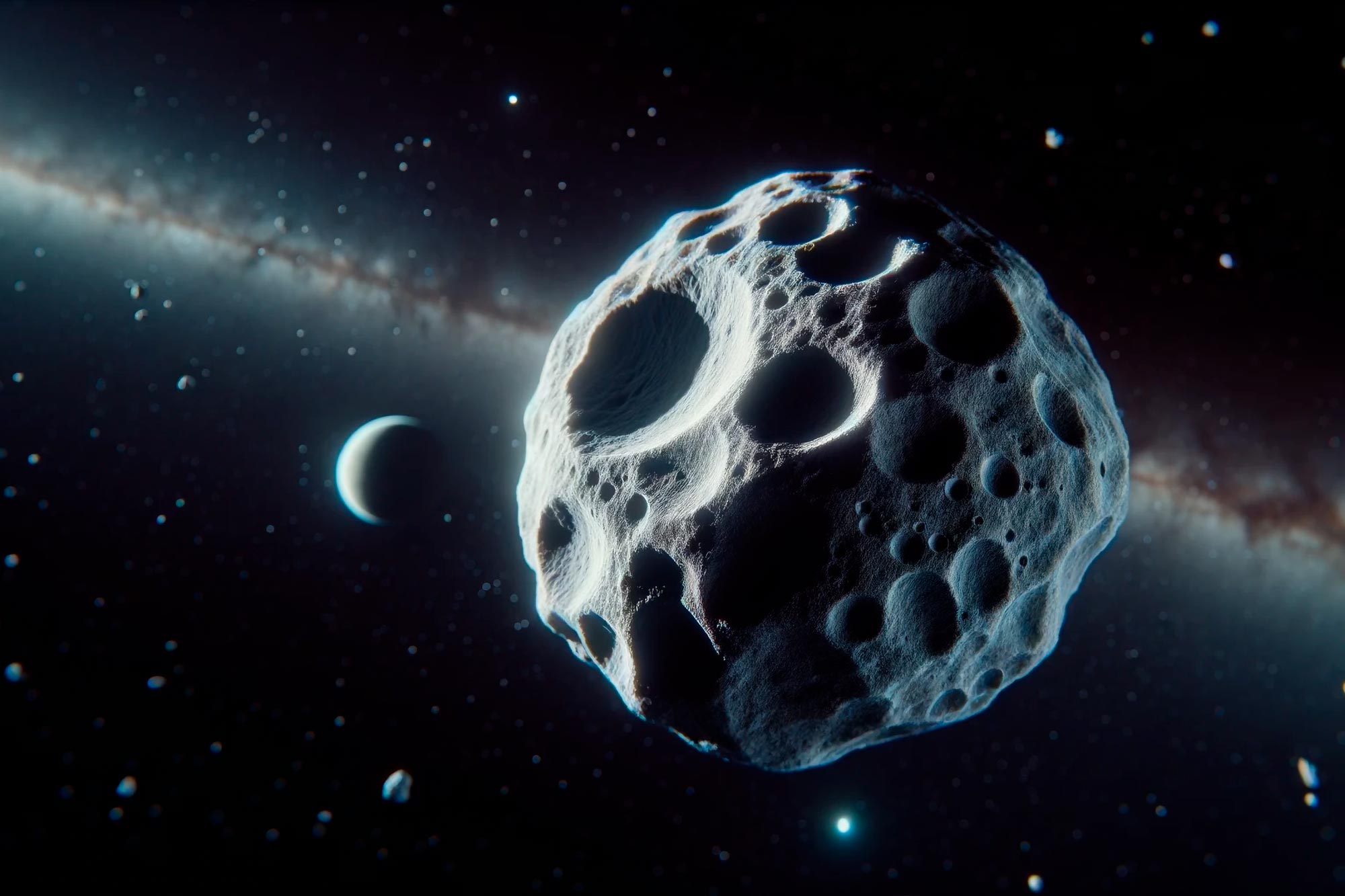
    Recent research on Ryugu asteroid samples shows cometary organic matter was transported to Earth’s vicinity, offering insights into how life’s building blocks might have been delivered from space. (Artist’s concept). Credit: SciTechDaily.com

    Ryugu, a near-Earth asteroid, captured widespread interest following the Japanese Hayabusa2 mission’s successful collection and return of samples to Earth. The retrieved samples have been a rich source of information about the solar system, shedding light on the potential contribution of asteroids in transporting organic molecules to Earth.

    Now, a team of scientists has performed an intensive investigation of Ryugu samples, discovering evidence that points to cometary organic matter being transported from space to the near-Earth region.

    The team included Megumi Matsumoto, an assistant professor from the Earth Science Department at Tohoku University Graduate School of Science. Details of their findings were recently published in the journal Science Advances.
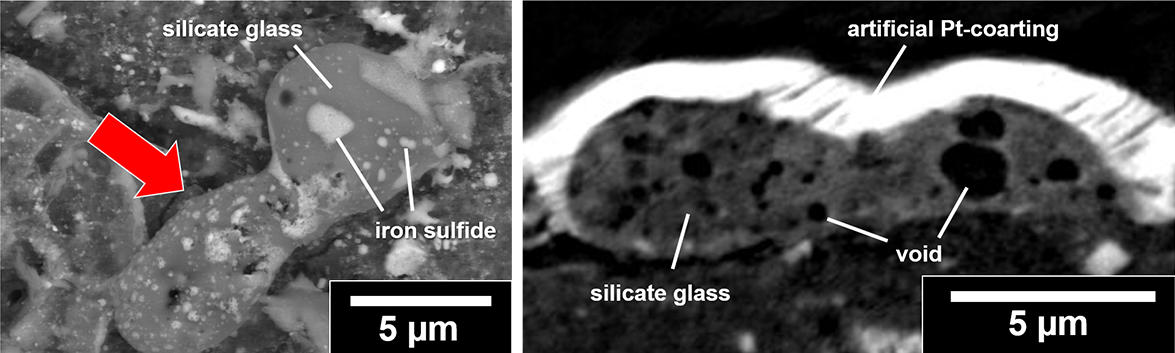
    Melt Splash Discovered on a Ryugu Sample Surface
    (Left) A melt splash discovered on a Ryugu sample surface. The melt splash shows a round shape. (Right) CT slice image of the melt splash exhibiting abundant voids inside. Credit: Megumi Matsumoto et al.

    Asteroid Ryugu has no protective atmosphere, and its surface layer is directly exposed to space. Small interplanetary dust in space can hit the asteroid’s surface, causing changes to the composition of the asteroid’s surface materials.

    Analyzing the Melt Splashes

    Matsumoto and her colleagues revealed that the sample surfaces contain small ‘melt splashes,’ ranging in size from 5 to 20 micrometers. These melt splashes were created when micrometeoroids of cometary dust bombarded Ryugu.

    “Our 3D CT imaging and chemical analyses showed that the melt splashes consist mainly of silicate glasses with voids and small inclusions of spherical iron sulfides,” says Matsumoto. “The chemical compositions of the melt splashes suggest that Ryugu’s hydrous silicates mixed with cometary dust.”
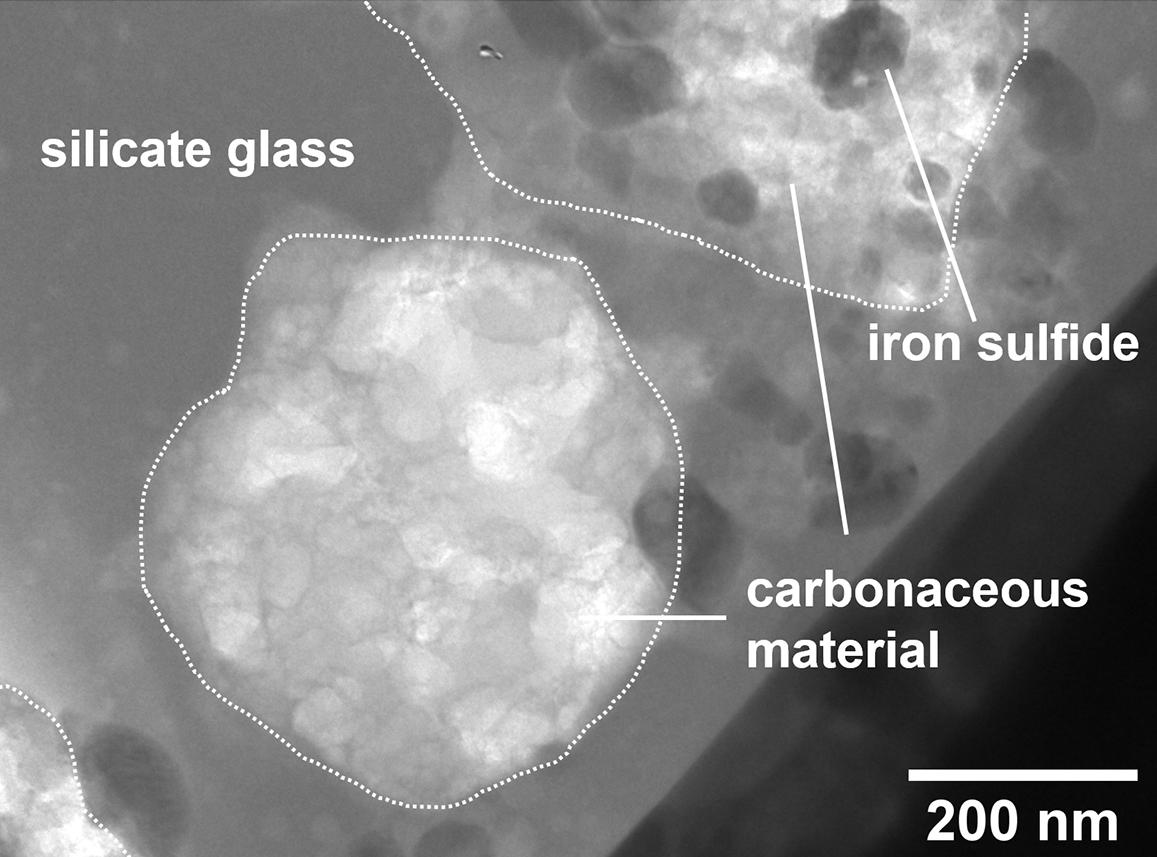
    Carbonaceous Material Found in the Melt Splash
    A carbonaceous material found in the melt splash. The carbonaceous material shows a spongy texture and contains small iron sulfide inclusions. This is similar to the primitive organic matters found in cometary dust. Credit: Megumi Matsumoto et al.

    The mixing and melting of Ryugu’s surface materials and cometary dust during impact-induced heating and rapid cooling formed the melt splashes. The voids correspond to the water vapor released from the Ryugu’s hydrous silicates and subsequently captured in the melt splashes.

    The Nature of Carbonaceous Materials

    The analysis also revealed small carbonaceous materials with abundant nano-pores and iron sulfide inclusions in the melt splashes. The carbonaceous materials are texturally similar to primitive organic matter in cometary dust, though they lack nitrogen and oxygen, making them chemically different from organic matter.

    “We propose that the carbonaceous materials formed from cometary organic matter via the evaporation of volatiles, such as nitrogen and oxygen, during the impact-induced heating. This suggests that cometary matter was transported to the near-Earth region from the outer solar system,” adds Matsumoto. “This organic matter might be the small seeds of life once delivered from space to Earth.”

    Looking ahead, the team hopes to examine Ryugu samples to find more melt splashes that will provide further insights into the influx of primitive space materials into Earth.

    Reference: “Microstructural and chemical features of impact melts on Ryugu particle surfaces: Records of interplanetary dust hit on asteroid Ryugu” by Megumi Matsumoto, Junya Matsuno, Akira Tsuchiyama, Tomoki Nakamura, Yuma Enokido, Mizuha Kikuiri, Aiko Nakato, Masahiro Yasutake, Kentaro Uesugi, Akihisa Takeuchi, Satomi Enju, Shota Okumura, Itaru Mitsukawa, Mingqi Sun, Akira Miyake, Mitsutaka Haruta, Yohei Igami, Hisayoshi Yurimoto, Takaaki Noguchi, Ryuji Okazaki, Hikaru Yabuta, Hiroshi Naraoka, Kanako Sakamoto, Shogo Tachibana, Michael Zolensky, Toru Yada, Masahiro Nishimura, Akiko Miyazaki, Kasumi Yogata, Masanao Abe, Tatsuaki Okada, Tomohiro Usui, Makoto Yoshikawa, Takanao Saiki, Satoshi Tanaka, Fuyuto Terui, Satoru Nakazawa, Sei-ichiro Watanabe and Yuichi Tsuda, 19 January 2024, Science Advances.
    DOI: 10.1126/sciadv.adi7203

    Never miss a breakthrough: Join the SciTechDaily newsletter.
    Follow us on Google and Google News.

    Asteroid Astrobiology Popular Tohoku University
    Share. Facebook Twitter Pinterest LinkedIn Email Reddit

    Related Articles

    Asteroid Bennu Just Changed the Origin Story of Life

    NASA Uncovers Life’s Building Blocks in Asteroid Bennu’s Pristine Sample

    Scientists Just Found DNA’s Building Blocks in Asteroid Bennu – Could This Explain Life’s Origins?

    Samples of Asteroid Returned to Earth Reveal Possible Source of Water and Building Blocks of Life

    Solving a Paradox to Uncover Key Clues About Our Solar System’s History

    Asteroid Ryugu Sample Collected in Space and Delivered to Earth – Now NASA Astrobiologists Prepare to Probe It

    Australia-Bound Asteroid Sample From Japan’s Hayabusa2 Mission May Reveal Life’s Origins

    Experiment Reveals Ancient Asteroid Impacts Created the Ingredients of Life on Earth and Mars

    First Evidence of Bio-Essential Sugars in Meteorites

    Leave A Reply Cancel Reply

    • Facebook
    • Twitter
    • Pinterest
    • YouTube

    Don't Miss a Discovery

    Subscribe for the Latest in Science & Tech!

    Trending News

    Monster Storms on Jupiter Unleash Lightning Beyond Anything on Earth

    Scientists Create “Liquid Gears” That Spin Without Touching

    The Simple Habit That Could Help Prevent Cancer

    Millions Take These IBS Drugs, But a New Study Finds Serious Risks

    Scientists Unlock Hidden Secrets of 2,300-Year-Old Mummies Using Cutting-Edge CT Scanner

    Bread Might Be Making You Gain Weight Even Without Eating More Calories

    Scientists Discover Massive Magma Reservoir Beneath Tuscany

    Europe’s Most Active Volcano Just Got Stranger – Here’s Why Scientists Are Rethinking It

    Follow SciTechDaily
    • Facebook
    • Twitter
    • YouTube
    • Pinterest
    • Newsletter
    • RSS
    SciTech News
    • Biology News
    • Chemistry News
    • Earth News
    • Health News
    • Physics News
    • Science News
    • Space News
    • Technology News
    Recent Posts
    • Scientists Were Wrong About This Strange “Rule-Breaking” Particle
    • Webb Space Telescope Uncovers Unexpected Ice Clouds on a Jupiter-Like World
    • 289-Million-Year-Old Reptile Mummy Reveals Origin of Human Breathing System
    • New Brain Discovery Challenges Long-Held Theory of Teenage Brain Development
    • Sharks Are Overheating as Warming Oceans Push Them to the Edge
    Copyright © 1998 - 2026 SciTechDaily. All Rights Reserved.
    • Science News
    • About
    • Contact
    • Editorial Board
    • Privacy Policy
    • Terms of Use

    Type above and press Enter to search. Press Esc to cancel.