

Male moths use a blend of pheromones, including the newly discovered aphrodisiac methyl salicylate, to attract mates, a strategy that underscores the complexity of insect communication and mating behaviors.
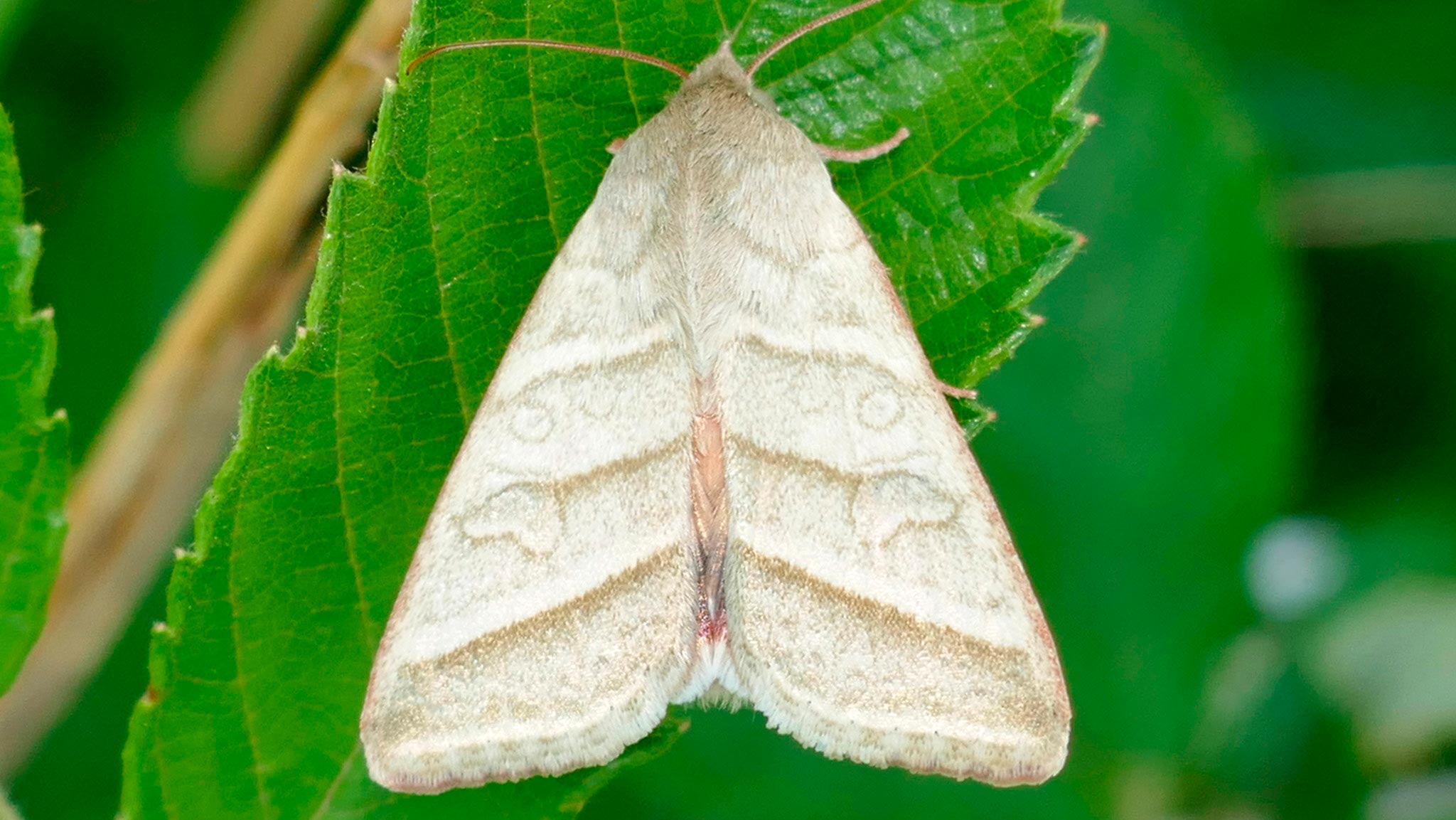
North Carolina State University researchers have identified the specific blend of pheromone chemicals – including a newly revealed aphrodisiac – used by male moths during courtship as they attempt to entice females to mate. The findings provide more detail about the complex blend of chemicals used in fundamental short-range communication between male and female moths after their initial characterization nearly 35 years ago.
The Role of Methyl Salicylate
The aphrodisiac, a chemical called methyl salicylate, is derived from plants. When attacked by herbivores, plants emit methyl salicylate both as a healing mechanism and as a cry for help to enemies of these herbivores. Its use in a pheromone blend by male Chloridea virescens moths could be viewed as a “macho” display showing that the male was able to defeat both the plant’s defenses and its call to the moth’s enemies, making it a more worthy mating option.
Insights into Moth Communication
“These close-range interactions provide valuable insight into both species recognition – how females recognize males of the same species – and female choice in mate selection,” said Coby Schal, Blanton J. Whitmire Distinguished Professor of Entomology at NC State and co-corresponding author of a paper describing the research. “This interaction gives females some insight into a particular male’s history.”
The studied moth family includes many generalist agricultural pests that feed on some 350 plant species across North and South America, such as the tobacco budworm, the corn earworm, and the fall armyworm – major pests in North Carolina.
Female moths begin the mating process by emitting “come hither” pheromones over longer-range distances. Males respond to these cues by flying close to the females and then emitting their own blend of pheromones. Females assess these chemicals and choose to mate – or not.
Methodology and Findings
The researchers used gas chromatography, in which chemical compounds are separated in a controllable oven, to ascertain the chemicals contained in the male pheromone blend, revealing some that weren’t found in the initial characterization made more than three decades ago. By connecting this instrument to the antennae of female moths, the researchers were able to see that methyl salicylate, which was barely detectable in the gas chromatography studies, elicited a big response from females.
In response to this surprising finding, the researchers showed that female moth antennae have two smell receptors that are tuned to methyl salicylate, helping them recognize the chemical in the blend emitted by males.
The researchers also were able to reduce the amount of methyl salicylate emitted by males and showed that mating success suffered. When these males received methyl salicylate in small quantities, their mating success rates returned to normal, showing the aphrodisiac-like quality of the chemical.
The researchers also found tiny amounts of methyl salicylate in moths that were fed artificial diets in the lab. Male moths caught in North Carolina soybean fields, on the other hand, had large amounts of the chemical in their hairpencils – or male organs that emit the pheromone blend. By adding the chemical into the lab male moths’ diet through a nectar-like sugar water drink, the researchers showed male moths incorporated the chemical and sequestered it in their hairpencils. When encouraged to vigorously court females, those hairpencils showed lower amounts of methyl salicylate, as males used much of it in their pheromone cocktail.
Conclusions
“It was surprising to find methyl salicylate in male moth pheromone blends, but the evidence from this paper suggests that male moths take up and sequester methyl salicylate as larvae while chewing up plants or as adults by drinking flower nectar,” Schal said. “Males may have evolved sexual signals that match the sensory bias exhibited by females in responding to methyl salicylate.”
Reference: “A mosaic of endogenous and plant-derived courtship signals in moths” by Yang Liu, Jeremy J. Heath, Sai Zhang, Michiel van Wijk, Guirong Wang, Jan Buellesbach, Ayako Wada-Katsumata, Astrid T. Groot and Coby Schal, 1 August 2023, Current Biology.
DOI: 10.1016/j.cub.2023.07.010
The study appears in Current Biology. Yang Liu, Jeremy J. Heath, Sai Zhang, Michiel van Wijk, Guirong Wang, Jan Buellesbach, Ayako Wada-Katsumata and Astrid T. Groot co-authored the paper. Funding was provided by the U.S. National Science Foundation (NSF IOS-1456973), the U.S. Department of Agriculture (USDA-NIFA 2016-67012-24696) and by the Blanton J. Whitmire Endowment at NC State.
Never miss a breakthrough: Join the SciTechDaily newsletter.
Follow us on Google and Google News.
1 Comment
Thank you for share with us.