
The missing piece in reconstructing the Earth’s climate history also provides a new understanding of the early evolution of life.
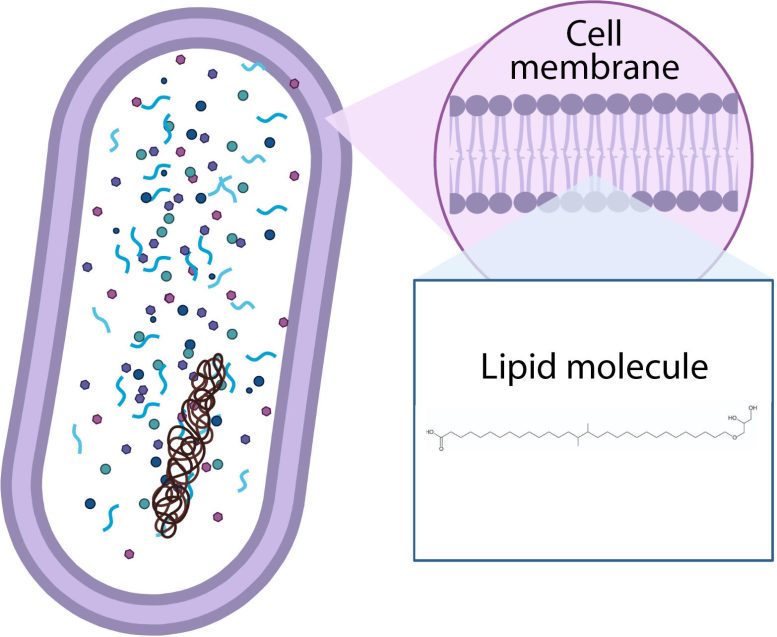
Microbial skins made of lipids, or fatty molecules, can be preserved as fossils and reveal information about the past lives of these microorganisms.
“Some microbial lipids are widely used to reconstruct past climates. They have always been surrounded by mystery, as we did not know which microbes were making them and under which conditions. This lack of information limits the predictive power of these molecules to reconstruct past environmental conditions,” says Sahonero.
Her study demonstrates which bacteria produce these lipids and how they have evolved their lipid-based outer layer to adapt to changing environments, further advancing our ability to reconstruct and predict climate change in greater detail.
Climate Reconstructions
Lipids, the molecular building blocks of the cell membrane, are unique for each microbial species. “It works just like fingerprints, they can be used to identify microbial remains,” says Laura Villanueva, associate professor in the Faculty of Geosciences at Utrecht University and senior scientist at NIOZ. The lipids of ancient microbes can be found in old sediments. Once these molecules from the past are separated, identified, and related to currently living groups of bacteria, the lipids can work like ‘biomarkers’. These markers can tell us about the atmospheric and oceanic conditions of the ancient earth because we know from the living relatives of the microbes how they interact with their environment.
Who Made These Molecules and How?
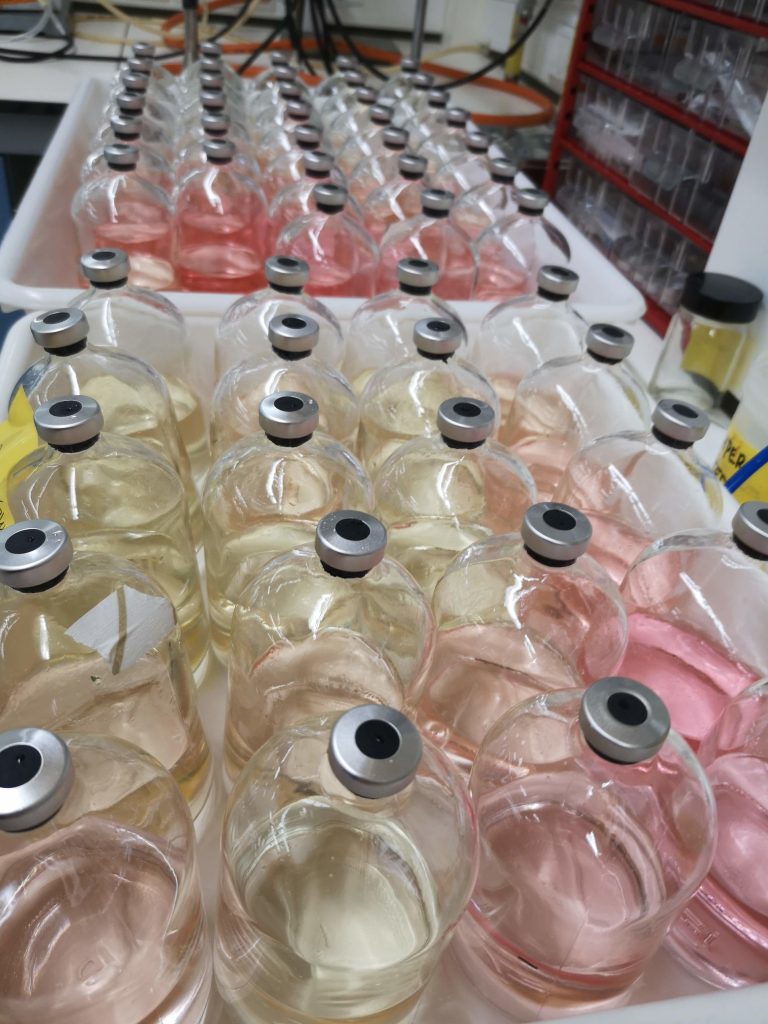
For a long time, it was unclear precisely which bacteria were making these specific lipids, called branched Glycerol Dialkyl Glycerol Tetraethers (GDGTs). This type of lipids are often used in climate reconstructions. Diana and her colleagues have finally discovered the bacteria forming these lipids. And also how these bacteria actually make the lipids. “It was like looking for a needle in a haystack”, says Sahoreno. “From the start, we knew we had to answer this question with a massive approach. We needed to investigate more than 1850 proteins to identify microbes making these lipid molecules.”
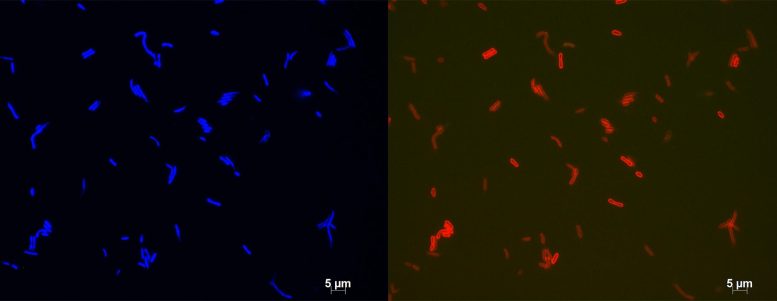
Once researchers know which currently living bacteria make these lipid molecules, they can be used to make more accurate climate reconstructions. Researchers can measure the interactions of these living bacteria with their surrounding seawater or atmosphere. This information leads to ‘proxies’ – keys to correlate details of the lipid molecules (abundance for instance) to values of the environment. This is an important step in reconstructing past environmental and climate conditions, based on old sediment samples.
Early Evolution of Life
“Our study indicates that there are many species of currently living bacteria that can make these types of membrane lipids. Also, we found that those bacteria are all limited to environments where oxygen is absent,” says Sahonero. “This study into archaeal-like lipids of bacteria shows how this group of microbes that produces them evolved their lipid membrane billions of years ago. It is fantastic to get a glimpse of this part of life’s history. It was mostly a mystery until now.”
What Next?
The work of Sahonero and her colleagues is still ongoing. “Now we know which bacteria form these molecular building blocks and we understand how they do that. Next, we need to find out how the production of these molecules depends on environmental factors like water temperature or pH,” says Villanueva. “Then, the proxy based on these bacterial lipids can be used more confidently by (paleo)climatologists. This gives them new possibilities to reconstruct and predict climate change in more detail.”
Reference: “Disentangling the lipid divide: Identification of key enzymes for the biosynthesis of membrane-spanning and ether lipids in Bacteria” by Diana X. Sahonero-Canavesi, Melvin F. Siliakus, Alejandro Abdala Asbun, Michel Koenen, F. A. Bastiaan von Meijenfeldt, Sjef Boeren, Nicole J. Bale, Julia C. Engelman, Kerstin Fiege, Lora Strack van Schijndel, Jaap S. Sinninghe Damsté and Laura Villanueva, 16 December 2022, Science Advances.
DOI: 10.1126/sciadv.abq8652
Never miss a breakthrough: Join the SciTechDaily newsletter.
Follow us on Google and Google News.