
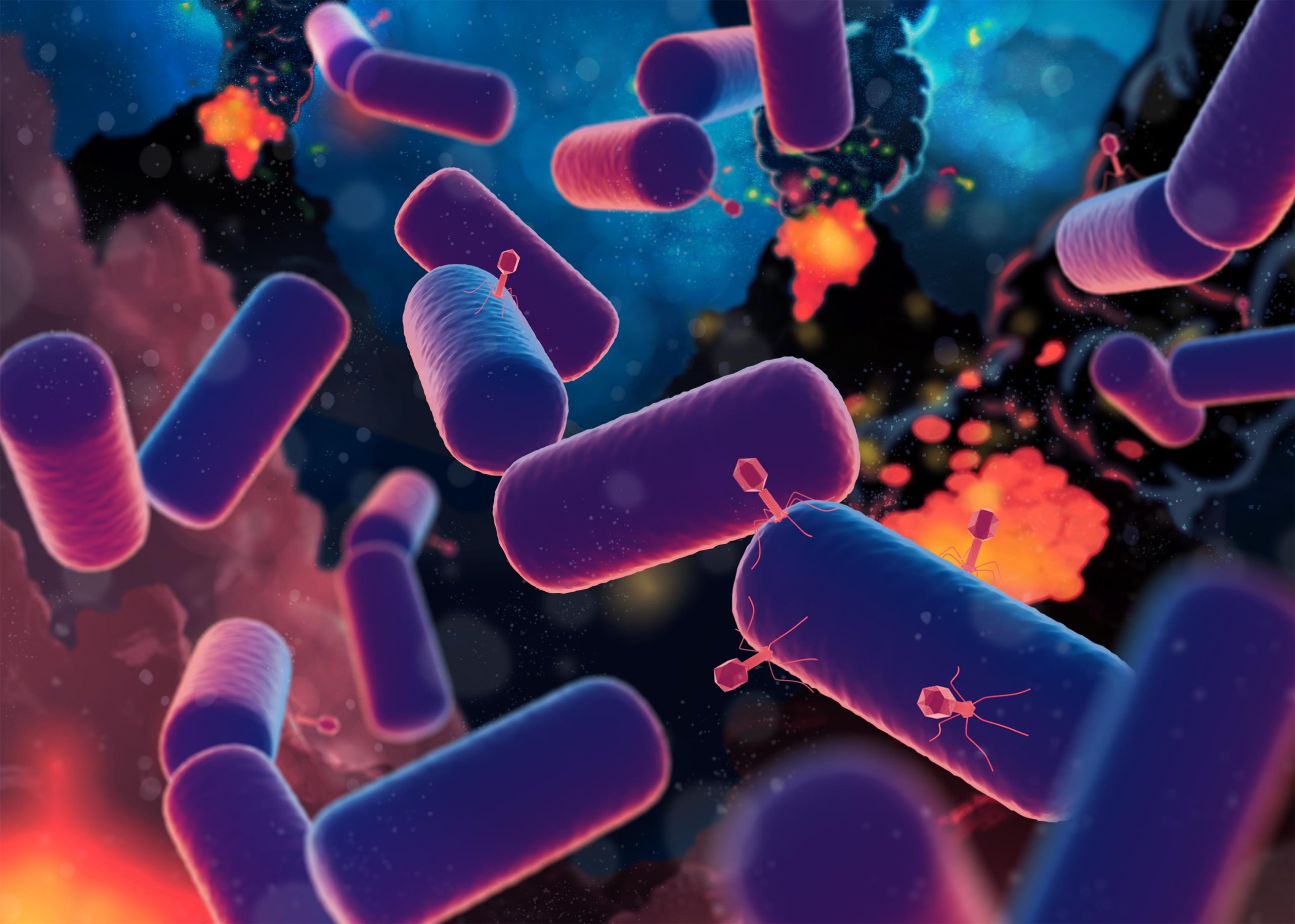
A University of Bristol-led study found that life on Earth, stemming from a common ancestor called LUCA, flourished soon after the planet’s formation.
Through genetic analysis and evolutionary modeling, researchers pinpointed LUCA’s existence to about 4.2 billion years ago, revealing it as a complex organism with an early immune system integral to Earth’s earliest ecosystems.
LUCA’s Genetic Blueprint and Its Descendants
Everything alive today derives from a single common ancestor known affectionately as LUCA (Last Universal Common Ancestor).
LUCA is the hypothesized common ancestor from which all modern cellular life, from single-celled organisms like bacteria to the gigantic redwood trees (as well as us humans) descend. LUCA represents the root of the tree of life before it splits into the groups, recognized today, Bacteria, Archaea, and Eukarya. Modern life evolved from LUCA from various different sources: the same amino acids used to build proteins in all cellular organisms, the shared energy currency (ATP), the presence of cellular machinery like the ribosome and others associated with making proteins from the information stored in DNA, and even the fact that all cellular life uses DNA itself as a way of storing information.
Research Methods and the Age of LUCA
The team compared all the genes in the genomes of living species, counting the mutations that have occurred within their sequences over time since they shared an ancestor in LUCA.
The time of separation of some species is known from the fossil record and so the team used a genetic equivalent of the familiar equation used to calculate speed in physics to work out when LUCA existed, arriving at the answer of 4.2 billion years ago, about four hundred million years after the formation of Earth and our solar system.
Co-author Dr. Sandra Álvarez-Carretero of Bristol’s School of Earth Sciences said: “We did not expect LUCA to be so old, within just hundreds of millions of years of Earth formation. However, our results fit with modern views on the habitability of early Earth.”
Physiological Insights and Evolutionary Modeling of LUCA
Next, the team worked out the biology of LUCA by modeling the physiological characteristics of living species back through the genealogy of life to LUCA. Lead author Dr. Edmund Moody explained: “The evolutionary history of genes is complicated by their exchange between lineages. We have to use complex evolutionary models to reconcile the evolutionary history of genes with the genealogy of species.”
Co-author Dr. Tom Williams from Bristol’s School of Biological Sciences said: “One of the real advantages here is applying the gene-tree species-tree reconciliation approach to such a diverse dataset representing the primary domains of life Archaea and Bacteria. This allows us to say with some confidence and assess that level of confidence on how LUCA lived.”
LUCA’s Complexity and Environmental Impact
Co-author Professor Davide Pisani said: “Our study showed that LUCA was a complex organism, not too different from modern prokaryotes, but what is really interesting is that it’s clear it possessed an early immune system, showing that even by 4.2 billion years ago, our ancestor was engaging in an arms race with viruses.”
Co-author Tim Lenton (University of Exeter, School of Geography) said “It’s clear that LUCA was exploiting and changing its environment, but it is unlikely to have lived alone. Its waste would have been food for other microbes, like methanogens, that would have helped to create a recycling ecosystem.”
Broader Implications of the Study on Early Life
“The findings and methods employed in this work will also inform future studies that look in more detail into the subsequent evolution of prokaryotes in light of Earth history, including the lesser studied Archaea with their methanogenic representatives,” added co-author Professor Anja Spang (the Royal Netherlands Institute for Sea Research).
Co-author Professor Philip Donoghue said: “Our work draws together data and methods from multiple disciplines, revealing insights into early Earth and life that could not be achieved by any one discipline alone. It also demonstrates just how quickly an ecosystem was established on early Earth. This suggests that life may be flourishing on Earth-like biospheres elsewhere in the universe.”
Reference: “The nature of the last universal common ancestor and its impact on the early Earth system” by Edmund R. R. Moody, Sandra Álvarez-Carretero, Tara A. Mahendrarajah, James W. Clark, Holly C. Betts, Nina Dombrowski, Lénárd L. Szánthó, Richard A. Boyle, Stuart Daines, Xi Chen, Nick Lane, Ziheng Yang, Graham A. Shields, Gergely J. Szöllősi, Anja Spang, Davide Pisani, Tom A. Williams, Timothy M. Lenton and Philip C. J. Donoghue, 12 July 2024, Nature Ecology & Evolution.
DOI: 10.1038/s41559-024-02461-1
The study also involved scientists from University College London (UCL), Utrecht University, Centre for Ecological Research in Budapest, and Okinawa Institute of Science and Technology Graduate University.
The research was funded by the John Templeton Foundation. The opinions expressed in this publication are those of the author(s) and do not necessarily reflect the views of the John Templeton Foundation.
Never miss a breakthrough: Join the SciTechDaily newsletter.
Follow us on Google and Google News.
1 Comment
The dating is consistent with earlier cross-bracing work on the tree.
But mostly it fleshes out the LUCA as a modern type cell that likely evolved from hydrothermal vents (possibly thermophile ancestors) but could live in surface waters (possibly evolved UV protection). It had evolved to defend against viruses but also “On the basis of the expected metabolic output (that is, an accumulation of acetate), we conclude that the LUCA must have been part of a broader ecosystem, of which it represents the only living descendant.” [Moody, E.R.R., Álvarez-Carretero, S., Mahendrarajah, T.A. et al. The nature of the last universal common ancestor and its impact on the early Earth system. Nat Ecol Evol (2024). https://doi.org/10.1038/s41559-024-02461-1%5D