

A new study indicates that despite significant evolutionary innovations post-extinction, brachiopods failed to match the species diversity of molluscs, challenging assumptions about their adaptive success and shedding light on the complexities of biodiversity evolution.
Researchers from the University of Bristol, the Open University, and the China University of Geosciences have discovered that while brachiopods were evolving in new directions, this did not lead to an increase in the number of species.
The findings, published in Nature Ecology & Evolution, shed light on some core principles of the evolution of modern biodiversity.
In current oceans, mollusks such as clams, oysters, and snails are hugely diverse, with over 50,000 species, whereas brachiopods are rare by comparison with only 394 species known. But this was not always the case. The team found that brachiopods were evolving new shell shapes and ecological behaviors following the end-Permian mass extinction which compromised their numbers.
“In the Palaeozoic, from 540 to 250 million years ago, brachiopods ruled the seabed,” said Dr Zhen Guo of the China University of Geosciences, who led the study. “Brachiopods are sometimes called lamp shells, and they generally sit on the sea floor, filtering tiny food particles from seawater. Most of them are quite small–you could hold twenty of them in your hands; but others were big and thick-shelled and lived a long time. Their shells were anything from circular to widely stretched and they had either smooth shells or carried deep ridges and troughs.”
Impact of the Permian Extinction
“The brachiopods were hit very hard by the end-Permian mass extinction 252 million years ago,” said Professor Michael Benton of the University of Bristol’s School of Earth Sciences, a collaborator. “The group could have disappeared completely, and indeed from that point, mollusks just became more and more successful. For a long time, it was thought that the brachiopods remained rare because the survivors were stuck in just a few modes of life.”
Dr Tom Stubbs of the Open University added: “In fact, the post-extinction brachiopods were innovating and trying new modes of life. One group, the terebratulids, were diversifying their body shapes and ecological functions from the end of the Permian to the present day, but their diversity did not increase.”
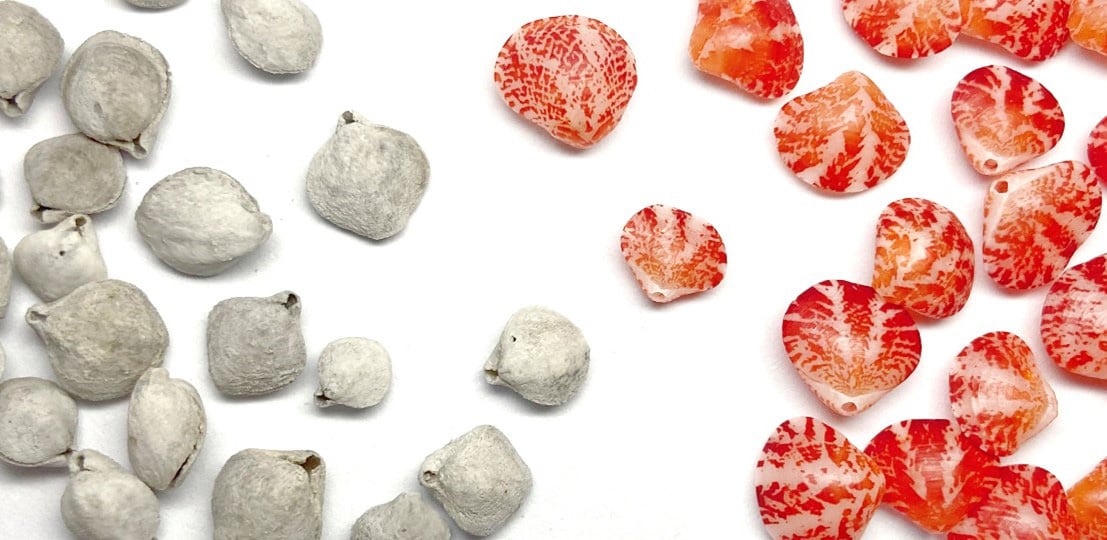
“This was quite unexpected,” said Professor Zhong-Qiang Chen of the China University of Geosciences. “Brachiopods were far from failures after the end-Permian extinction. They were evolving in new directions and exploring new modes of life, just as the mollusks were at the same time. But this did not turn into evolutionary success in terms of the number of species. Despite their bursts of evolution in form and function, they could not spread widely, and the exact reason remains unclear.”
The new study is based on an analysis of a database of more than 1000 genera of brachiopods from the past 250 million years. For each genus, the analysts recorded dozens of measurements of the overall shape of the shells, their external sculpture, and internal anatomy. These features were analyzed together to provide measurements of the overall diversity of shapes for each major brachiopod group at each point in time. This measure of ‘diversity of shape’, usually called disparity, could then be compared from point to point in time to show a measure of shape innovation, and it can be compared with counts of the numbers of species or genera through the same time spans.
“Our study took a huge amount of effort,” concluded Zhen Guo. “But it’s important to understand modern biodiversity in terms of the processes that lie behind it.
“If we simply look at modern brachiopods, we have no understanding of their rich past history and how innovative they have been in evolutionary terms. But our discovery that disparity and diversity are decoupled in brachiopod history is new and unexpected. Brachiopods were pretty inventive in evolving new shell forms, but it did not translate into many new species.”
Reference: “Morphological innovation did not drive diversification in Mesozoic–Cenozoic brachiopods” by Zhen Guo, Michael J. Benton, Thomas L. Stubbs and Zhong-Qiang Chen, 25 July 2024, Nature Ecology & Evolution.
DOI: 10.1038/s41559-024-02491-9
Never miss a breakthrough: Join the SciTechDaily newsletter.
Follow us on Google and Google News.