
Close Menu
    Facebook X (Twitter) Instagram
    SciTechDaily
    • Biology
    • Chemistry
    • Earth
    • Health
    • Physics
    • Science
    • Space
    • Technology
    Facebook X (Twitter) Pinterest YouTube RSS
    SciTechDaily
    Home»Health»Unlocking the Secrets of Organ and Limb Regeneration From a Tiny Salamander’s Genetics
    Health

    Unlocking the Secrets of Organ and Limb Regeneration From a Tiny Salamander’s Genetics

    By Yale UniversityJanuary 28, 20201 Comment3 Mins Read
    Facebook Twitter Pinterest Telegram LinkedIn WhatsApp Email Reddit
    Share
    Facebook Twitter LinkedIn Pinterest Telegram Email Reddit
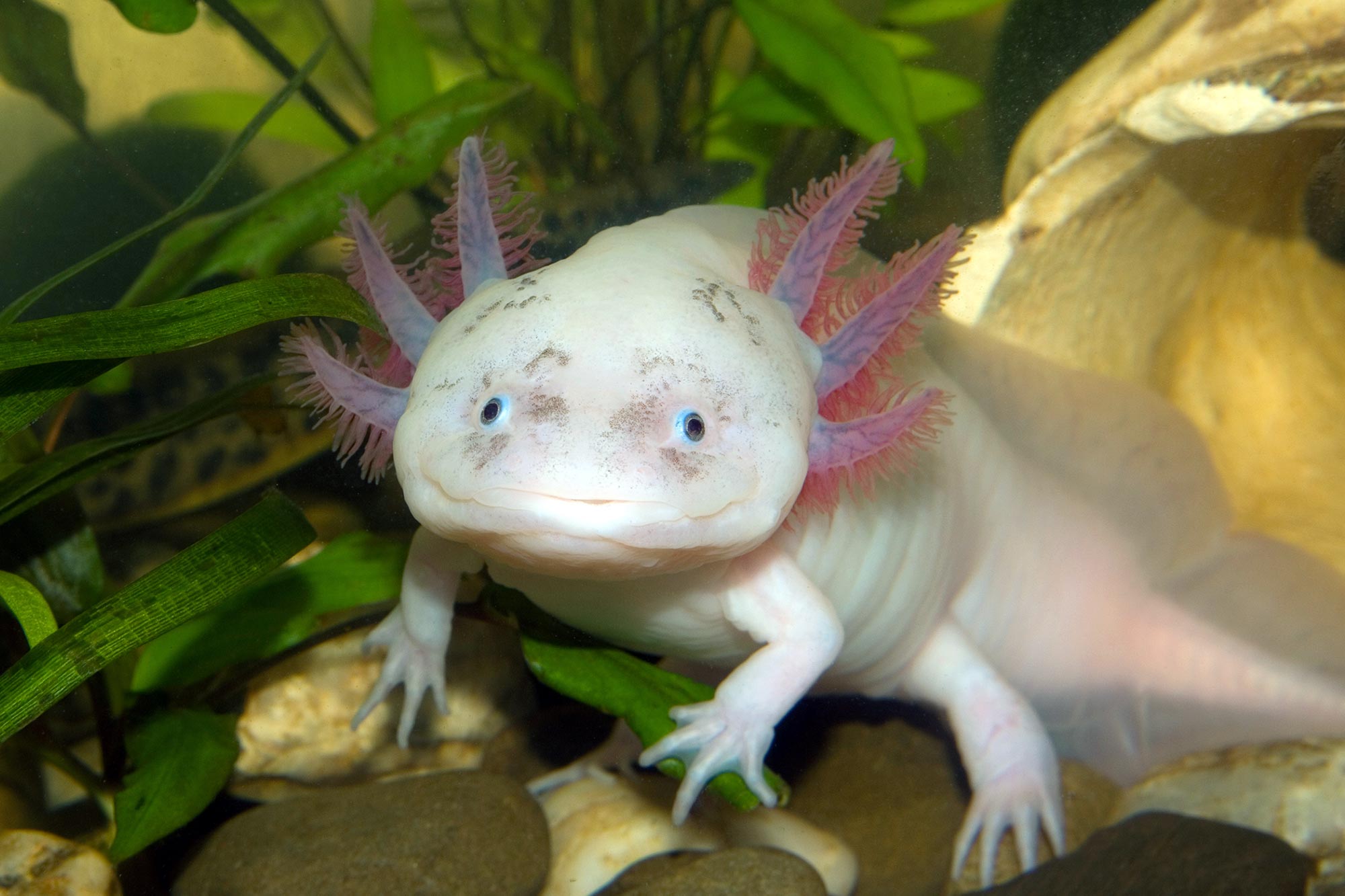
    Axolotl Salamander
    Since humans possess similar genes to the axolotl, the researchers say, scientists may one day discover how to activate them to help speed wound repair or regenerate tissue.

    The type of salamander called axolotl, with its frilly gills and widely spaced eyes, looks like an alien and has other-worldly powers of regeneration. Lose a limb, part of the heart, or even a large portion of its brain? No problem: They grow back.

    “It regenerates almost anything after almost any injury that doesn’t kill it,” said Parker Flowers, postdoctoral associate in the lab of Craig Crews, the John C. Malone Professor of Molecular, Cellular, and Developmental Biology and professor of chemistry and pharmacology.

    If scientists can find the genetic basis for the axolotl’s ability to regenerate, they might be able to find ways to restore damaged tissue in humans. But they have been thwarted in the attempt by another peculiarity of the axolotl — it has the largest genome of any animal yet sequenced, 10 times larger than that of humans.

    “It regenerates almost anything after almost any injury that doesn’t kill it.” Parker Flowers

    Now Flowers and colleagues have found an ingenious way to circumvent the animal’s complex genome to identify at least two genes involved in regeneration, they report today (January 28, 2020) in the journal eLife.

    The advent of new sequencing technologies and gene-editing technology has allowed researchers to craft a list of hundreds of gene candidates that could responsible for the regeneration of limbs. However, the huge size of the axolotl genome populated by vast areas of repeated stretches of DNA has made it difficult to investigate the function of those genes.

    Lucas Sanor, a former graduate student in the lab, and fellow co-first author Flowers used gene editing techniques in a multi-step process to essentially create markers that could track 25 genes suspected of being involved in limb regeneration. The method allowed them to identify two genes in the blastema — a mass of dividing cells that form at the site of a severed limb — that were also responsible for the partial regeneration of the axolotl tail.

    Flowers stressed that many more such genes probably exist. Since humans possess similar genes, the researchers say, scientists may one day discover how to activate them to help speed wound repair or regenerate tissue.

    Reference: “Multiplex CRISPR/Cas screen in regenerating haploid limbs of chimeric Axolotls” by Lucas D Sanor, Grant Parker Flowers and Craig M Crews, 28 January 2020, eLife.
    DOI: 10.7554/eLife.48511

    Never miss a breakthrough: Join the SciTechDaily newsletter.
    Follow us on Google and Google News.

    Cell Biology Evolution Genetics Popular Yale University
    Share. Facebook Twitter Pinterest LinkedIn Email Reddit

    Related Articles

    A Promising Fatty Liver Treatment May Actually Trigger Cancer

    Aging Sperm Are Mutating Faster Than Scientists Expected

    Scientists Solve Medical Mystery Behind Rare Multi-Organ Disease

    No Evidence COVID-19 Coronavirus Was Genetically Engineered in a Lab – Epidemic Has a Natural Origin

    Osteoarthritis Treatment Breakthrough: Drug Combo Reverses Arthritis in Animal Study

    Breakthrough in Understanding Evolution – Mitochondrial Division Conserved Across Species

    Drinkable Cocktail Interferes With Alzheimer’s and Restores Memories

    Yale Scientists Reveal a Cure for a Group of Genetic Skin Disorders

    Lysosomes May Contribute to Alzheimer’s Disease

    1 Comment

    1. Antony on January 28, 2020 11:53 am

      I wish they’d hurry up and find out what genome makes brain matter regenerate cause my brain 🧠 needs lots of repairing. Lol

      Reply
    Leave A Reply Cancel Reply

    • Facebook
    • Twitter
    • Pinterest
    • YouTube

    Don't Miss a Discovery

    Subscribe for the Latest in Science & Tech!

    Trending News

    One of the Universe’s Largest Stars May Be Getting Ready To Explode

    Scientists Discover Enzyme That Could Supercharge Ozempic-Like Weight Loss Drugs

    Popular Sweetener Linked to DNA Damage – “It’s Something You Should Not Be Eating”

    Ancient “Rock” Microbes May Reveal How Complex Life Began

    Researchers Capture Quantum Interference in One of Nature’s Rarest Atoms

    “A Plague Is Upon Us”: The Mass Death That Changed an Ancient City Forever

    Scientists Discover Game-Changing New Way To Treat High Cholesterol

    This Small Change to Your Exercise Routine Could Be the Secret to Living Longer

    Follow SciTechDaily
    • Facebook
    • Twitter
    • YouTube
    • Pinterest
    • Newsletter
    • RSS
    SciTech News
    • Biology News
    • Chemistry News
    • Earth News
    • Health News
    • Physics News
    • Science News
    • Space News
    • Technology News
    Recent Posts
    • Scientists Rethink Extreme Warming After Surprising Ocean Discovery
    • The Surprising Role of Asteroids in the Origin of Life
    • Scientists Raise Concerns Over Newly Recognized Pollutant Found Everywhere in the Air
    • New Study Challenges 40-Year Puzzle About Childhood Body Fat
    • 20-Year Study Finds Daily Multivitamins Don’t Extend Lifespan
    Copyright © 1998 - 2026 SciTechDaily. All Rights Reserved.
    • Science News
    • About
    • Contact
    • Editorial Board
    • Privacy Policy
    • Terms of Use

    Type above and press Enter to search. Press Esc to cancel.