
Ancient Amber Fossil Reveals Early Beetle Pollinator
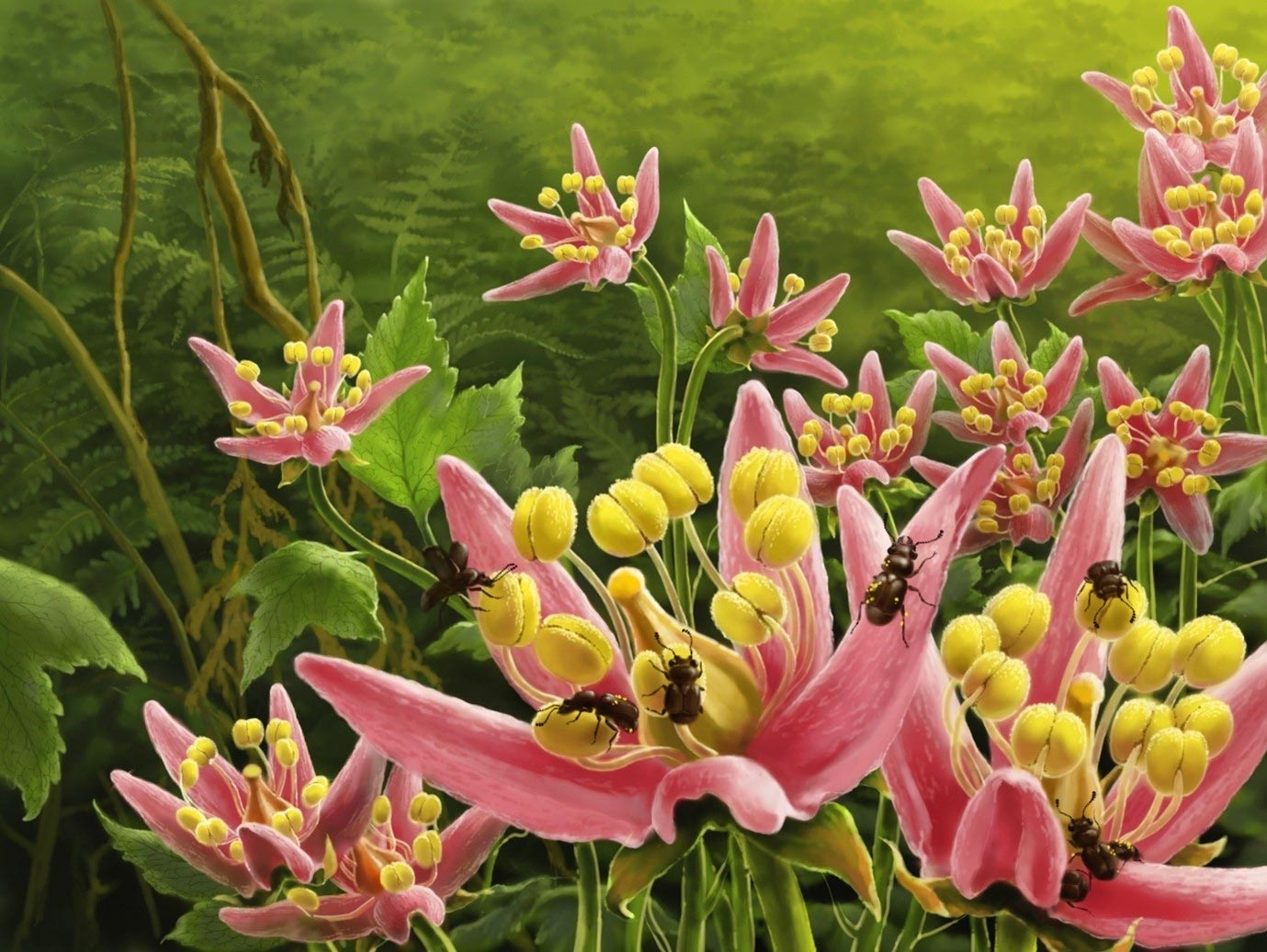
An amber fossil of a Cretaceous beetle has shed some light on the diet of one of the earliest pollinators of flowering plants.
The animal’s remains were unearthed by researchers at the University of Bristol and the Nanjing Institute of Geology and Palaeontology of the Chinese Academy of Sciences (NIGPAS) who were able to study its fossil fecal matter, which was composed solely of pollen.
Besides being a visitor of angiosperms — flowering plants — researchers now have conclusive evidence that the new fossil named Pelretes vivificus also fed on their pollen. Details of this discovery have been published today in Nature Plants.
“The beetle is associated with clusters of pollen grains, suggesting that short-winged flower beetles visited angiosperms in the Cretaceous. Some aspects of the beetle’s anatomy, such as its hairy abdomen, are also adaptations associated with pollination,” said Professor Chenyang Cai, paleontologist from the School of Earth Sciences and NIGPAS.
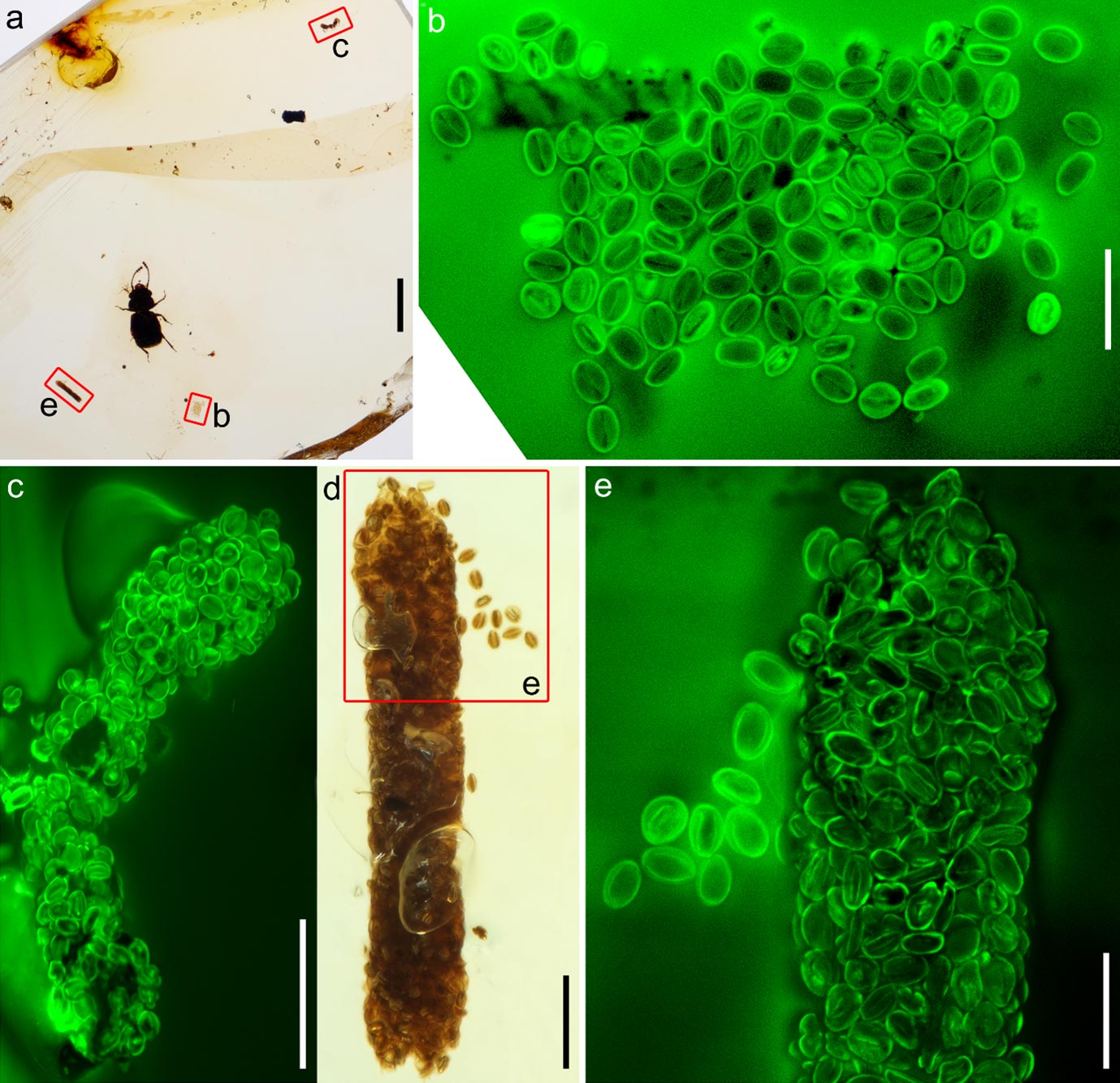
Erik Tihelka, entomologist and paleontologist at the School of Earth Sciences, added: “The fossil is associated with beetle coprolites — fossil fecal pellets — that provide a very unusual but important insight into the diet of short-winged flower beetles in the Cretaceous. The fossil fecal pellets are completely composed of pollen, the same type that is found in clusters surrounding the beetle and attached to its body. We thus know that Pelretes visited angiosperms to feed on their pollen. This finding provides a direct link between early flowering plants in the Cretaceous and their insect visitors; it shows that these insect fossils were not just incidentally co-preserved with pollen, but that there was a genuine biological association between the two.”
Origins of Insect-Flower Symbiosis
While pollinators such as bees and butterflies provide crucial ecosystem services today, little is known about the origin of the intimate association between flowering plants and insects.

Cretaceous amber fossils provide an important source of evidence for understanding the biology of early angiosperms, before they became the dominant group of plants on Earth. Amber is the fossil resin of ancient trees that often fortuitously trapped insects and other small organisms, preserving them with life-like fidelity.
“Farmers who want to protect their orchards can set up sticky traps on trees to monitor insects. Now imagine if your only insight into an ancient ecosystem were such sticky traps and you were to reconstruct all its ecological interactions based solely on this source of evidence. That is the challenge faced by paleontologists studying amber,” explains Tihelka. “Luckily, the amber trap from northern Myanmar is one of the richest fossiliferous amber deposits known. Besides the unparalleled abundance of fossil insects, the amber dates back to the mid-Cretaceous, right when angiosperms were taking off,” said Mr. Tihelka.
The Floral Revolution and the Rise of Angiosperms
Two hundred million years ago the world was as green as today, overgrown with dense vegetation. But it was not as colorful — there were no flowers. Flowering plants that make up over 80% of all plant species today, only began to diversify in the Cretaceous, about 125 million years ago. Some scientists have attributed the huge evolutionary success of angiosperms to their mutualistic relationships with insect pollinators, but fossil evidence of Cretaceous pollinators has so far been scarce.
The flower beetle Pelretes vivificus lived in the Burmese amber rainforest some 98 million years ago. Its closest relatives are short-winged flower beetles (Kateretidae) that today occur in Australia, visiting a diverse range of flowers and feeding on their pollen.
“The pollen associated with the beetle can be assigned to the fossil genus Tricolpopollenites. This group is attributed to the eudicots, a living group of angiosperms, that includes the orders Malpighiales and Ericales,” explains Dr. Liqin Li, fossil pollen specialist from NIGPAS who contributed to the study.
This shows that pollinators took advantage of early angiosperms soon after their initial diversification and by the mid-Cretaceous visited a diverse range of groups.
Reference: “Angiosperm pollinivory in a Cretaceous beetle” by Erik Tihelka, Liqin Li, Yanzhe Fu, Yitong Su, Diying Huang and Chenyang Cai, 12 April 2021, Nature Plants.
DOI: 10.1038/s41477-021-00893-2
Never miss a breakthrough: Join the SciTechDaily newsletter.
Follow us on Google and Google News.