
Close Menu
    Facebook X (Twitter) Instagram
    SciTechDaily
    • Biology
    • Chemistry
    • Earth
    • Health
    • Physics
    • Science
    • Space
    • Technology
    Facebook X (Twitter) Pinterest YouTube RSS
    SciTechDaily
    Home»Biology»Vampire Bats Social Distance When They Get Sick, Slowing Disease Spread
    Biology

    Vampire Bats Social Distance When They Get Sick, Slowing Disease Spread

    By Oxford University Press USAOctober 26, 2020No Comments3 Mins Read
    Facebook Twitter Pinterest Telegram LinkedIn WhatsApp Email Reddit
    Share
    Facebook Twitter LinkedIn Pinterest Telegram Email Reddit
    Desmodus rotundus
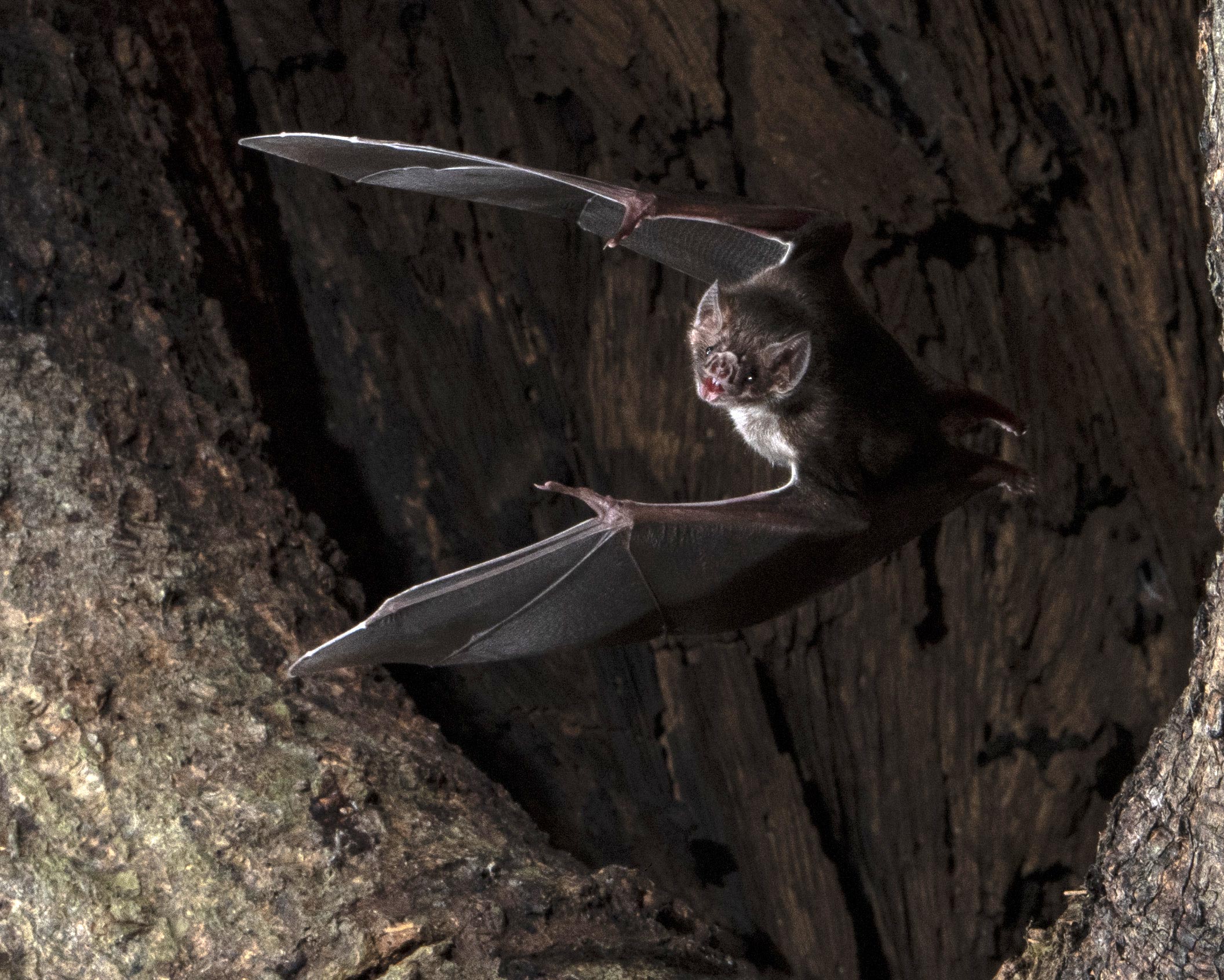
    A new paper in Behavioral Ecology finds that wild vampire bats that are sick spend less time near others from their community, which slows how quickly a disease will spread. The research team had previously seen this behavior in the lab, and used a field experiment to confirm it in the wild. Credit: Sherri and Brock Fenton/Behavioral Ecology

    A new paper in Behavioral Ecology, published by Oxford University Press, finds that wild vampire bats that are sick spend less time near others from their community, which slows how quickly a disease will spread. The research team had previously seen this behavior in the lab, and used a field experiment to confirm it in the wild.

    As a pathogen spreads across a population, changes in social behavior can alter how the disease spreads. Transmission rates can increase when parasites change host behavior or decrease when healthy individuals avoid sick ones. In certain social insects, sick ones might self-isolate voluntarily or be excluded by their colony mates. A simpler mechanism causing reduced transmission is that infected animals often show sickness behavior, which includes increased lethargy and sleep, and reduced movement and sociality. This sickness-induced social distancing does not require cooperation from others and is probably common across species.

    Researchers here conducted a field experiment to investigate how sickness behavior affects relationships over time using a dynamic social network created from high-resolution proximity data. After capturing 31 adult female vampire bats from a roost inside a hollow tree at Lamanai, Belize, researchers simulated “sick” bats by injecting a random half of bats with the immune-challenging substance, lipopolysaccharide, while the control group received saline injections.

    Over the next three days, the researchers glued proximity sensors to the bats, released them back into their hollow tree, and tracked changes over time in the associations among all 16 “sick” bats and 15 control bats under natural conditions.

    Compared to control bats, “sick” bats associated with fewer groupmates, spent less time with others, and were less socially connected to healthy groupmates when considering both direct and indirect connections. During the six hours of the treatment period, a ‘sick’ bat associated on average with four fewer associates than a control bat. A control bat had, on average, a 49% chance of associating with each control bat, but only a 35% chance of associating with each “sick” bat. During the treatment period, “sick” bats spent 25 fewer minutes associating per partner. These differences declined after the treatment period and when the bats were sleeping or foraging outside the roost.

    “The sensors gave us an amazing new window into how the social behavior of these bats changed from hour to hour and even minute to minute during the course of the day and night, even while they are hidden in the darkness of a hollow tree,” said the study’s lead author, Simon Ripperger. “We’ve gone from collecting data every day to every few seconds.”

    Reference: “Tracking sickness effects on social encounters via continuous proximity-sensing in wild vampire bats” by Simon P Ripperger, Sebastian Stockmaier and Gerald G Carter, 27 October 2020, Behavioral Ecology.
    DOI: 10.1093/beheco/araa111

    Funding: Deutsche Forschungsgemeinschaft (research unit FOR-1508), National Geographic Society (research grant WW-057R-17).

    Never miss a breakthrough: Join the SciTechDaily newsletter.
    Follow us on Google and Google News.

    Bats Infectious Diseases Virology Zoology
    Share. Facebook Twitter Pinterest LinkedIn Email Reddit

    Related Articles

    Swarming Secrets: Bat ‘Nightclubs’ Hold the Key to Preventing Future Viral Outbreaks

    Bats in Switzerland Harbor Diverse Viruses – Some With Risk of Jumping to Humans

    New Research Finds SARS-CoV-2 (the Virus That Causes COVID-19) Jumped From Bats to Humans Without Much Change

    New Research Uncovers Why Bats Excel As Viral Reservoirs Without Getting Sick

    Bats Offer Clues to Treating COVID-19 – Secrets to Longevity and Disease Tolerance

    “Bound by Blood” – Vampire Bats Keep ‘Friends’ Made in Captivity After Release Into Wild

    Bats Hunt Their Prey Using Private and Social Information

    Kitti’s Hog-Nosed Bat Is World’s Smallest Mammal

    Central American Bats Harbor a New Subtype of Influenza

    Leave A Reply Cancel Reply

    • Facebook
    • Twitter
    • Pinterest
    • YouTube

    Don't Miss a Discovery

    Subscribe for the Latest in Science & Tech!

    Trending News

    Scientists Discover How Coffee Impacts Memory, Mood, and Gut Health

    Why Did the Neanderthals Disappear? Scientists Reveal Humans Had a Hidden Advantage

    Physicists Propose Strange Experiment Where Time Goes Quantum

    Magnesium Magic: New Drug Melts Fat Even on a High-Fat, High-Sugar Diet

    Weight-Loss Drugs Like Ozempic May Come With an Unexpected Cost

    Mezcal “Worm” in a Bottle Mystery: DNA Testing Reveals a Surprise

    New Research Reveals That Your Morning Coffee Activates an Ancient Longevity Switch

    This Is What Makes You Irresistible to Mosquitoes

    Follow SciTechDaily
    • Facebook
    • Twitter
    • YouTube
    • Pinterest
    • Newsletter
    • RSS
    SciTech News
    • Biology News
    • Chemistry News
    • Earth News
    • Health News
    • Physics News
    • Science News
    • Space News
    • Technology News
    Recent Posts
    • This Popular Supplement May Boost Your Brain, Not Just Your Muscles
    • What Happened in Childhood Could Be Causing Your Gut Issues Today
    • Scientists Say This Simple Supplement May Actually Reverse Heart Disease
    • Scientists Just Captured Killer T Cells in Action Inside Tumors
    • Alaska’s Sky Explodes With Swirling Clouds and a Hidden Polar Storm
    Copyright © 1998 - 2026 SciTechDaily. All Rights Reserved.
    • Science News
    • About
    • Contact
    • Editorial Board
    • Privacy Policy
    • Terms of Use

    Type above and press Enter to search. Press Esc to cancel.