
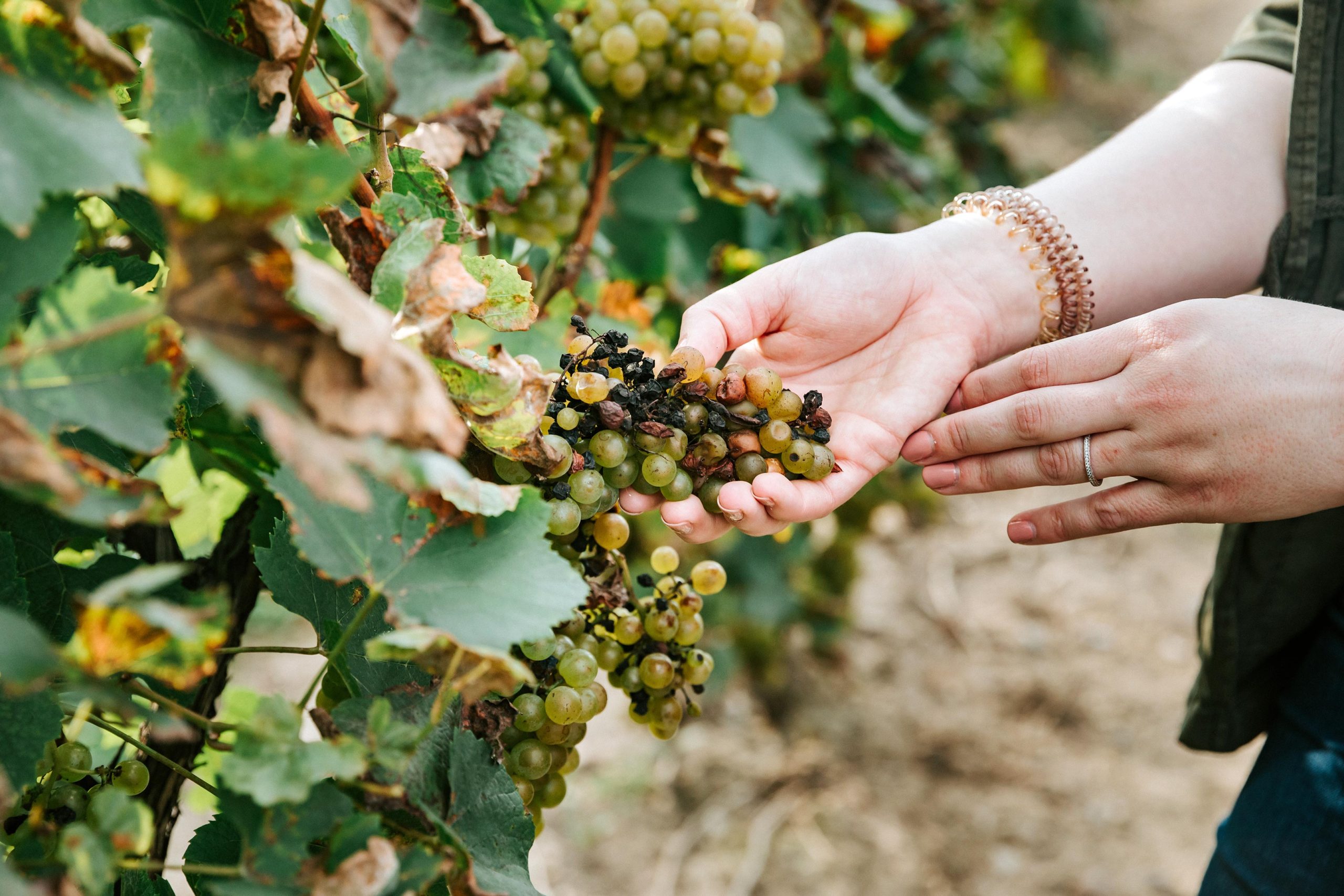
In a case study, scientists detected the costly infection in cabernet sauvignon grapevines before they showed symptoms visible to the human eye.
Withering molds, root-rotting bacteria, viruses, and other plant pathogens destroy an estimated 15 to 30% of global harvests every year. Early detection can make the difference between a failed crop and a treatable one. Using an airborne science instrument developed at NASA’s Jet Propulsion Laboratory in Southern California, researchers have found that they can accurately spot the stealthy signs of a grape disease that inflicts billions of dollars in annual crop damage. The remote sensing technique could aid ground-based monitoring for this and other crops.
Targeting GLRaV-3
In a pair of new studies, researchers from JPL and Cornell University focused on a viral disease called GLRaV-3 (short for grapevine leafroll-associated virus complex 3). Primarily spread by insects, GLRaV-3 reduces yields and sours developing fruit, costing the U.S. wine and grape industry some $3 billion in damage and losses annually. It typically is detected by labor-intensive vine-by-vine scouting and expensive molecular testing.
The research team wanted to see if they could help growers identify GLRaV-3 infections early and from the air by using machine learning and NASA’s next-generation Airborne Visible/InfraRed Imaging Spectrometer (AVIRIS-NG). The instrument’s optical sensor, which records the interaction of sunlight with chemical bonds, has been used to measure and monitor hazards such as wildfires, oil spills, greenhouse gases, and air pollution associated with volcanic eruptions.
Technology Application
It was during a 2020 campaign to map methane leaks in California that plant pathologist Dr. Katie Gold and her team seized the opportunity to pose a different question: Could AVIRIS-NG uncover undercover crop infection in one of the state’s most important grape-producing regions?
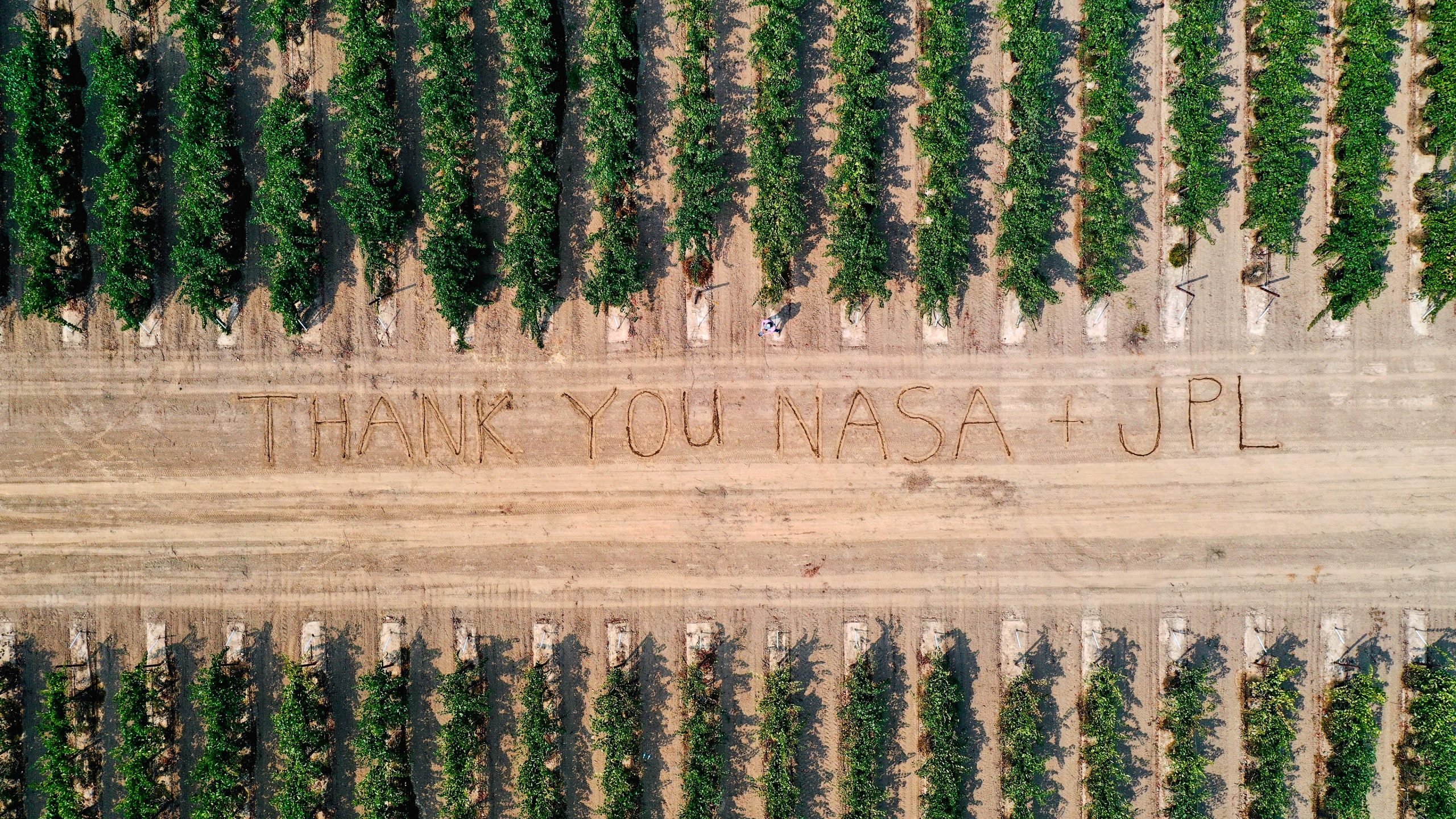
“Like humans, sick plants may not exhibit outward symptoms right away, making early detection the greatest challenge facing growers,” said Gold, an assistant professor at Cornell University and senior author of the new studies. In the case of grapevine leafroll virus, it can take up to a year before a vine betrays the telltale signs of infection, such as discolored foliage and stunted fruit. However, on the cellular level, stress is well underway before then, changing how sunlight interacts with plant tissue.
Aerial Advantage
Mounted in the belly of a research plane, AVIRIS-NG observed roughly 11,000 acres of vineyards in Lodi, California. The region – located in the heart of California’s Central Valley – is a major producer of the state’s premium wine grapes.
The team fed the observations into computer models they developed and trained to distinguish infection. To help check the results, industry collaborators scouted more than 300 acres of the vineyards from the ground for visible viral symptoms while collecting vine samples for molecular testing.
Gold noted it was a labor-intensive process, undertaken during a California heat wave. “Without the hard work of the growers, industry collaborators, and the scouting teams, none of what we accomplished would have been possible,” she said. Similar efforts will continue under the NASA Acres Consortium, of which Gold is a lead scientist.
The researchers found that they were able to differentiate non-infected and infected vines both before and after they became symptomatic, with the best-performing models achieving 87% accuracy. Successful early detection of GLRaV-3 could help provide grape growers up to a year’s warning to intervene.
In a complementary paper, the researchers said their case study shows how emerging capabilities in air and space can support ground-based pathogen surveillance efforts. These capabilities include forthcoming missions like NASA’s Surface Biology and Geology (SBG) – part of the fleet of missions that will compose the agency’s Earth System Observatory. They said that SBG will provide data that could be used in combination with machine learning for agricultural decision-making at the global scale.
Sustainable Farming and Future Vision
Fernando Romero Galvan, a doctoral candidate and lead author of both studies, noted that sustainable farming practices are more important than ever in the face of climate change. “I think these are exciting times for remote sensing and plant disease detection,” he said. “Scalable solutions can help growers make data-driven, sustainable crop management decisions.”
“What we did with this study targets one area of California for one disease,” said co-author Ryan Pavlick, a research technologist at JPL. “The ultimate vision that we have is being able to do this across the planet for many crop diseases and for growers all over the world.”
References:
“Scalable early detection of grapevine virus infection with airborne imaging spectroscopy” by Fernando Romero Galvan, Ryan Pavlick, Graham Richard Trolley, Somil Aggarwal, Daniel Sousa, Charlie Starr, Elisabeth Jane Forrestel, Stephanie Bolton, Maria del Mar Alsina, Nicholaus Dokoozlian and
Kaitlin Morey Gold, 25 Apr 2023, Phytopathology.
DOI: 10.1094/PHYTO-01-23-0030-R
“Toward Cloud-Native, Machine Learning Base Detection of Crop Disease With Imaging Spectroscopy” by Gloire Rubambiza, Fernando Romero Galvan, Ryan Pavlick, Hakim Weatherspoon and Kaitlin M. Gold, 11 May 2023, JGR: Biogeosciences.
DOI: 10.1029/2022JG007342
Never miss a breakthrough: Join the SciTechDaily newsletter.
Follow us on Google and Google News.