
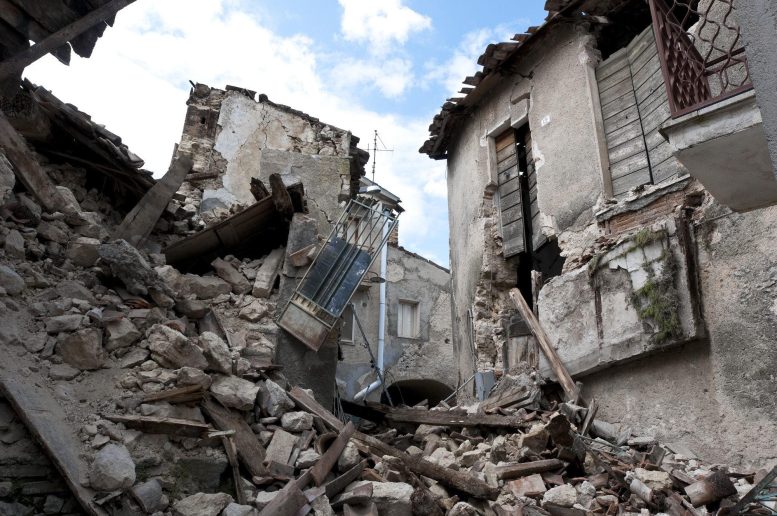
Supershear earthquakes, where fault ruptures outpace seismic waves, are more common than believed, making up 14% of strike-slip quakes.
- Supershear earthquakes occur when a fault ruptures faster than seismic shear waves can travel through rock.
- The events were thought to be rare because scientists had mostly looked for them on land.
- The findings suggest that disaster planning assessments should include whether a fault is able to produce supershear quakes, which are potentially more destructive than other types.
According to a study led by geophysicists at the University of California, Los Angeles, powerful supershear earthquakes, thought to be rare, are significantly more common than previously believed. The study was recently published in the journal Nature Geoscience.
The researchers examined all 6.7-or-greater magnitude strike-slip earthquakes globally since 2000, identifying 12 of the supershear type, or around 14%. (Four of the earthquakes had previously gone unreported.)
This figure is more than twice what experts expected; before, fewer than 6% of strike-slip earthquakes were classified as supershear.
Strike-slip earthquakes occur when the edges of two tectonic plates push sideways against one other. Supershear quakes are a subtype of that group that occurs when faults under the surface rupture faster than shear waves — seismic waves that shake the earth — can travel through rock. Similar to a sonic boom, the effect corrals energy that is subsequently violently released.
As a consequence, compared to other earthquakes of the same size, supershear earthquakes tend to generate greater shaking and can be more destructive.
“When an airplane flies faster than sound can travel through air, a cone of pent-up sound waves forms in front of the plane and when it catches up, we hear it all at once,” said Lingsen Meng, UCLA’s Leon and Joanne V.C. Knopoff Professor of Physics and Geophysics, and the paper’s corresponding author. “Supershear earthquakes are potentially more destructive than other kinds of earthquakes because they are more effective at generating seismic waves, with more shaking, which could cause more damage.”
Supershear Earthquakes on Land and Sea
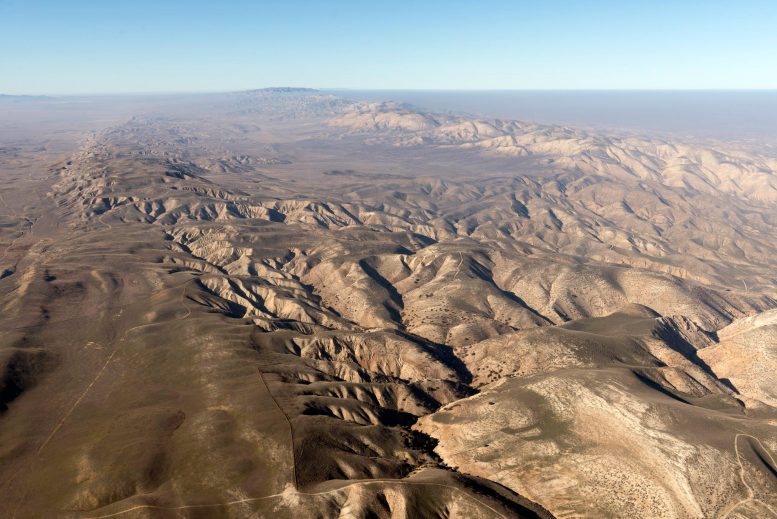
The research also found that supershear earthquakes occur as commonly beneath the oceans as they do on land and that they are most likely to occur along strike-slip faults, such as California’s San Andreas Fault.
The findings suggest that disaster planning efforts should take into consideration whether nearby faults are capable of producing supershear earthquakes and if so, take measures to prepare for a higher level of shaking and potential damage than could be caused by non-supershear earthquakes.

Meng said the reason relatively few supershear earthquakes have been found is that researchers mainly study earthquakes on land.
The paper’s co-authors are UCLA doctoral students Han Bao and Liuwei Xu of UCLA and Jean-Paul Ampuero, a senior researcher at Université Côte d’Azur in Nice, France.
The scientists used a method called backprojection to determine the direction in which seismic waves arrived to infer how fast an earthquake moves along the fault. The technique applies an algorithm to analyze brief time delays between seismic waves as they’re detected by a group of sensors. The method is similar to how one can locate a person by tracking the signals their smartphone sends to cell towers.
Fault Maturity and Geometry
The data revealed supershear earthquakes tend to occur on mature strike-slip faults, in which the edges of two continental plates rub laterally against each other. In a mature fault, that action has been happening for long enough to create a zone of damaged rocks that act like a dam around the fault, slowing or blocking seismic wave propagation and concentrating their energy.
Ampuero said the findings could help scientists better understand what it takes for a fault to produce the kinds of ruptures that lead to supershear earthquakes.
In the past century, at least one large supershear earthquake has occurred in California: In 1979, a 6.5-magnitude quake in Southern California’s Imperial Valley region injured people as far away as Mexico and caused extensive damage to irrigation systems. And, although it predated scientific monitoring, the 1906 earthquake that caused extensive damage in San Francisco likely also fell into the supershear category.
Not all supershear earthquakes are that disastrous. The shape of the fault, the rocks around it, and other factors can affect the propagation of seismic waves and limit the accumulation of energy. Faults that curve tend to slow, deflect or absorb seismic waves, while straight faults let them flow freely.
In a previous study, Meng’s research group identified the catastrophic 7.5 magnitude earthquake that hit the Indonesian island of Sulawesi in 2018 as a supershear event. The temblor and ensuing tsunami killed at least 4,000 people. Despite the curve in the Indonesian earthquake fault, the horrific damage occurred because the fault moved faster than any previously recorded and energy from earlier temblors likely was stored up in the rocks, awaiting a moment to burst, Meng said.
Fortunately, Meng said supershear earthquakes in the ocean are less likely than earthquakes that cause the sea floor to move vertically to produce tsunamis.
The San Andreas Fault, on the other hand, is mostly straight and could experience an even more explosive rupture than the Sulawesi quake.
References:
“Global frequency of oceanic and continental supershear earthquakes” by Han Bao, Liuwei Xu, Lingsen Meng, Jean-Paul Ampuero, Lei Gao and Haijiang Zhang, 31 October 2022, Nature Geoscience.
DOI: 10.1038/s41561-022-01055-5
“Early and persistent supershear rupture of the 2018 magnitude 7.5 Palu earthquake” by Han Bao, Jean-Paul Ampuero, Lingsen Meng, Eric J. Fielding, Cunren Liang, Christopher W. D. Milliner, Tian Feng and Hui Huang, 4 February 2019, Nature Geoscience.
DOI: 10.1038/s41561-018-0297-z
Never miss a breakthrough: Join the SciTechDaily newsletter.
Follow us on Google and Google News.
1 Comment
Violent Superstars Earthquakes=:
Some facts about this are that they push against each other and so the edges come near to each other. There are also 7.5 magnitudes of earthquakes and 4,000 people or more have died from them. There is continental drift between these super shears earthquakes. This is what the super shears are about.