
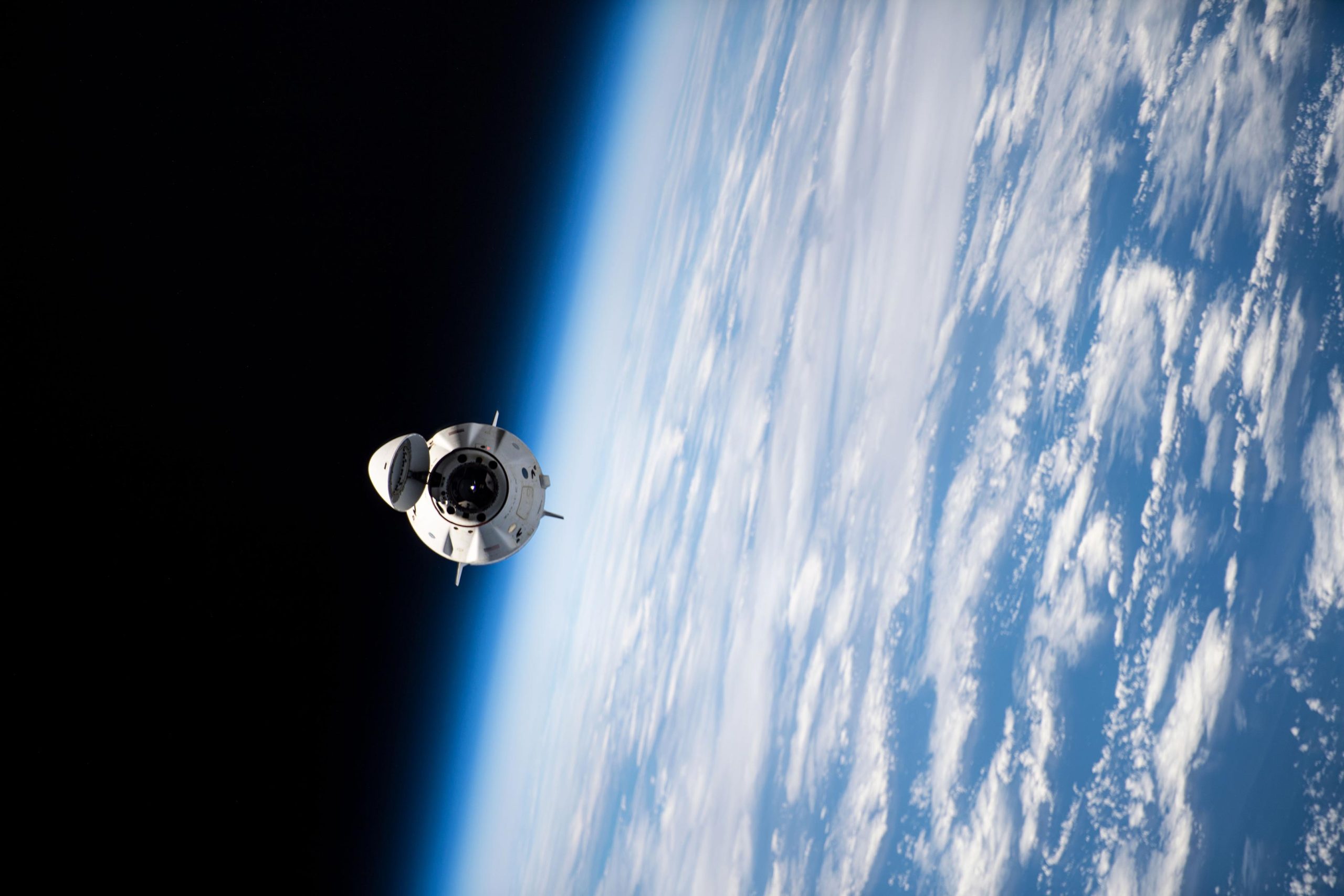
Update: Due to high winds at the landing site off Florida’s coast, the departure has been postponed from Thursday to Friday.
A SpaceX Dragon spacecraft is set to return from the International Space Station with nearly 6,000 pounds of scientific samples and hardware.
The undocking will be live-streamed, and the payload includes various scientific experiments, such as GISMOS for DNA sequencing and SpaceTED for radiation exposure analysis, along with artistic contributions from the International Space Art and Poetry Contest.
SpaceX Dragon Spacecraft Departure
NASA and its international partners are preparing to receive a shipment of scientific research samples and hardware as the SpaceX Dragon spacecraft departs the International Space Station (ISS) on Thursday, December 5, for its journey back to Earth.
Live coverage of the undocking and departure will begin at 10:50 a.m. EST on NASA+.
Splashdown and Payload Details
At 11:05 a.m., the Dragon spacecraft will undock from the Harmony module’s forward port on the ISS. Ground controllers at SpaceX will then command the spacecraft to fire its thrusters, guiding it to a safe distance from the station.
After re-entering Earth’s atmosphere, the spacecraft will splash down off the coast of Florida. While NASA will not livestream the splashdown, updates will be provided on the agency’s space station blog.
Scientific Experiments Returned
Filled with nearly 6,000 pounds of crew supplies, science investigations, and equipment, the spacecraft arrived at the orbiting laboratory on November 5 after it launched on November 4 on a Falcon 9 rocket from Launch Complex 39A at NASA’s Kennedy Space Center in Florida for the agency’s SpaceX 31st commercial resupply services mission.
Dragon will carry back to Earth thousands of pounds of supplies and scientific experiments designed to take advantage of the space station’s microgravity environment. Splashing down off the coast of Florida enables quick transportation of the experiments to NASA’s Space Systems Processing Facility at Kennedy Space Center, allowing researchers to collect data with minimal sample exposure to Earth’s gravity.
Advanced Research and Educational Initiatives
Scientific hardware and samples returning to Earth include GISMOS (Genes in Space Molecular Operations and Sequencing), which successfully conducted in-orbit sequencing of microbial DNA from the space station water system, and marks the first real look at the microbial population of the water system. In addition, SpaceTED (Space Tissue Equivalent Dosimeter) returns to Earth after collecting data on crew radiation exposure and characterizes the space radiation environment. The dosimeter is a student-developed technology demonstration and effectively operated for 11 months on station – six months longer than intended because of its success.
Additionally, two specimens printed with ESA’s (European Space Agency) Metal 3D Printer, will go to researchers for post-processing and analysis. Researchers will compare the specimens printed in microgravity with those printed on Earth. The goal is to demonstrate the capability to perform metal deposition, or the layering of metals, in 3D under sustained microgravity conditions and manufacture test specimens. Researchers aim to understand the performance and limitations of the chosen technology and become familiar with crewed and remote operations of the instrument onboard a space habitat.
Also returning on spacecraft is the International Space Art and Poetry Contest, which invited students and educators around the world to submit drawings, paintings, or poems. Winning art submissions were printed on station, photographed in the cupola, and will be returned to their creators on Earth. In addition, Plasmonic Bubbles researchers will observe high-speed video of bubble behavior in microgravity to understand fundamental processes that occur on a heated bubble surface. Results may improve understanding of how molecules are deposited on bubble surfaces and enhance detection methods for health care and environmental industries.
Impact on Scientific and Commercial Space Exploration
For more than two decades, people have lived and worked continuously aboard the International Space Station, advancing scientific knowledge, and making research breakthroughs that are not possible on Earth. The station is a critical testbed for NASA to understand and overcome the challenges of long-duration spaceflight and to expand commercial opportunities in low Earth orbit. As commercial companies focus on providing human space transportation services and destinations as part of a robust low Earth orbit economy, NASA is focusing more resources on deep space missions to the Moon as part of its Artemis campaign in preparation for future human missions to Mars.
Never miss a breakthrough: Join the SciTechDaily newsletter.
Follow us on Google and Google News.