
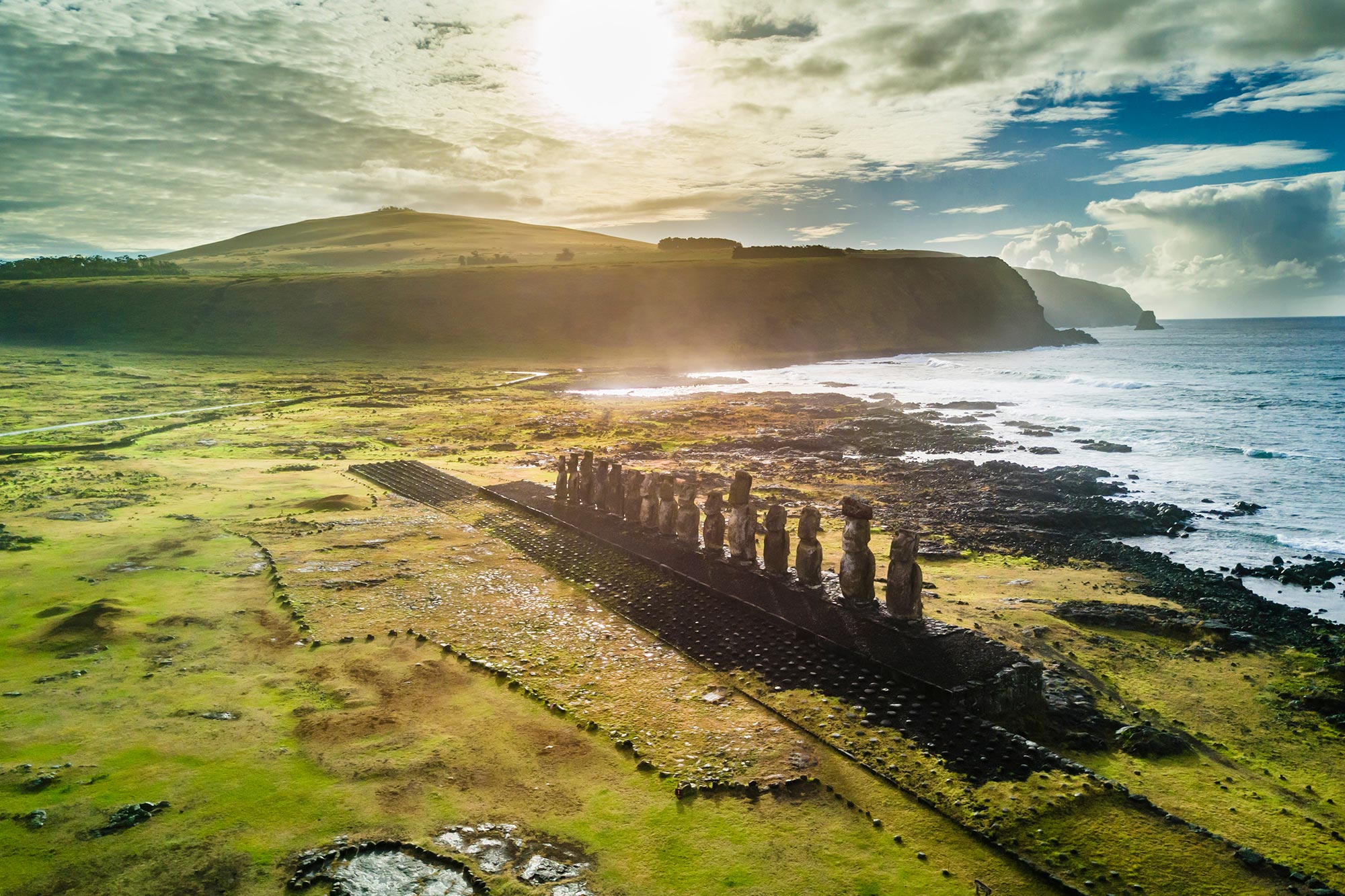
By the end of the century, waves driven by rising seas could crash into Rapa Nui’s most sacred shoreline, flooding Ahu Tongariki and threatening dozens of other cultural treasures.
Scientists used advanced computer simulations to map the island’s vulnerabilities, showing how the encroaching Pacific could one day swallow the iconic moai statues that have stood for centuries.
Rising Seas Threaten Rapa Nui’s Heritage
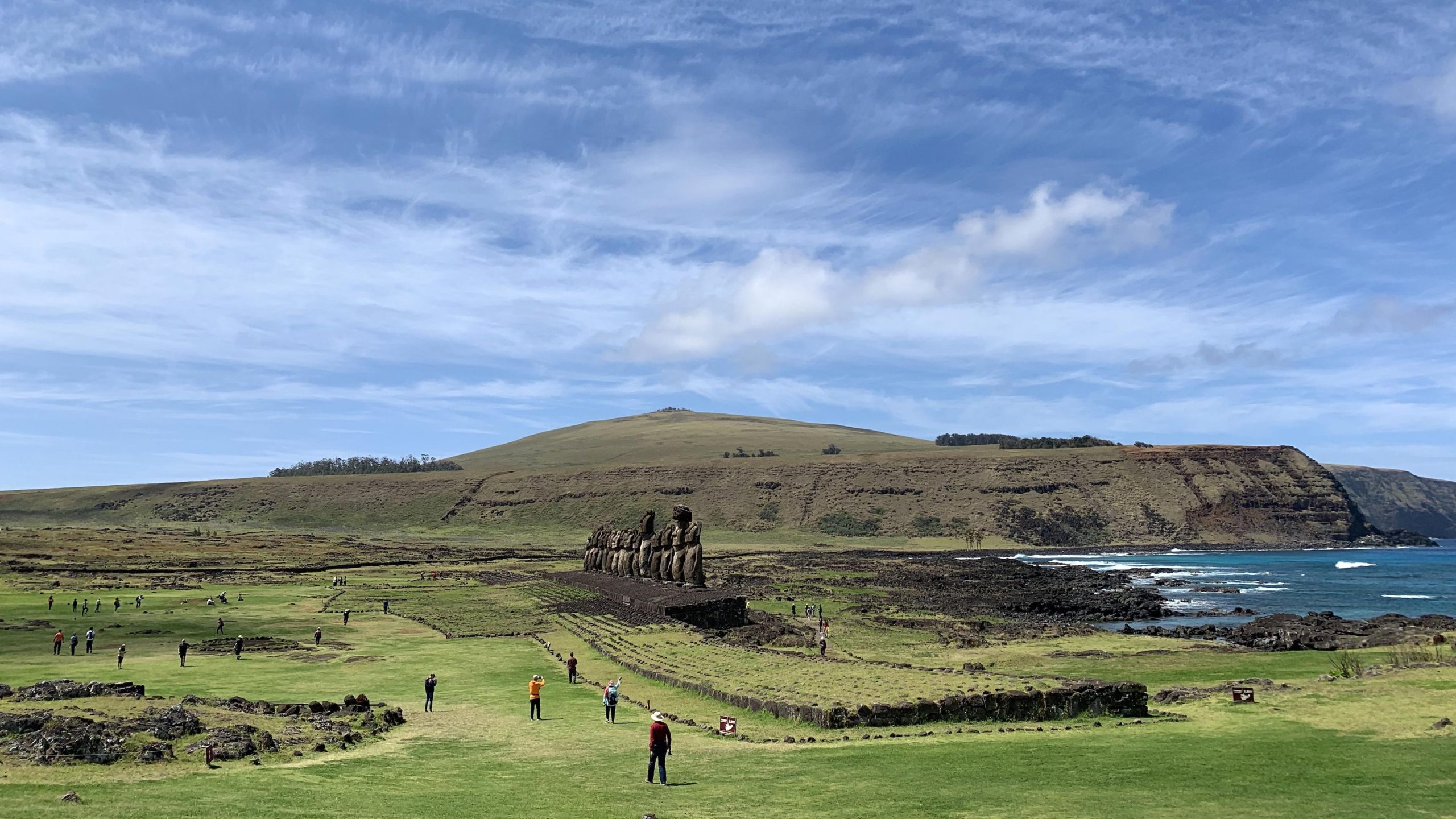
Rising seas could push seasonal waves inland far enough to reach Ahu Tongariki, the famous ceremonial platform within Rapa Nui National Park, by the year 2080. The finding comes from a new study in the Journal of Cultural Heritage led by researchers at the University of Hawai‘i at Mānoa. Their analysis shows that coastal flooding may also place as many as 51 other cultural landmarks at risk, including the island’s world-renowned moai statues.
“This research reveals a critical threat to the living culture and livelihood of Rapa Nui,” said Noah Paoa, lead author of the study and doctoral student in the Department of Earth Sciences in the UH Mānoa School of Ocean and Earth Science and Technology (SOEST). “For the community, these sites are an essential part of reaffirming identity and support the revitalization of traditions. Economically, they are the backbone of the island’s tourism industry. Failure to address this threat could ultimately endanger the island’s UNESCO world heritage site status.”
“As we work to understand the impacts of future sea level rise, we provide information that not only enables us to maintain safe, functional spaces and infrastructure, but also to support thriving communities,” said Chip Fletcher, co-author of the study and dean of SOEST. “That means we must document threats to culturally significant places and assets, and develop plans to preserve and protect what matters to communities.”
Computer Simulations Reveal Vulnerabilities
To explore how rising seas might affect Rapa Nui, Paoa’s team created a digital twin of the area and used advanced computer models to recreate wave activity along the shoreline. They then projected flood scenarios under different sea level rise conditions. By layering these flood maps over geospatial data on cultural landmarks provided by local partners, the researchers were able to identify which heritage sites are likely to be inundated.
“Unfortunately, from a scientific standpoint, the findings are not surprising,” said Paoa. “We know that sea level rise poses a direct threat to coastlines globally. The critical question was not if the site would be impacted, but how soon and how severely. Our work aimed to set potential timelines by which we could expect the impacts to happen. Finding that waves could reach Ahu Tongariki by 2080 provides the specific, urgent data needed to incentivize community discussion and planning for the future.”
A Shared Threat Across the Pacific
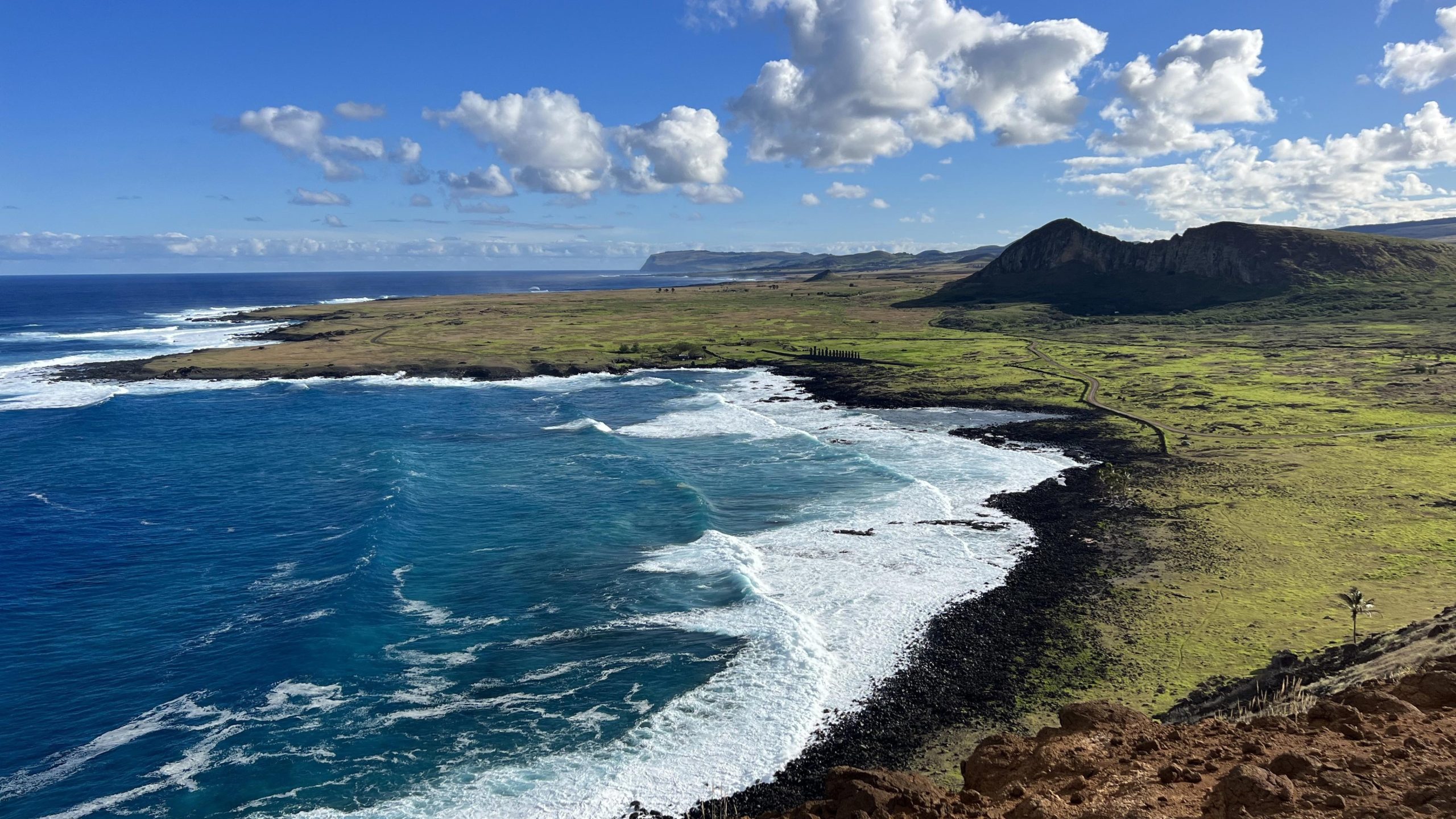
The challenges facing Rapa Nui mirror those in other coastal areas of the world, including Hawaiʻi.
“While Hawaiʻi is invested in protecting coastal infrastructure from sea level rise, the irreplaceable coastal cultural heritage sites in Hawai‘i and across the Pacific face the same urgent threat,” Paoa added. “Our research in Rapa Nui serves as a vital blueprint, demonstrating how we can use science to forecast risks to sacred places, such as coastal heiau and ancestral burial sites. By developing and applying these methods we hope we can help protect what is precious to the people of Hawaiʻi—provided such work is guided by, and deemed appropriate by, the Native Hawaiian community.”
Planning for Future Adaptation
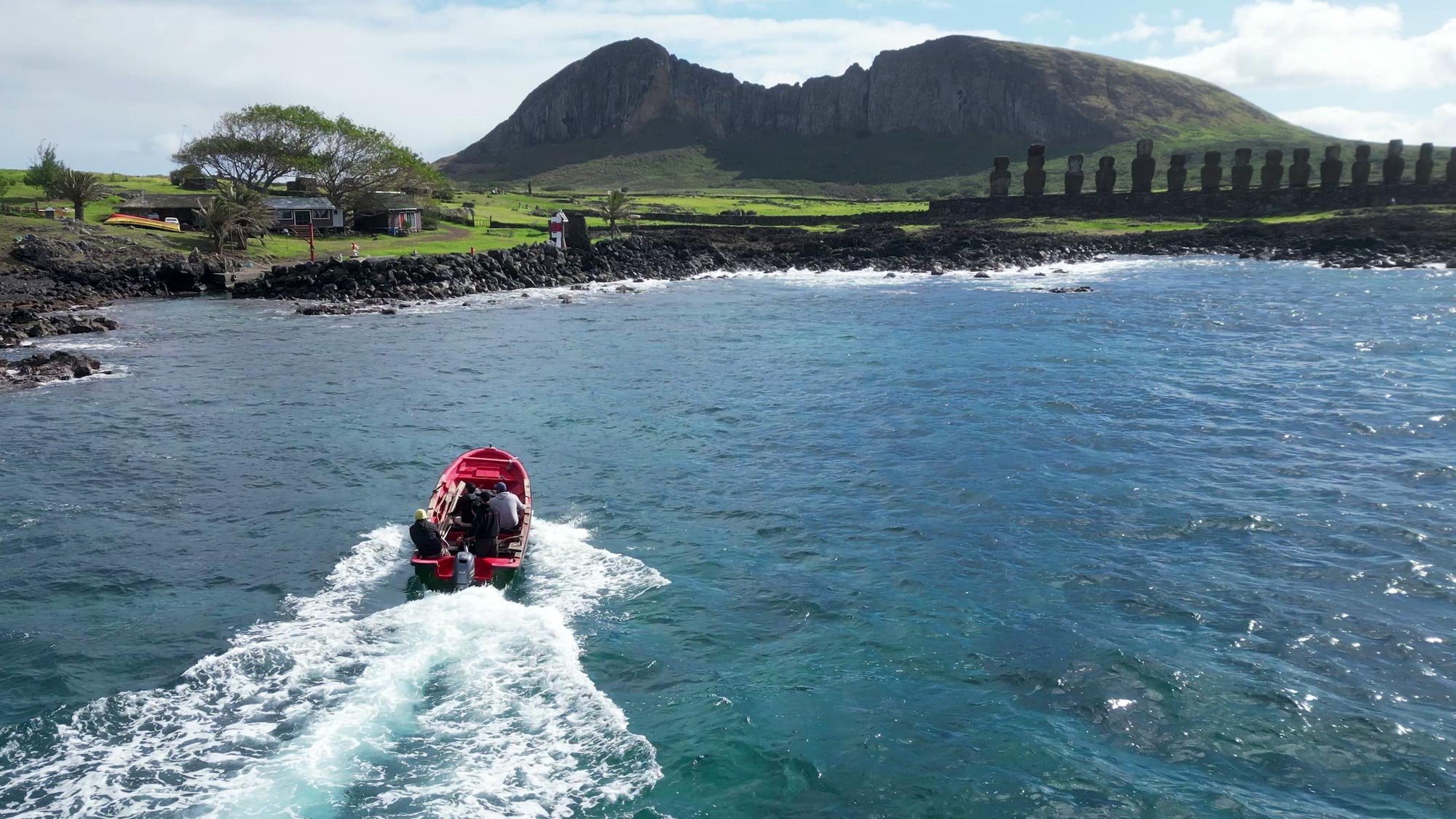
Paoa is now using available data on coastal flooding to examine potential sea level rise impacts on cultural assets in Hawai‘i. In the future, he and the research team, in collaboration with local partners in Rapa Nui, plan to further investigate potential impacts of sea level rise on the island’s coastal cultural assets and examine adaptation and mitigation efforts to safeguard the cultural heritage.
Reference: “Impacts of sea-level rise and wave inundation in the Tongariki Complex, Rapa Nui” by Noah Paoa, Charles H. Fletcher, Assaf Azouri, Matthew Barbee, Tiffany R. Anderson, Martin Guiles, Shellie Habel, Philip Thompson, Kristian McDonald, Camilla Tognacchini, Gabriel Wilkins Riroroko and Douglas S. Luther, 22 July 2025, Journal of Cultural Heritage.
DOI: 10.1016/j.culher.2025.07.004
Never miss a breakthrough: Join the SciTechDaily newsletter.
Follow us on Google and Google News.
6 Comments
Nothing lasts forever.
Another crisis to worry about. 😭
“The Intergovernmental Panel on Climate Change projects sea level in Rapa Nui to reach 0.32–0.70 m to 0.48–0.94 m relative to a 1995–2014 baseline by the end of the century under the intermediate and very-high greenhouse gas emission pathways (SSP2–4.5 and SSP5–8.5, respectively).”
The possibility of SSP5-8.5 has been called into question based on available fossil fuel resources. In any event, while it was supposed to represent the ‘business as usual’ scenario of CO2 emissions, it has consistently predicted more CO2 increase than has actually happened. It is an improbable scenario.
Is the range (0.32-0.70) +/- 1-sigma or 2-sigma?
“Rising seas COULD” push seasonal waves inland far enough to reach Ahu Tongariki, …”
“Could” only means that is is not impossible. It is a qualitative estimate of unspecified, but low probability. It is akin to saying one “could” win the lottery. It says nothing about the likelihood of winning the lottery. However, any reasonable person understands that the likelihood is very small.
Really…better worry about the Co2 being generated as a result of AI needs for power….gas turbine plants being built EVERYWHERE!!!
Anybody thought to look at their WATER NEEDS FOR COOLING??
MOVE ALONG….NOTHING TO SEE HERE
We could make large robotic fish-farm covers made from piezo-electric ceramics that’ll power the future AI and, at the same time, evaporate the oceans thereby saving Rapa Nui and get the Nobel and appropriate accolade from a grateful world.