
Researchers have uncovered an unexpectedly large and tectonically controlled hydrothermal vent field around Milos Island.
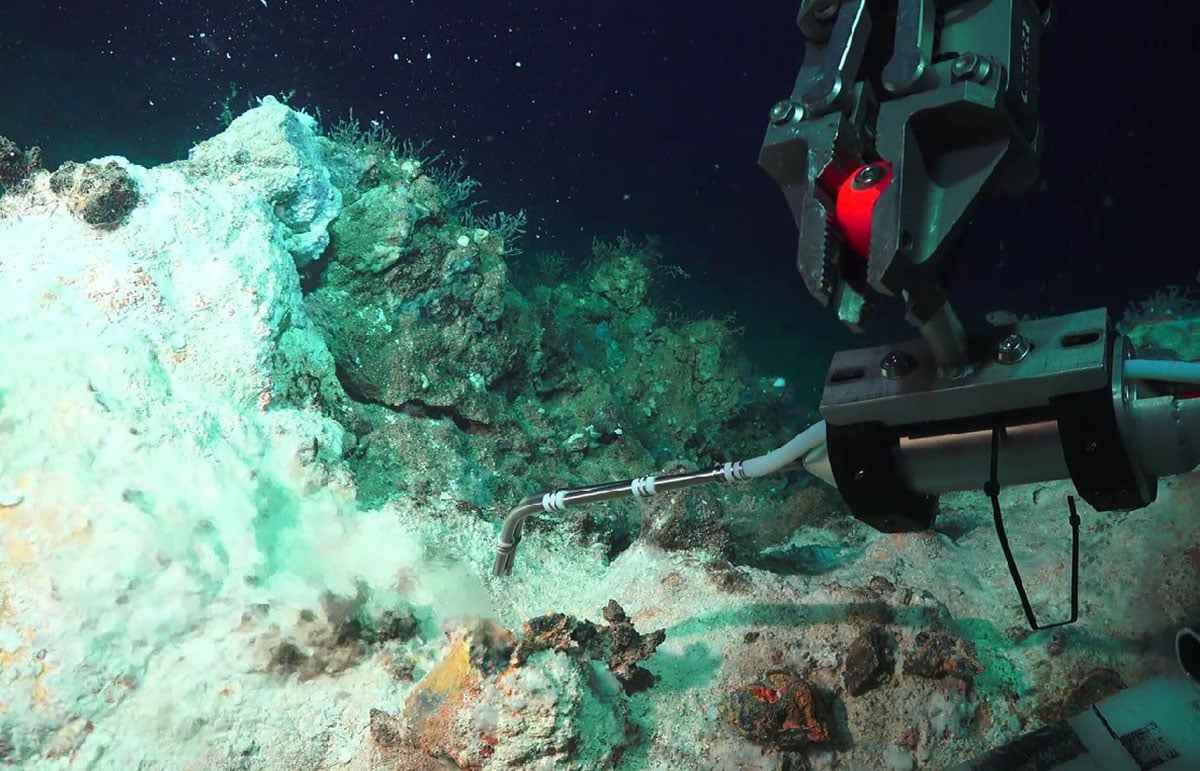
A new study in Scientific Reports describes the discovery of a surprisingly large hydrothermal vent field along the underwater shelf of Milos Island, Greece. Researchers identified the vents during the METEOR expedition M192, using a variety of tools that included advanced underwater systems such as an autonomous vehicle and a remotely operated vehicle to map and inspect the seafloor.
Through these methods, the team uncovered previously unknown venting at depths between 100 and 230 meters (about 330 to 755 feet). This discovery places Milos among the largest shallow-to-intermediate hydrothermal systems known in the Mediterranean and greatly broadens current understanding of how such vents are distributed in the region.
The study documents three primary vent areas: Aghia Kiriaki, Paleochori–Thiorychia, and Vani. All of these sites sit along active fault zones that stretch across the Milos shelf. These faults are part of a major tectonic depression called the Milos Gulf–Fyriplaka graben, which has lowered the seafloor to depths reaching 230 meters (about 755 feet). The clear link between vent positions and these geological structures indicates that tectonic forces strongly influence where hydrothermal fluids rise and emerge at the seabed.
Vents Aligned With Tectonic Structures
“We never expected to find such a large field of gas flares off Milos,” says Solveig I. Bühring, senior author of the study and scientist at the MARUM – Center for Marine Environmental Sciences, University of Bremen, who led the expedition M192 during which the vents were discovered. “When we first observed the vents through the ROV cameras, we were stunned by their diversity and beauty — from shimmering, boiling fluids to thick microbial mats covering the chimneys.”
According to first author Paraskevi Nomikou of the National and Kapodistrian University of Athens, the spatial pattern of these vent clusters is closely controlled by the island’s tectonic fabric:
“Our data clearly show that the gas flares follow the patterns of the major fault systems around Milos,” Nomikou explains. “Different fault zones influence different vent clusters, especially where several faults meet. These tectonic structures strongly control how and where hydrothermal fluids reach the seafloor.”
The findings demonstrate how active faulting and ongoing geological processes have shaped the evolution of these vent fields. This discovery establishes Milos as one of the most significant natural laboratories in the Mediterranean for studying the interplay between tectonics, volcanism, and hydrothermal activity.
Reference: “Structural control and depth clustering of extensive hydrothermal venting on the shelf of Milos Island” by Paraskevi Nomikou, Konstantina Bejelou, Andrea Koschinsky, Christian dos Santos Ferreira, Dimitrios Papanikolaou, Danai Lampridou, Stephanos P. Kilias, Eirini Anagnostou, Marcus Elvert, Clemens Röttgen, Joely M. Maak, Alissa Bach, Wolfgang Bach, Areti Belka, Evgenia Bazhenova, Karsten Haase, Charlotte Kleint, Effrosyni Varotsou, Palash Kumawat, Erika Kurahashi, Jianlin Liao, Eva-Maria Meckel, Ignacio Pedre, Wiebke Lehmann, Enno Schefuß, Michael Seidel, Sotiria Kothri and Solveig I. Bühring, 27 November 2025, Scientific Reports.
DOI: 10.1038/s41598-025-26398-y
Never miss a breakthrough: Join the SciTechDaily newsletter.
Follow us on Google and Google News.
1 Comment
Why are they surprised, the entire are is highly geologically active. Earthquakes and Volcanoes