
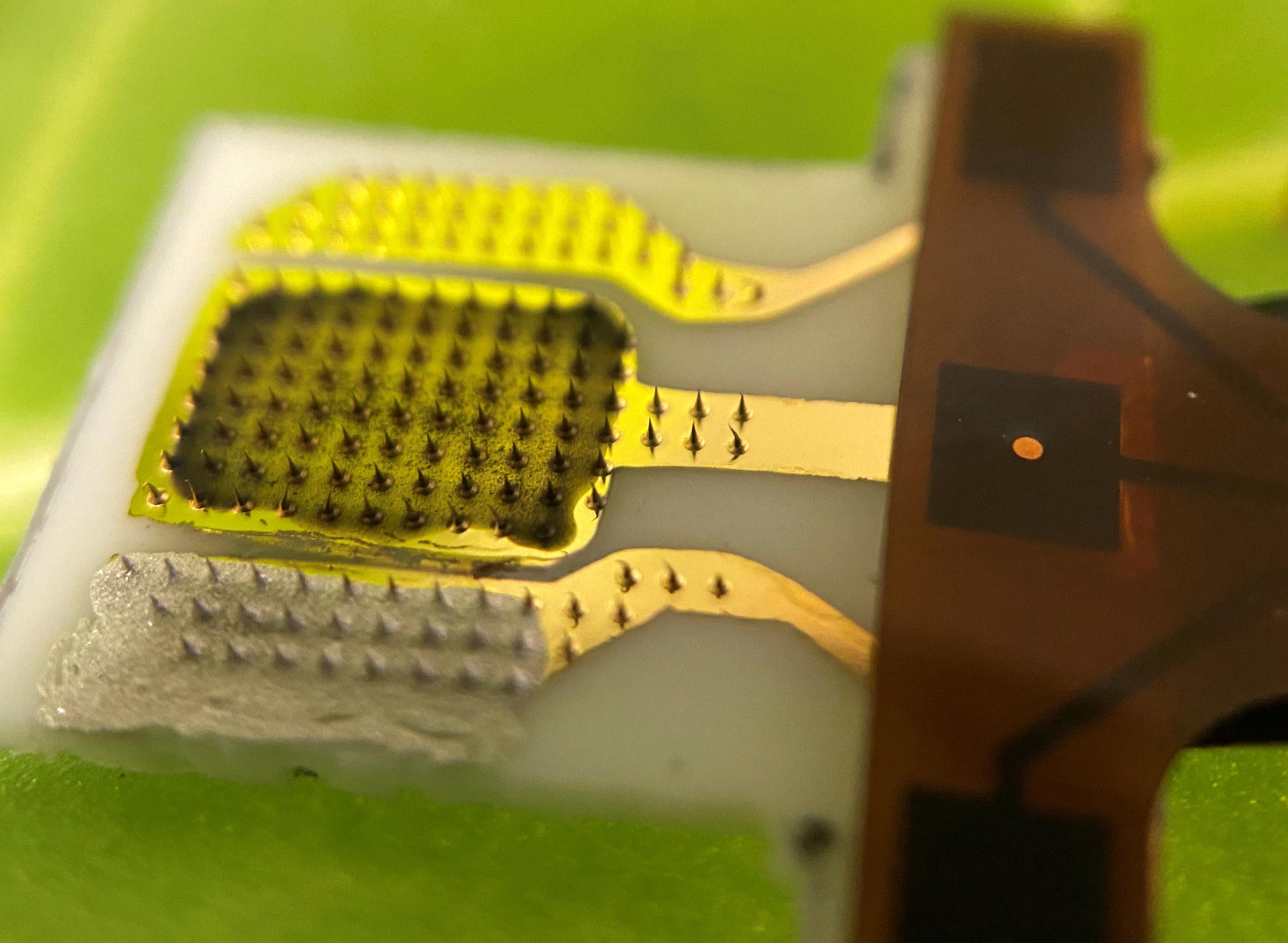
Plants send distress signals when under attack from pests, drought, or disease, but these signals are often invisible to the naked eye. Now, scientists have developed a tiny, wearable sensor that attaches to plant leaves and detects stress before visible damage occurs.
By measuring hydrogen peroxide levels—an early biochemical warning—this patch helps farmers and gardeners respond swiftly, improving plant health and crop yields. Best of all, it provides real-time results in under a minute at an affordable cost.
Enhancing Plant Health with Wearable Sensors
Environmental factors like pests, drought, extreme temperatures, and infections can put significant stress on plants, creating challenges for both home gardeners and farmers. Detecting this stress early – before leaves begin to discolor, wilt, or wither – is crucial for effective intervention.
Now, researchers reporting today (March 19) in ACS Sensors have developed a wearable patch that attaches directly to plant leaves, allowing growers to monitor plant health in real-time. This electrochemical sensor detects hydrogen peroxide, a key distress signal plants produce when under stress.
When a plant experiences stress, its normal biochemical processes become disrupted, triggering the production of hydrogen peroxide. This molecule not only signals distress but also helps activate the plant’s defense mechanisms. Identifying these chemical changes early allows growers to respond quickly, minimizing damage and improving crop yields, even in harsh conditions.
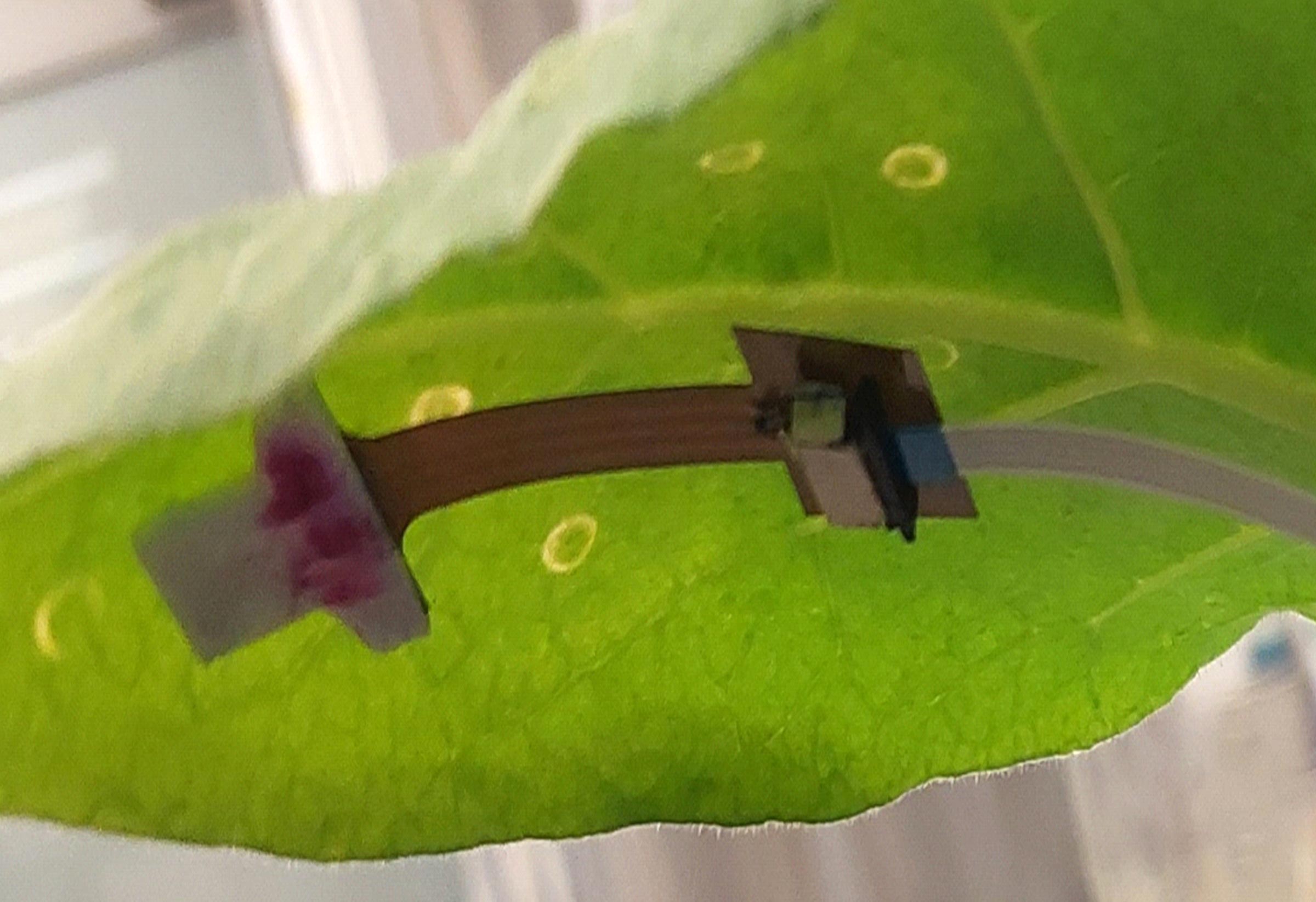
However, most existing methods for detecting hydrogen peroxide are complex, requiring leaf samples, multiple processing steps, or external detectors that rely on fluorescence – an approach often complicated by chlorophyll interference. Previous research on plant-wearable devices has focused on monitoring leaf water content as an indicator of health, but Liang Dong and his team sought a more direct approach. They developed a self-contained patch that rapidly and accurately detects hydrogen peroxide levels in living plants, offering a simpler and more effective way to monitor plant stress.
Innovative Patch Design for Early Detection
To build a patch that sticks to the underside of leaves, the researchers created an array of microscopic plastic needles across a flexible base. Onto this patterned surface they coated a chitosan-based hydrogel mixture that converted small changes in hydrogen peroxide into measurable differences in electrical current. The mixture contained an enzyme that reacted with hydrogen peroxide to produce electrons and reduced graphene oxide to conduct those electrons through the sensor.
Real-World Testing on Crops
The researchers tested their patches on live, healthy soybean and tobacco plants and compared them to stressed bacteria-infected plants. They found:
- For both crops infected with the bacterial pathogen Pseudomonas syringae pv. tomato DC3000, the sensor produced more electrical current on stressed leaves than on healthy ones, and the current levels were directly related to the amount of hydrogen peroxide present.
- The sensor’s measurement of hydrogen peroxide was accurate and confirmed by conventional lab analyses.
- After about 1 minute, the patches measured hydrogen peroxide in the leaves at significantly lower levels than those previously reported from needle-like sensors for live plants.
- Patches could be reused nine times before the microscopic needles lost their form.
A Game-Changer for Farmers
The new strategy provides information that could help growers efficiently make decisions about their crops. “We can achieve direct measurements in under a minute for less than a dollar per test,” says Dong. “This breakthrough will significantly streamline analysis, making it practical for farmers to use our patch sensor for real-time disease crop monitoring.”
And the researchers are excited to continue moving the research forward. “Our next step is to refine the technology and enhance its reusability,” concludes Dong.
Reference: “A Biohydrogel-Enabled Microneedle Sensor for In Situ Monitoring of Reactive Oxygen Species in Plants” by Nawab Singh, Qinming Zhang, Weihui Xu, Steven A. Whitham and Liang Dong, 19 March 2025, ACS Sensors.
DOI: 10.1021/acssensors.4c02645
The authors acknowledge funding from Iowa State University, the U.S. Department of Agriculture’s National Institute of Food and Agriculture, and the National Science Foundation.
Never miss a breakthrough: Join the SciTechDaily newsletter.
Follow us on Google and Google News.