
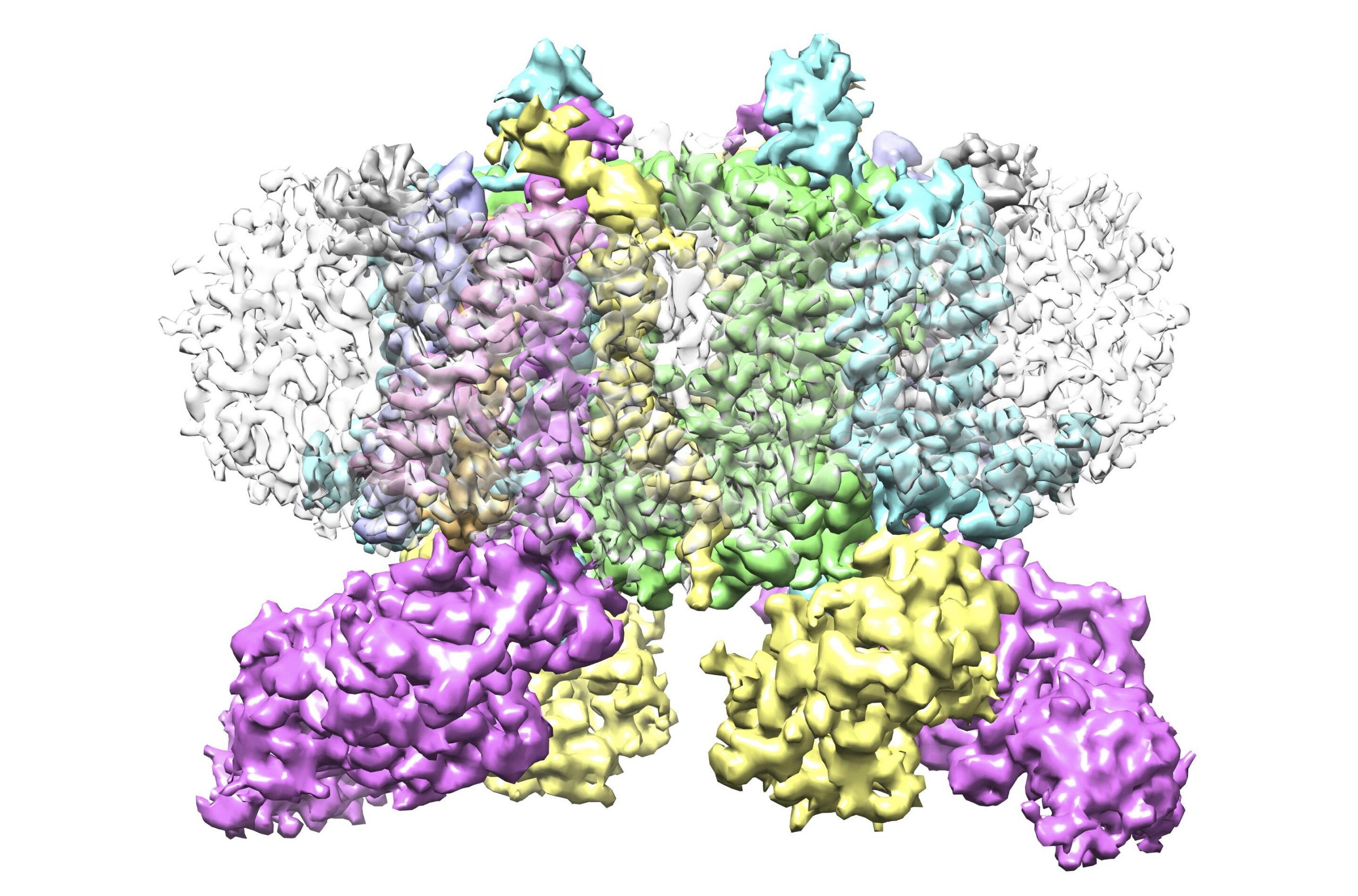
- Scientists reveal ‘beating heart’ of photosynthesis that is responsible for significantly influencing plant growth.
- Study shows how an electrical reaction in protein complex cytochrome b6f provides the energy that plants need to turn carbon dioxide into the carbohydrates and biomass that sustain the global food chain.
- Discovery could allow experts to redesign future photosynthesis in crop plants to achieve higher yields and meet urgent food security needs for a growing global population.
Scientists have solved the structure of one of the key components of photosynthesis, a discovery that could lead to photosynthesis being ‘redesigned’ to achieve higher yields and meet urgent food security needs.
The study, led by the University of Sheffield and published in the journal Nature, reveals the structure of cytochrome b6f — the protein complex that significantly influences plant growth via photosynthesis.
Photosynthesis is the foundation of life on Earth providing the food, oxygen, and energy that sustains the biosphere and human civilization.
Using a high-resolution structural model, the team found that the protein complex provides the electrical connection between the two light-powered chlorophyll-proteins (Photosystems I and II) found in the plant cell chloroplast that convert sunlight into chemical energy.
Lorna Malone, the first author of the study and a Ph.D. student in the University of Sheffield’s Department of Molecular Biology and Biotechnology, said: “Our study provides important new insights into how cytochrome b6f utilizes the electrical current passing through it to power up a ‘proton battery’. This stored energy can then be then used to make ATP, the energy currency of living cells. Ultimately this reaction provides the energy that plants need to turn carbon dioxide into the carbohydrates and biomass that sustain the global food chain.”
The high-resolution structural model, determined using single-particle cryo-electron microscopy, reveals new details of the additional role of cytochrome b6f as a sensor to tune photosynthetic efficiency in response to ever-changing environmental conditions. This response mechanism protects the plant from damage during exposure to harsh conditions such as drought or excess light.
Dr. Matt Johnson, reader in Biochemistry at the University of Sheffield and one of the supervisors of the study added: “Cytochrome b6f is the beating heart of photosynthesis which plays a crucial role in regulating photosynthetic efficiency.
“Previous studies have shown that by manipulating the levels of this complex we can grow bigger and better plants. With the new insights we have obtained from our structure we can hope to rationally redesign photosynthesis in crop plants to achieve the higher yields we urgently need to sustain a projected global population of 9-10 billion by 2050.”
Reference: “Cryo-EM structure of the spinach cytochrome b6 f complex at 3.6 Å resolution” by Lorna A. Malone, Pu Qian, Guy E. Mayneord, Andrew Hitchcock, David A. Farmer, Rebecca F. Thompson, David J. K. Swainsbury, Neil A. Ranson, C. Neil Hunter and Matthew P. Johnson, 13 November 2019, Nature.
DOI: 10.1038/s41586-019-1746-6
The research was conducted in collaboration with the Astbury Center for Structural Molecular Biology at the University of Leeds.
Researchers now aim to establish how cytochrome b6f is controlled by a myriad of regulatory proteins and how these regulators affect the function of this complex.
Never miss a breakthrough: Join the SciTechDaily newsletter.
Follow us on Google and Google News.