
Close Menu
    Facebook X (Twitter) Instagram
    SciTechDaily
    • Biology
    • Chemistry
    • Earth
    • Health
    • Physics
    • Science
    • Space
    • Technology
    Facebook X (Twitter) Pinterest YouTube RSS
    SciTechDaily
    Home»Biology»New Microfluidic Technology for the Selection of Single Photosynthetic Cells
    Biology

    New Microfluidic Technology for the Selection of Single Photosynthetic Cells

    By Uppsala UniversitySeptember 2, 2020No Comments3 Mins Read
    Facebook Twitter Pinterest Telegram LinkedIn WhatsApp Email Reddit
    Share
    Facebook Twitter LinkedIn Pinterest Telegram Email Reddit
    PhenoChip
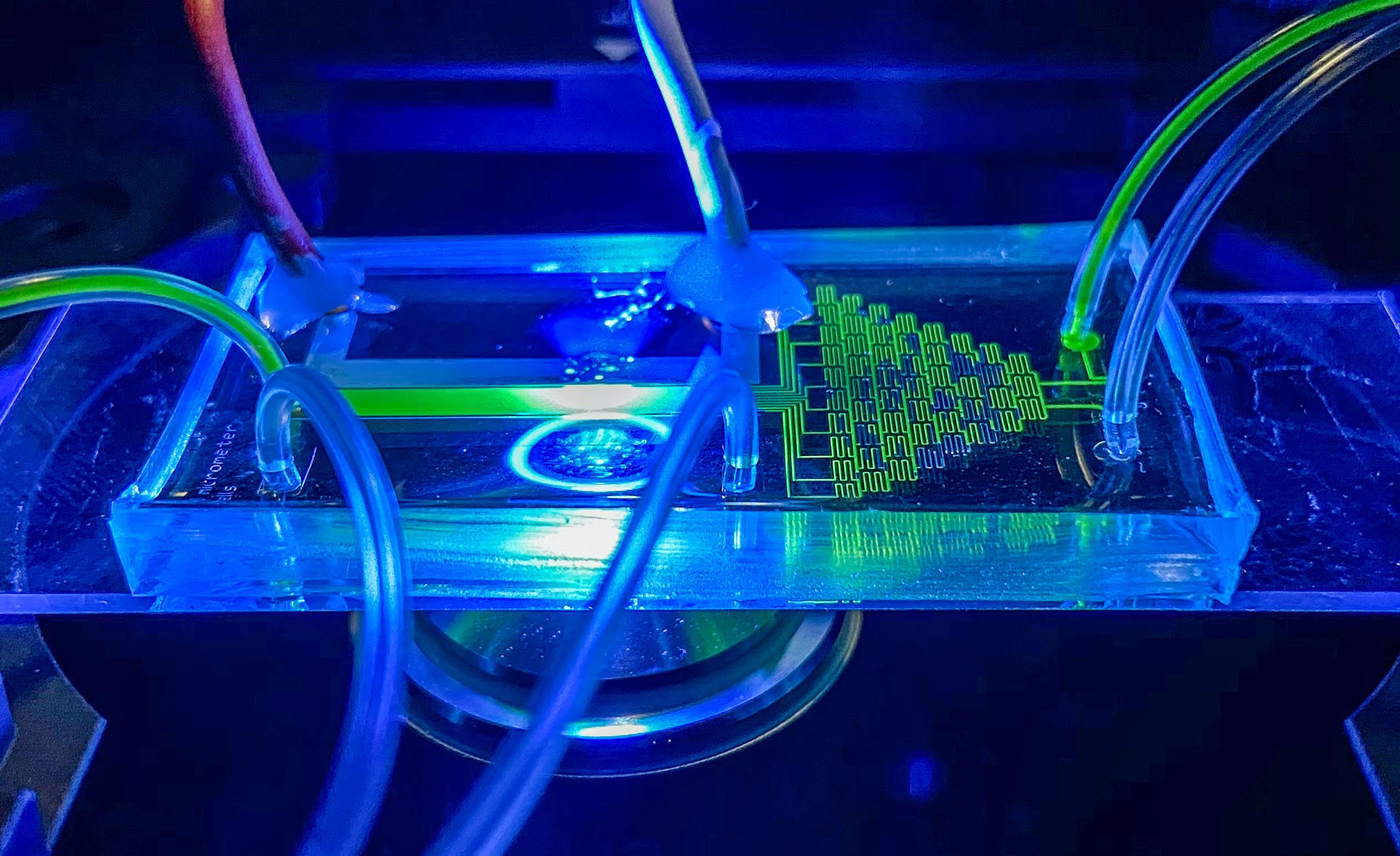
    PhenoChip- a microfluidic device for the single cell phenotyping of unicellular phototrophs such as microalgae and cyanobacteria. Credit: Lars Behrendt

    Novel technology for the selection of single photosynthetic cells for industry and ecosystem understanding.

    You might need a microscope to witness the next agricultural revolution. New research, published in the journal Science Advances, demonstrates how microfluidic technologies can be used to identify, isolate, and propagate specific single photosynthetically active cells for fundamental industry applications and improved ecosystem understanding.

    Natural environments are inherently dynamic and require photosynthetic organisms to adapt their physiology to make optimal use of available resources and grow to the best of their abilities. However, not all photosynthetic organisms are equally efficient in this physiological fine-tuning, and where some, for example, succumb to the effects of temperature stress, others persist and grow.

    In agriculture, humans have taken advantage of this phenotypic heterogeneity in natural plant populations for thousands of years: the selective breeding of more resistant or productive plant phenotypes has given rise to many of our modern crops and has sustained much of human progress.

    While microalgae and cyanobacteria have a similar potential for bioenergy production and biosynthesis of food and chemicals, until now, the tools for their selection have been blunt and unwieldy, relying on bulk culture — akin to selecting for traits in wheat at the level of the landscape.

    Assistant Professor Lars Behrendt
    Lars Behrendt, Assistant Professor at Department of Environmental Toxicology, Uppsala University and SciLifeLab. Credit: Niklas Norberg Wirtén/SciLifeLab

    In this new study, a team of researchers from Sweden, Denmark and Switzerland reports on a novel microfluidic technology called ‘PhenoChip’ which allows for the identification and selection of unicellular phototrophs under relevant environments.

    “Similar to our ancestors selecting a more drought-resistant plant, we can now pick and propagate single phenotypes and start asking fundamental questions. What mechanism causes this phenotype to emerge? Does it persist over many generations? Can we use it to obtain increased biomass yields for biotechnological applications or select resilient phenotypes from natural environments?” says first author Lars Behrendt, Assistant Professor at the Department of Environmental Toxicology at Uppsala University.

    In a first-proof-of-concept application, the team used PhenoChip on single cells essential to coral reef health, ecosystems currently under pressure due to changes in climate. In their study, they exposed cells of the coral symbiont Symbiodinium to thermal and chemical treatments, both relevant to the onset of coral bleaching. This enabled the identification of single cells with elevated resilience to rising temperatures and the selection of cells that maintained specific phenotypes for several generations.

    PhenoChip’s assisted evolution of Symbiodinium could thus help ongoing initiatives aiming to mitigate threats to coral reefs resulting from projected changes in sea surface temperatures and other stressors.

    “Conceivably we could use PhenoChip to create a ‘library’ of desired Symbiodinium phenotypes and try to supply these symbionts — which have not been genetically manipulated but were selected for being more naturally robust — to bleached corals under laboratory conditions. While we don’t yet know whether this would improve the ability of corals to recover and persist in the face of future stress, it’s an exciting thought,” says Behrendt.

    Reference: “PhenoChip: A single-cell phenomic platform for high-throughput photophysiological analyses of microalgae” by Lars Behrendt, M. Mehdi Salek, Erik L. Trampe, Vicente I. Fernandez, Kang Soo Lee, Michael Kühl and Roman Stocker, 2 September 2020, Science Advances.
    DOI: 10.1126/sciadv.abb2754

    Never miss a breakthrough: Join the SciTechDaily newsletter.
    Follow us on Google and Google News.

    Agriculture Biotechnology Molecular Biology Photosynthesis Plant Science Uppsala University
    Share. Facebook Twitter Pinterest LinkedIn Email Reddit

    Related Articles

    Quillwort Genome Could Hold Secrets To Make Crops Use Water or Carbon Dioxide More Efficiently

    Virus Infection Cycle Revealed in Incredible Dynamic Detail

    The First Frost Is the Deepest – New Discovery May Help Us Grow Crops in Fluctuating Climate

    Common Weed Killers Can Increase the Prevalence of Antibiotic Resistant Bacteria

    Yale Scientists Solve a Thorny Problem: Where Do Thorns Come From?

    How Some Crops Replenish Their Own Fertilizer Through Bacteria in Their Roots – A Surprisingly Complex Interaction

    Revealed: Plants Molecular ‘Alarm’ System That Protects Them From Predators

    Possible On/Off Switch for Plant Growth Identified

    Experts Reveal ‘Beating Heart’ of Photosynthesis – Can Help Us Meet Urgent Food Security Needs

    Leave A Reply Cancel Reply

    • Facebook
    • Twitter
    • Pinterest
    • YouTube

    Don't Miss a Discovery

    Subscribe for the Latest in Science & Tech!

    Trending News

    First-of-Its-Kind Discovery: Homer’s Iliad Found Embedded in a 1,600-Year-Old Egyptian Mummy

    Beyond Inflammation: Scientists Uncover New Cause of Persistent Rheumatoid Arthritis

    A Simple Molecule Could Unlock Safer, Easier Weight Loss

    Scientists Just Built a Quantum Battery That Charges Almost Instantly

    Researchers Unveil Groundbreaking Sustainable Solution to Vitamin B12 Deficiency

    Millions of People Have Osteopenia Without Realizing It – Here’s What You Need To Know

    Researchers Discover Boosting a Single Protein Helps the Brain Fight Alzheimer’s

    World-First Study Reveals Human Hearts Can Regenerate After a Heart Attack

    Follow SciTechDaily
    • Facebook
    • Twitter
    • YouTube
    • Pinterest
    • Newsletter
    • RSS
    SciTech News
    • Biology News
    • Chemistry News
    • Earth News
    • Health News
    • Physics News
    • Science News
    • Space News
    • Technology News
    Recent Posts
    • This Simple Exercise Trick Builds Muscle With Less Effort, Study Finds
    • Middle Age Is Becoming a Breaking Point in America, Study Reveals
    • Scientists Discover How Coffee Impacts Memory, Mood, and Gut Health
    • How Cells Copy DNA Might Matter More Than We Ever Realized
    • Scientists Just Solved the Mystery of the Twelve Apostles
    Copyright © 1998 - 2026 SciTechDaily. All Rights Reserved.
    • Science News
    • About
    • Contact
    • Editorial Board
    • Privacy Policy
    • Terms of Use

    Type above and press Enter to search. Press Esc to cancel.