
Marine microalgae-based cellular agriculture is a promising new way to sustainably produce plant-based ‘meat’ and healthy ‘superfoods’ for the future.
Researchers at Flinders University’s Centre for Marine Bioproducts Development (CMBD) in Australia are responding to growing interest from consumers looking for healthier, more environmentally friendly, sustainable and ethical alternatives to animal proteins.
Marine microalgae, single-cell photosynthetic organisms from the ocean could be the solution to the world’s meat protein shortage, says CMBD director Flinders University Professor Wei Zhang, who is also co-leading a bid to establish a national Marine Bioproducts Cooperative Research Centre (MB-CRC) in Australia.
The CRC’s mission is to find ways to develop the third generation of Australian high-value marine bioindustry (as opposed to the first-generation of fisheries and the second-generation of aquaculture) and transform Australia’s emerging marine bioproducts sector into a globally competitive industry.
The Centre’s focus will be on industry and market-driven innovations to improve both the supply chain and value chain to deliver costs savings, improved production, and competitive capacity for Australia to access high value marine bioproducts markets across the globe.

From Lab to Table: Cultivating High-Value Functional Foods
“Our research spans the entire value chain, from microalgae cultivation and circular advanced biomanufacturing to the development of high-value functional food,” Professor Zhang says.
“Microalgae come in a diverse range of nutritional profiles and advanced cultivation strategies can be developed for tuning microalgae to produce protein-, oil- and carbohydrate-dominant types that can be processed into a broad range of functional foods, including healthy cell patties, chips, pastes, jams and even caviar.”
Two freshwater microalgal products currently on the market are the high protein Chlorella and Spirulina varieties used in the production of foods such as green pasta, drinks, and beverages.
Marine species are of significant interest as they do not require scarce freshwater and crop land. Their unique nutritional profiles, such as their high DHA and EPA content (long chain omega 3 fatty acids), are essential for infant and brain development and cardiac health.
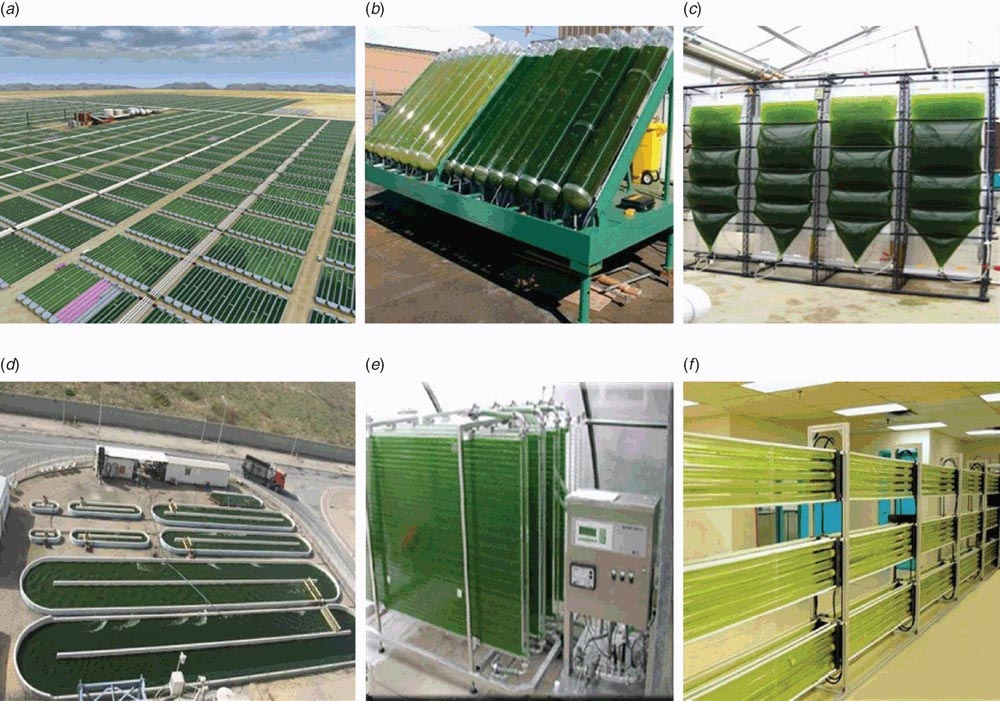
Bioreactors for upscaling upscaled aquatic production of photosynthetic microalgae can also help to combat greenhouse gas emissions and climate change. One 90 x 90 x 210 cm (3 x 3 x 7 ft) bioreactor unit can absorb up to 400 times more carbon dioxide than the same footprint of trees.

Oceanic Rainforests: Microalgae’s Eco-Friendly Edge
Using sunlight, certain varieties of microalgae create oxygen and convert carbon dioxide into organic carbon (protein, carbohydrates, pigments, fats, and fibers), just like plants, but do not require valuable arable land for their production.
“They are therefore often called the rainforests of the oceans,” says Associate Professor Kirsten Heimann, senior lecturer in biotechnology at Flinders University.
“Using sunlight, photosynthetic microalgae create oxygen and convert carbon dioxide into organic carbon (protein, carbohydrates, pigments, fats, fibers, and micronutrients), just like plants, but do not require valuable arable land for their production.
This means microalgae can be sustainably harvested and converted into eco-friendly superfoods,” she says. “Putting one and one together, microalgae and innovative production and processing could help to service the world’s booming population and growing demand for sustainable protein production,” she says.
Beyond Food: Seaweed-Based Bioplastics in the Pipeline
Along with research into processing techniques, the CMBD team is also investigating the use of waste or harvested seaweed for biodegradable plastics production, another sustainable solution to non-degradable petroleum-based plastics.
Reference: “Release of encapsulated bioactives influenced by alginate viscosity under in-vitro gastrointestinal model” by Reinu E. Abraham, Peng Su, Munish Puri, Colin L. Raston and Wei Zhang, 4 January 2021, International Journal of Biological Macromolecules.
DOI: 10.1016/j.ijbiomac.2020.12.143
The results demonstrate the use of both microalgae and macroalgae for development of controlled release of health and nutritional bioactives from marine sources.
Never miss a breakthrough: Join the SciTechDaily newsletter.
Follow us on Google and Google News.
3 Comments
Nice article.
Beautiful. I saw this story a few days ago, and had to come back to it, after realizing its potential. It is likely the food of the future. I wonder how they would do in outer space? Factory farming?
Hum, reminds me of the real old movie: “Soilent Green”