
Close Menu
    Facebook X (Twitter) Instagram
    SciTechDaily
    • Biology
    • Chemistry
    • Earth
    • Health
    • Physics
    • Science
    • Space
    • Technology
    Facebook X (Twitter) Pinterest YouTube RSS
    SciTechDaily
    Home»Earth»Weather Forecasting Will Never Be the Same: NOAA GOES-U Satellite Ready to Launch
    Earth

    Weather Forecasting Will Never Be the Same: NOAA GOES-U Satellite Ready to Launch

    By NASAJune 18, 2024No Comments4 Mins Read
    Facebook Twitter Pinterest Telegram LinkedIn WhatsApp Email Reddit
    Share
    Facebook Twitter LinkedIn Pinterest Telegram Email Reddit
    GOES U Satellite Starry Night
    NOAA’s GOES-U is the fourth and final satellite in the Geostationary Operational Environmental Satellites (GOES) – R Series, the Western Hemisphere’s most sophisticated weather-observing and environmental monitoring system. The GOES-R Series provides advanced imagery and atmospheric measurements, real-time mapping of lightning activity, and space weather observations. Credit: NASA

    The Geostationary Operational Environmental Satellite U (GOES-U) is set for launch on a SpaceX Falcon Heavy rocket from NASA’s Kennedy Space Center.

    The satellite, part of NOAA’s GOES-R series, has undergone significant pre-launch preparations including attachment to the launch vehicle, fueling, and encapsulation. It aims to improve weather forecasting and space weather detection.
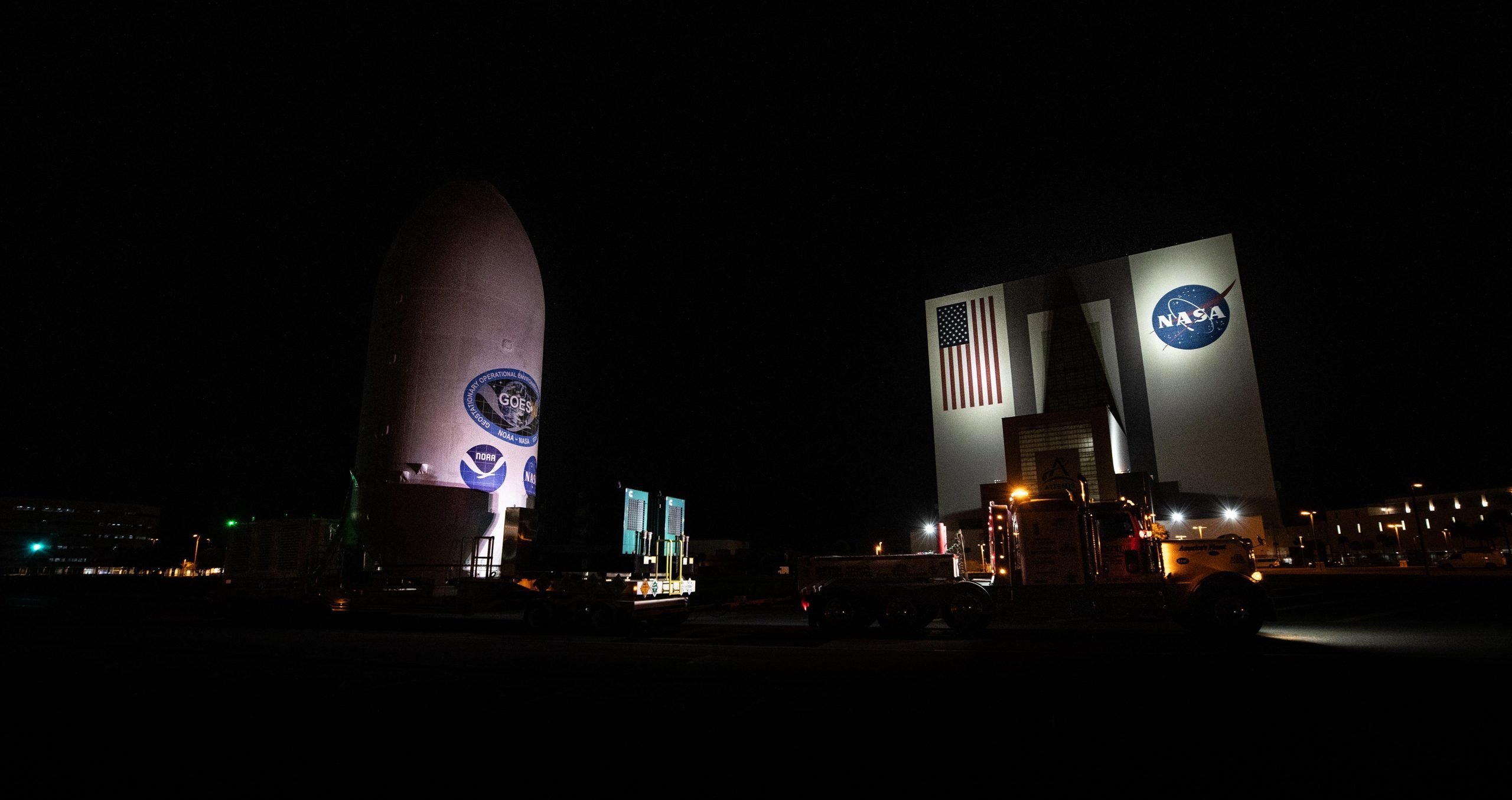
    NOAA GOES-U Transport
    Crews transport NOAA’s (National Oceanic and Atmospheric Administration) Geostationary Operational Environmental Satellite (GOES-U) from the Astrotech Space Operations facility to the SpaceX hangar at Launch Complex 39A at NASA’s Kennedy Space Center in Florida beginning on Friday, June 14, 2024, with the operation finishing early Saturday, June 15, 2024. Credit: NASA/Ben Smegelsky

    Launch Preparations for GOES-U Satellite

    The Geostationary Operational Environmental Satellite U (GOES-U) has now passed several important milestones ahead of its upcoming launch aboard a SpaceX Falcon Heavy rocket from Launch Complex 39A at NASA’s Kennedy Space Center in Florida.

    Technicians at Astrotech Space Operations facility in Titusville, Florida lifted the National Oceanic and Atmospheric Administration’s (NOAA) GOES-U satellite onto the payload adapter and the payload attach fitting on June 10, enabling GOES-U to securely attach to the top of its Falcon Heavy rocket.


    NOAA is preparing for a milestone satellite launch in 2024. GOES-U will be the fourth and final satellite in NOAA’s latest generation of Geostationary Operational Environmental Satellites called the GOES-R Series—the nation’s most advanced weather-observing and environmental monitoring satellite system. Credit: NOAA, NASA, GOES imagery courtesy of CIRA and CIMSS

    Satellite Integration and Fueling

    This milestone follows recent fueling operations where teams loaded over 5,000 pounds of hypergolic propellant and oxidizer into the satellite, which will be used to provide it with thrust in orbit. The GOES-U satellite now weighs a total of 10,956 pounds.

    Teams next encapsulated the 20-foot-tall satellite inside two payload fairing halves in preparation for connecting it to the rocket on June 13.
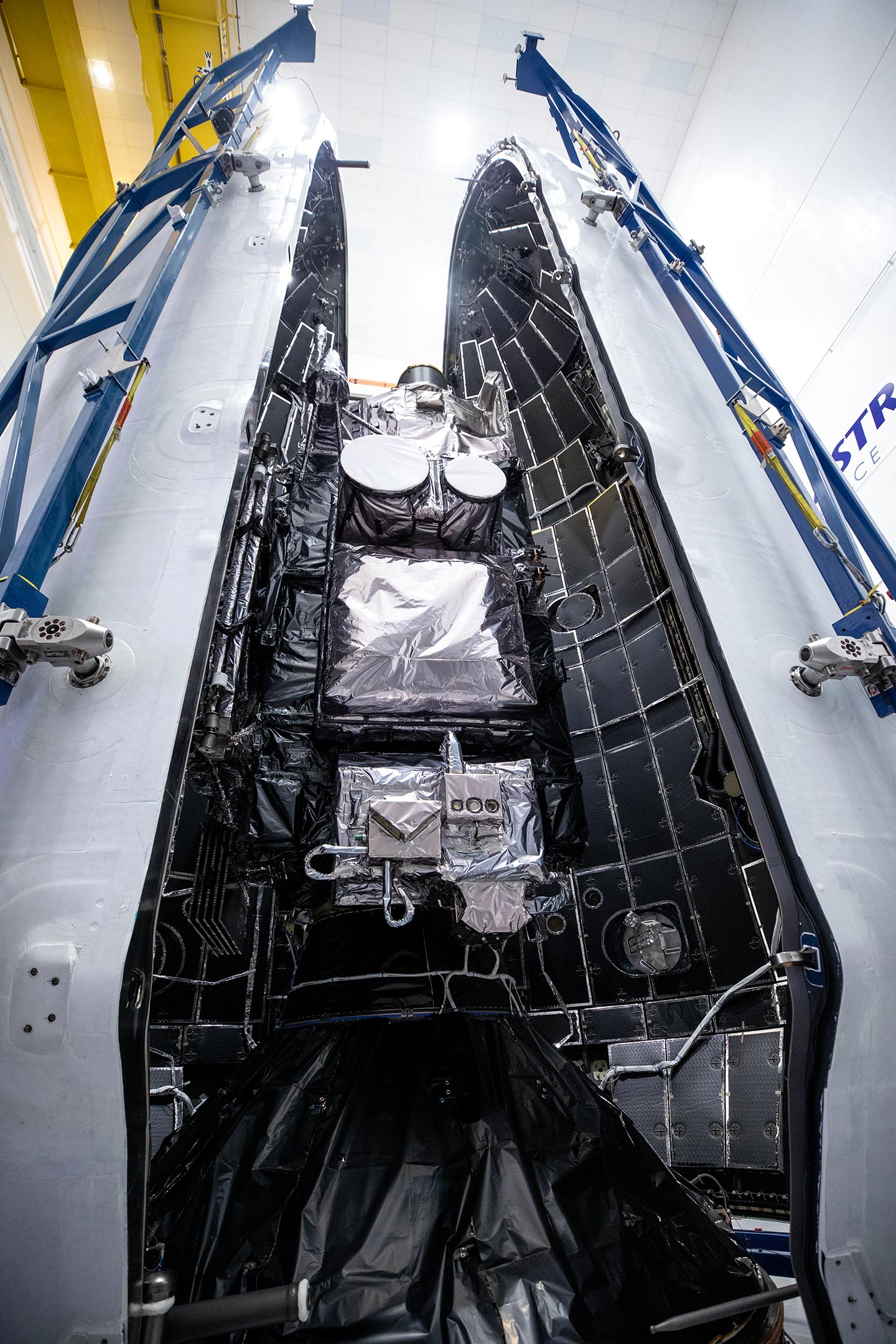
    NOAA GOES-U Payload Fairing Encapsulation
    Technicians prepare NOAA’s GOES-U for encapsulation inside payload fairing halves on Thursday, June 13, 2024, at the Astrotech Space Operations facility in Titusville near NASA’s Kennedy Space Center in Florida. Credit: NASA/Ben Smegelsky

    Final Pre-Launch Procedures

    During the ascent phase of the launch, the fairing halves will protect GOES-U from aerodynamic pressure and heating. Once GOES-U no longer requires this protection, approximately four minutes after liftoff, the halves will be jettisoned and return to Earth, where SpaceX crews will recover them for use on future missions.

    After encapsulation, workers transported the spacecraft from Astrotech’s facility to NASA Kennedy and SpaceX’s hangar at the spaceport’s Launch Complex 39A, on June 15.
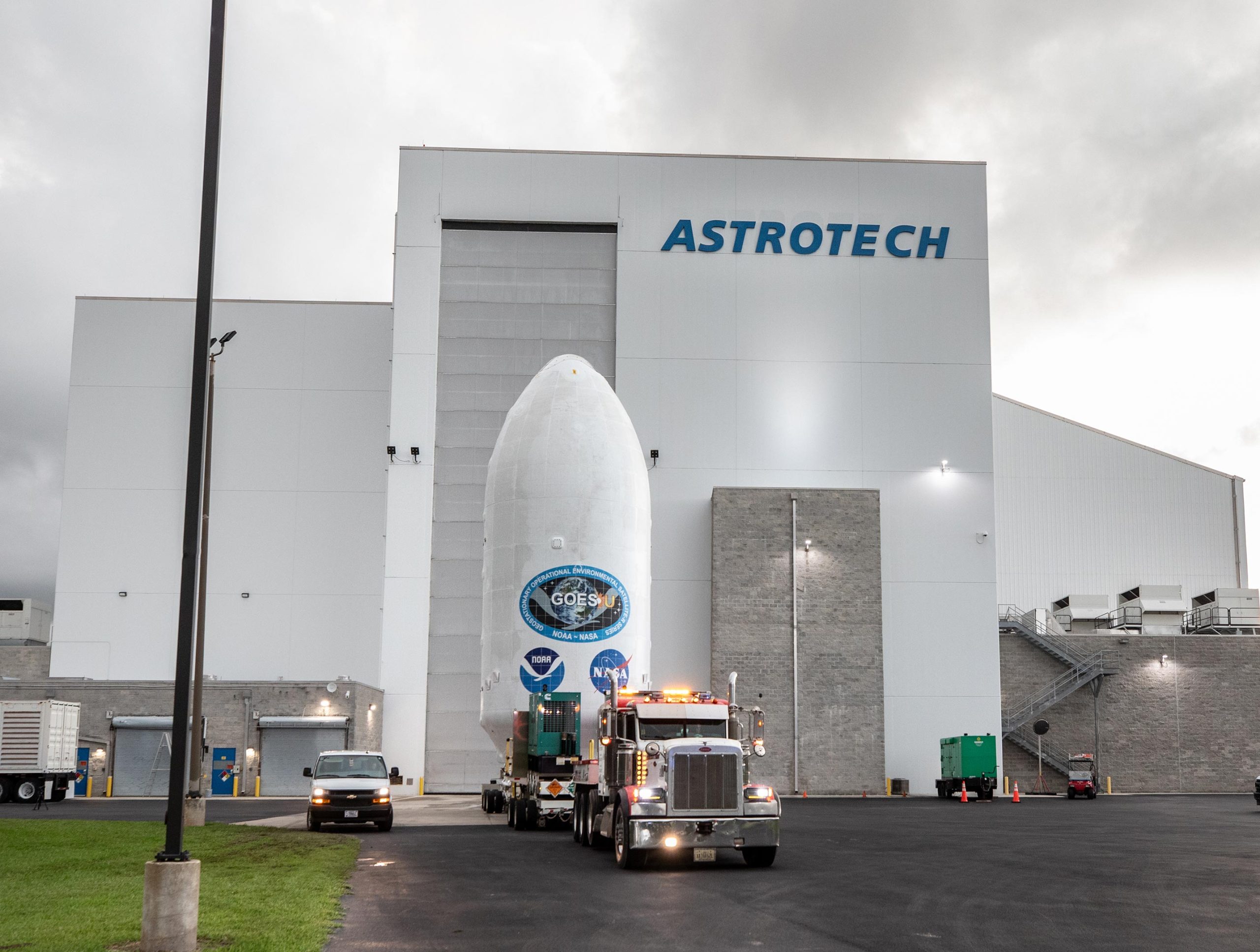
    Crews Transport NOAA’s GOES-U
    Crews transport NOAA’s GOES-U from the Astrotech Space Operations facility to the SpaceX hangar at Launch Complex 39A at NASA’s Kennedy Space Center in Florida beginning on Friday, June 14, 2024, with the operation finishing early Saturday, June 15, 2024. Credit: NASA/Ben Smegelsky

    Launch Schedule and Mission Objectives

    The next mission milestone includes connecting the encapsulated GOES-U to the SpaceX Falcon Heavy rocket ahead of rolling the stack out to the launch pad.

    NASA is targeting a two-hour window opening at 5:16 p.m. EDT on June 25, for the launch of GOES-U aboard a SpaceX Falcon Heavy rocket from Launch Complex 39A at NASA Kennedy. Following launch, the spacecraft will complete a nearly three-week journey to its destination in geostationary orbit 22,236 miles above the equator, allowing the satellites to continually view the Western Hemisphere.

    As the fourth and final satellite in NOAA’s GOES-R Series, GOES-U will enhance meteorologists’ ability to provide advanced weather forecasting and warning capabilities. GOES-U also will improve detection and monitoring of space weather hazards using a new compact coronagraph instrument.

    NASA’s Launch Services Program, based at Kennedy, manages the launch service for the GOES-U mission. NASA’s Goddard Space Flight Center in Greenbelt, Maryland oversees the acquisition of the spacecraft and instruments. Lockheed Martin designs, builds, and tests the GOES-R series satellites. L3Harris Technologies provides the primary instrument, the Advanced Baseline Imager, along with the ground system, which includes the antenna system for data reception.

    Never miss a breakthrough: Join the SciTechDaily newsletter.
    Follow us on Google and Google News.

    NASA NOAA SpaceX
    Share. Facebook Twitter Pinterest LinkedIn Email Reddit

    Related Articles

    Say Goodbye to This Ocean-Monitoring Satellite

    NASA Analyzes Tropical Storm Dorian Day and Night

    NASA Satellite Image: Amazon Fires Shroud South America in Smoke

    NASA and NOAA Show Long-Term Global Warming Trend Continues

    Independent Analyses Reveal 2015 Surface Temperatures Are the Warmest on Record

    NASA DSCOVR Satellite Image of Africa and Europe

    Global Temperature Analysis Finds 2014 as Warmest Year in Modern Record

    2014 Antarctic Ozone Hole Comparable to Previous Years

    New NASA/NOAA Animations Reveal Water Vapor Over Oceans

    Leave A Reply Cancel Reply

    • Facebook
    • Twitter
    • Pinterest
    • YouTube

    Don't Miss a Discovery

    Subscribe for the Latest in Science & Tech!

    Trending News

    Even Occasional Binge Drinking May Triple Liver Damage Risk

    Liftoff! NASA’s Artemis II Launch Sends Astronauts Around the Moon for First Time in 50 Years

    Scientists Discover New Way To Eliminate “Zombie Cells” Driving Aging

    This New Quantum Theory Could Change Everything We Know About the Big Bang

    This One Vitamin May Help Protect Your Brain From Dementia Years Later

    Stopping Weight-Loss Drugs Like Ozempic Can Quickly Erase Heart Benefits

    A 500-Million-Year-Old Surprise Is Forcing Scientists to Rethink Spider Evolution

    Coffee and Blood Pressure: What You Need To Know Before Your Next Cup

    Follow SciTechDaily
    • Facebook
    • Twitter
    • YouTube
    • Pinterest
    • Newsletter
    • RSS
    SciTech News
    • Biology News
    • Chemistry News
    • Earth News
    • Health News
    • Physics News
    • Science News
    • Space News
    • Technology News
    Recent Posts
    • 20-Year Study Reveals Cholera’s Surprising Weakness
    • $220 Billion Problem: Scientists Uncover the Secret Weapon Bacteria Use To Take Over Crops
    • Collapsing Plasma May Hold the Key to Cosmic Magnetism
    • DNA Meets Electronics: Scientists Create Ultra-Low Power Memory Breakthrough
    • A Strange Quantum Effect Could Power Future Electronics Without Batteries
    Copyright © 1998 - 2026 SciTechDaily. All Rights Reserved.
    • Science News
    • About
    • Contact
    • Editorial Board
    • Privacy Policy
    • Terms of Use

    Type above and press Enter to search. Press Esc to cancel.