
Close Menu
    Facebook X (Twitter) Instagram
    SciTechDaily
    • Biology
    • Chemistry
    • Earth
    • Health
    • Physics
    • Science
    • Space
    • Technology
    Facebook X (Twitter) Pinterest YouTube RSS
    SciTechDaily
    Home»Biology»Western Chimpanzees – a Critically Endangered Species – Share Overlapping Territories With Humans
    Biology

    Western Chimpanzees – a Critically Endangered Species – Share Overlapping Territories With Humans

    By University of ExeterFebruary 25, 2021No Comments3 Mins Read
    Facebook Twitter Pinterest Telegram LinkedIn WhatsApp Email Reddit
    Share
    Facebook Twitter LinkedIn Pinterest Telegram Email Reddit
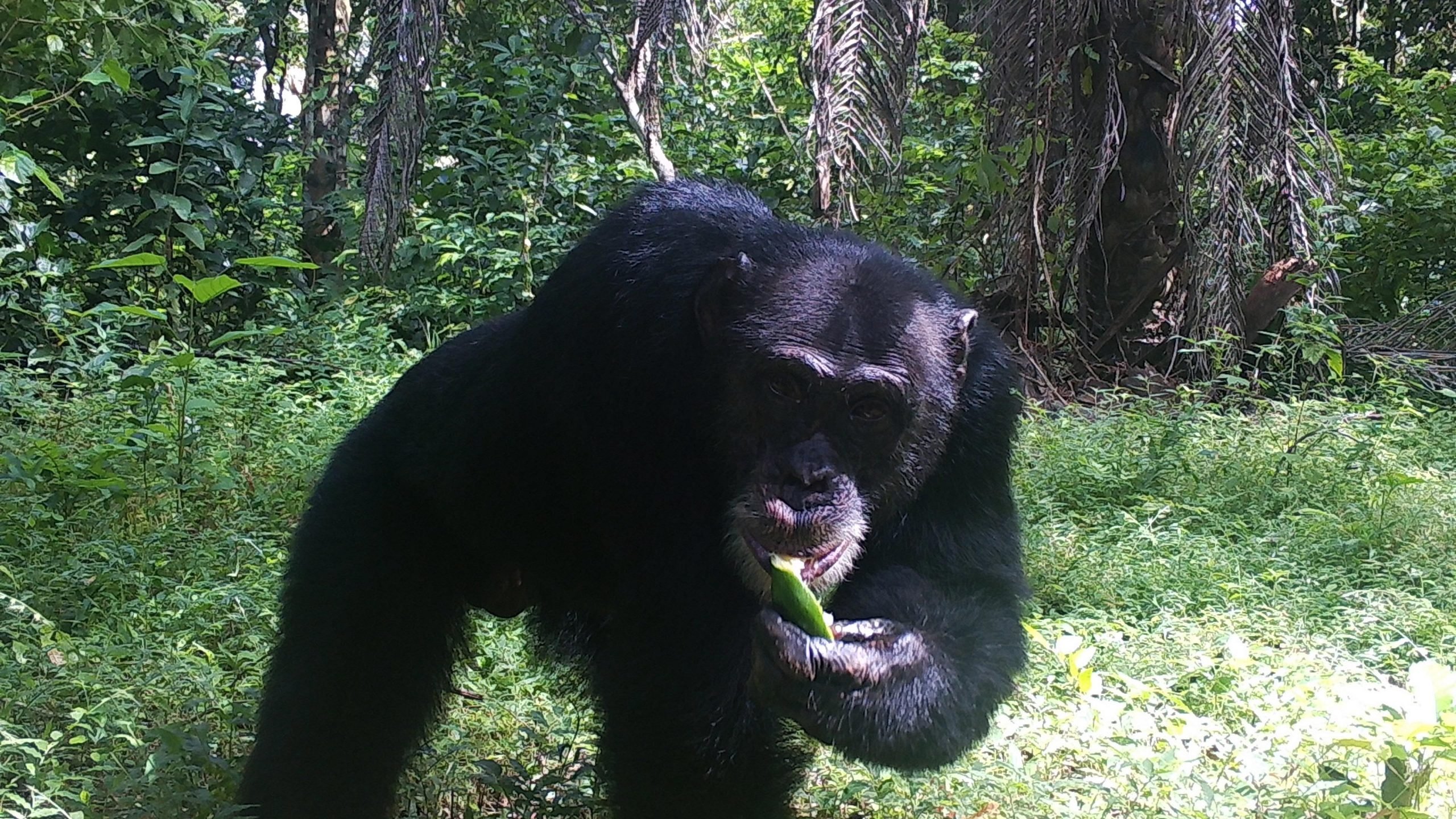
    Chimpanzee Behind House
    Camera trap image of a chimpanzee feeding on orange fruit behind someone’s house in Caiquene village. Credit: E Bersacola and Kim Hockings / Cantanhez Chimpanzee Project

    Chimpanzees and humans “overlap” in their use of forests and even villages, new research shows.

    Scientists used camera traps to track the movements of western chimpanzees — a critically endangered species — in Guinea-Bissau.

    Chimpanzees used areas away from villages and agriculture more intensively, but entered land used by humans to get fruit — especially when wild fruits were scarce.

    Researchers from the University of Exeter and Oxford Brookes University say the approach used in this study could help to inform a “coexistence strategy” for chimpanzees and humans.

    “Understanding how wildlife balance the risks and rewards of entering environments used by humans is crucial to developing strategies to reduce risks of negative interactions, including disease transmission and aggression by animals or humans,” said lead author Dr. Elena Bersacola, of the Centre for Ecology and Conservation on Exeter’s Penryn Campus in Cornwall.

    “Using 12 months of data from 21 camera traps, our study produced hotspot maps that show how humans and chimpanzees overlap in their use of forests, villages and cultivated areas.”
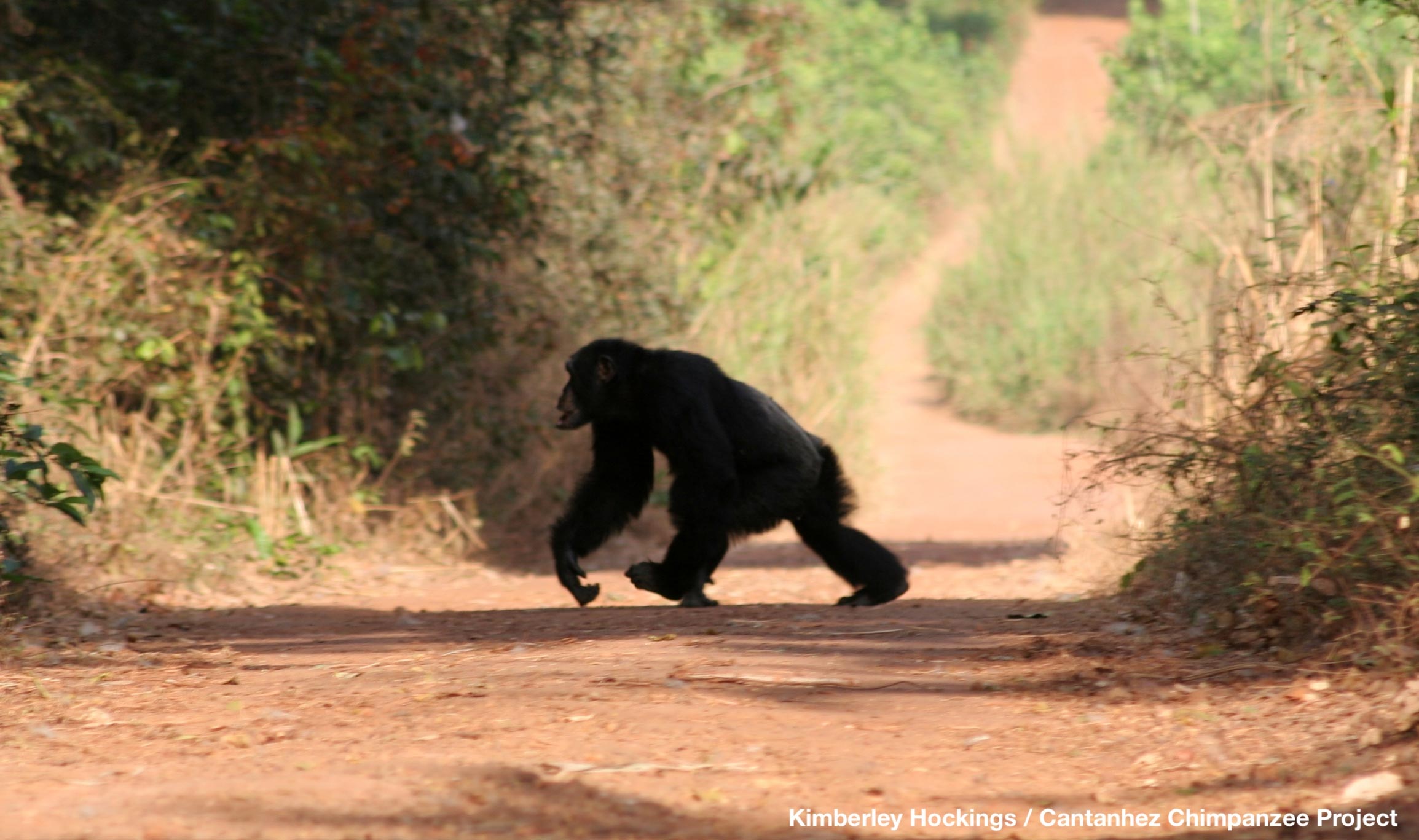
    Adult Male Chimpanzee Crossing Road
    An adult male chimpanzee crossing a road. Credit: Kimberley Hockings

    Food Scarcity Drives Risk-Taking Behavior

    Chimpanzee use of space was linked to the availability of naturalized oil-palm fruit, and the study also shows that chimpanzees access high-risk orange, lime, and papaya fruits in response to nutritional necessity rather than preference alone.

    The study used a “landscape of fear” framework, based on the idea that animals learn about risks and the resulting fear shapes their decisions over where and when to feed, travel, and rest.

    Researchers are increasingly incorporating humans as agents for shaping the wildlife’s landscapes of fear.

    The team in this study were cautious not to let the chimpanzees become “habituated” (used to humans, and therefore not fearful).

    “Elena got around this problem by setting up a patchwork of camera traps throughout one chimpanzee community’s home range and monitoring their use of space,” said Dr. Kimberley Hockings, of the University of Exeter.

    “The methods and analyses Elena used are new and exciting and have helped us understand human-chimpanzee coexistence across the landscape.

    “This is important because western chimpanzees are critically endangered and these shared landscapes are crucial for their persistence.

    “These methods can also be applied to other threatened wildlife that are being pushed into ever-increasing human-impacted landscapes across the globe.”

    Professor Catherine Hill, of Oxford Brookes University, said: “Our modeling approach generates fine-resolution space-time output maps, which can be scaled-up to identify human-wildlife interaction hotspots.

    “Our method provides the necessary tools to understand and more effectively manage human-wildlife coexistence at different spatial scales, including the management of resources important to both.”

    Reference: “Chimpanzees balance resources and risk in an anthropogenic landscape of fear” by Elena Bersacola, Catherine M. Hill and Kimberley J. Hockings, 25 February 2021, Scientific Reports.
    DOI: 10.1038/s41598-021-83852-3

    Never miss a breakthrough: Join the SciTechDaily newsletter.
    Follow us on Google and Google News.

    Chimpanzee Ecology University of Exeter Zoology
    Share. Facebook Twitter Pinterest LinkedIn Email Reddit

    Related Articles

    Scent Trails of Dung and Urine Could Boost Elephant Conservation

    Pace of Life: Friends and Enemies “Make Sense” for Long-Lived Animals

    Scientists Discover “Supercolony” of Adelie Penguins in the Danger Islands

    Biologists Discover Six New Species of Silky Anteaters in Brazil

    New Butterfly Species Discovered in South Russia

    Temperature Variability Across the World Alters the Ecological Impacts of Seasons

    Birdsongs Elicit “Emotional” Response From Birds

    European Catfish Learn to Catch Pigeons

    Humans Are a Greater Disturbance to Elk Than Natural Predators

    Leave A Reply Cancel Reply

    • Facebook
    • Twitter
    • Pinterest
    • YouTube

    Don't Miss a Discovery

    Subscribe for the Latest in Science & Tech!

    Trending News

    Bone-Strengthening Discovery Could Reverse Osteoporosis

    Scientists Uncover Hidden Trigger Behind Stem Cell Aging

    Scientists Find Way to Reverse Fatty Liver Disease Without Changing Diet

    Could Humans Regrow Limbs? New Study Reveals Promising Genetic Pathway

    Scientists Reveal Eating Fruits and Vegetables May Increase Your Risk of Lung Cancer

    Scientists Reverse Brain Aging With Simple Nasal Spray

    Scientists Uncover Potential Brain Risks of Popular Fish Oil Supplements

    Scientists Discover a Surprising Way To Make Bread Healthier and More Nutritious

    Follow SciTechDaily
    • Facebook
    • Twitter
    • YouTube
    • Pinterest
    • Newsletter
    • RSS
    SciTech News
    • Biology News
    • Chemistry News
    • Earth News
    • Health News
    • Physics News
    • Science News
    • Space News
    • Technology News
    Recent Posts
    • Scientists Unlock Hidden Secrets of 2,300-Year-Old Mummies Using Cutting-Edge CT Scanner
    • Men vs. Women: Scientists Uncover Dramatic Differences in How the Immune System Ages
    • Eating Chili Peppers Linked to Longer Life
    • Bread Might Be Making You Gain Weight Even Without Eating More
    • 4,000-Year-Old Tablets Reveal Lost Magic, Medicine, and Ancient Kings
    Copyright © 1998 - 2026 SciTechDaily. All Rights Reserved.
    • Science News
    • About
    • Contact
    • Editorial Board
    • Privacy Policy
    • Terms of Use

    Type above and press Enter to search. Press Esc to cancel.