
Close Menu
    Facebook X (Twitter) Instagram
    SciTechDaily
    • Biology
    • Chemistry
    • Earth
    • Health
    • Physics
    • Science
    • Space
    • Technology
    Facebook X (Twitter) Pinterest YouTube RSS
    SciTechDaily
    Home»Earth»Wetlands of Adair Bay – Stunning Photo Captured by Space Station Astronaut
    Earth

    Wetlands of Adair Bay – Stunning Photo Captured by Space Station Astronaut

    By NASA Earth ObservatoryDecember 4, 2022No Comments2 Mins Read
    Facebook Twitter Pinterest Telegram LinkedIn WhatsApp Email Reddit
    Share
    Facebook Twitter LinkedIn Pinterest Telegram Email Reddit
    Wetlands of Adair Bay Annotated
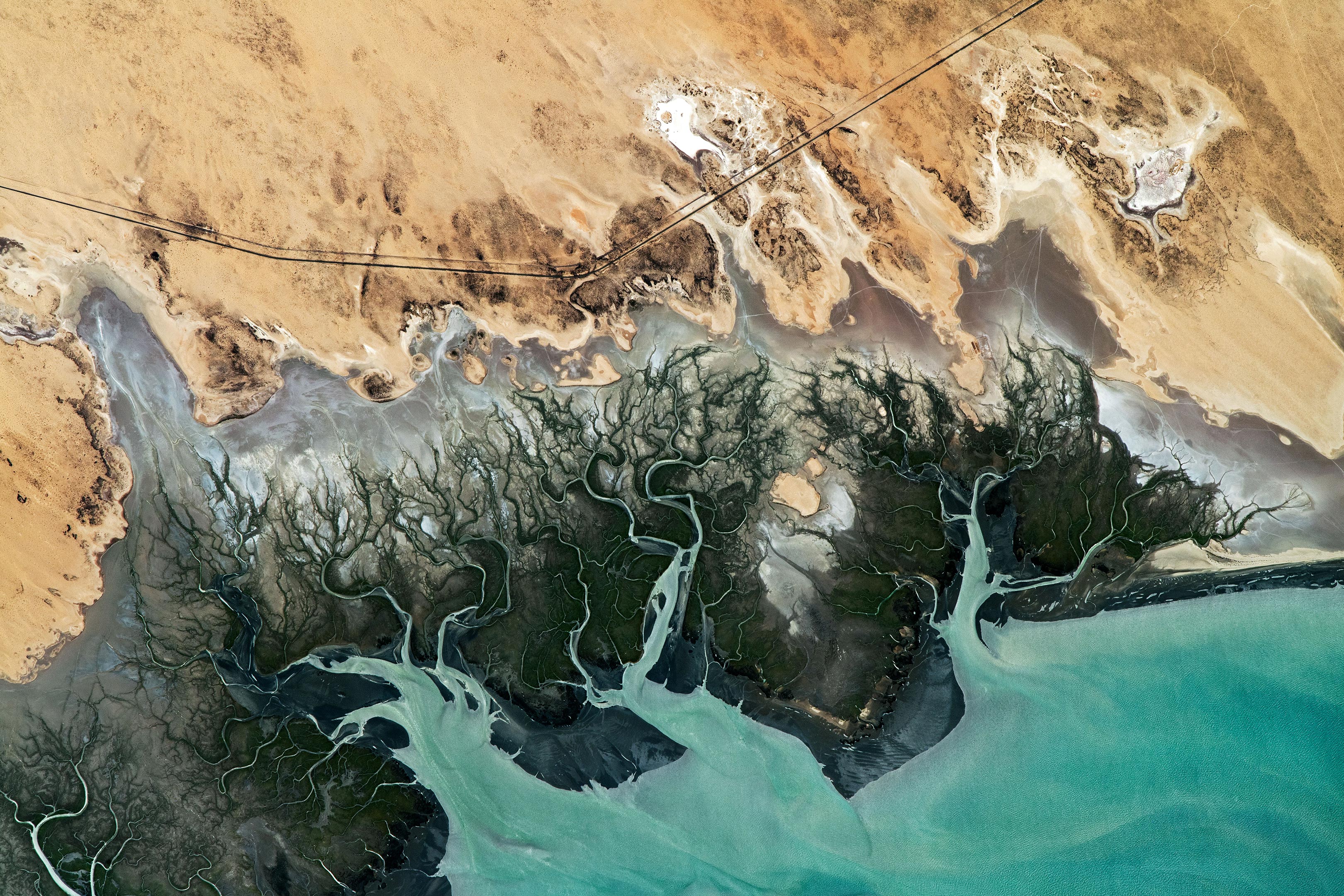
    Wetlands of Adair Bay captured in astronaut photograph from the International Space Station on August 1, 2022.

    The estuary system marks the transition between the Great Altar Desert in northwestern Mexico and the Gulf of California.

    The wetlands of Adair Bay (also known as Bahia Adair) mark the transition between the Great Altar Desert in northwestern Mexico and the Gulf of California. A single highway, paralleled by a railroad, cuts across dry salt flats and sand on the northern reaches of the estuary. This photograph, taken by an astronaut on the International Space Station (ISS), also highlights the sediment-rich waterways that allow the mixing of freshwater and saltwater vital to the function of the estuary.

    The green areas in the estuary system are salt-tolerant halophytic vegetation, comprised mostly of mangrove trees and shrubs. Salty mudflats, indicated by the blend of gray and white hues, separate the estuary from the adjacent desert sand. Pozos (Spanish for wells), a form of natural freshwater springs, are located throughout the salty mudflats and are common in wetlands along the Gulf of California, though difficult to see from space.

    Coastal salt marshes like the wetlands of Adair Bay are sustained by tides. During low tides, water evaporates from exposed soils, creating salt flats; during high tides, nutrients are washed into the estuary, supporting halophytic vegetation growth and the life cycle of aquatic organisms. The wetlands of Adair Bay are a Ramsar site and provide protected nesting grounds for migratory birds, as well as breeding grounds for endangered fish, such as the totoaba.

    Astronaut photograph ISS067-E-213849 was acquired on August 1, 2022, with a Nikon D5 digital camera using a focal length of 1150 millimeters. It is provided by the ISS Crew Earth Observations Facility and the Earth Science and Remote Sensing Unit, Johnson Space Center. The image was taken by a member of the Expedition 67 crew. The image has been cropped and enhanced to improve contrast, and lens artifacts have been removed. The International Space Station Program supports the laboratory as part of the ISS National Lab to help astronauts take pictures of Earth that will be of the greatest value to scientists and the public, and to make those images freely available on the Internet. Caption by Sara Schmidt, GeoControl Systems, JETS Contract at NASA-JSC.

    Never miss a breakthrough: Join the SciTechDaily newsletter.
    Follow us on Google and Google News.

    Geography NASA NASA Earth Observatory
    Share. Facebook Twitter Pinterest LinkedIn Email Reddit

    Related Articles

    NASA Picturing Earth: Astronaut Photography In Focus [Video]

    Coloring the Great Salt Lake – Astronaut Takes Beautiful Photograph From Space Station

    Sea Ice in Denmark Strait – Drifted More Than 1,000 Km (600 Miles) From the Arctic Ocean

    NASA Scientists Map Beirut Blast Damage – Devastating Explosion Rocked Port Area

    NASA Advanced Rapid Imaging Satellite Maps Blast Damage: Beirut Explosion Aftermath

    NASA/NOAA Satellites Observe Surprisingly Rapid Increase in Scale and Intensity of Fires in Siberia

    Mars Terraforming: Cultivating Ideas for Mars on Earth

    Meandering Mississippi River: Photo Taken by Astronaut on Space Station Shows Divergence From State Boundaries

    Incredible Rare Peek at Patagonia in Winter

    Leave A Reply Cancel Reply

    • Facebook
    • Twitter
    • Pinterest
    • YouTube

    Don't Miss a Discovery

    Subscribe for the Latest in Science & Tech!

    Trending News

    The Universe Is Expanding Too Fast and Scientists Can’t Explain Why

    “Like Liquid Metal”: Scientists Create Strange Shape-Shifting Material

    Early Warning Signals of Esophageal Cancer May Be Hiding in Plain Sight

    Common Blood Pressure Drug Shows Surprising Power Against Deadly Antibiotic-Resistant Superbug

    Scientists Uncover Dangerous Connection Between Serotonin and Heart Valve Disease

    Scientists Discover a “Protector” Protein That Could Help Reverse Hair Loss

    Bone-Strengthening Discovery Could Reverse Osteoporosis

    Scientists Uncover Hidden Trigger Behind Stem Cell Aging

    Follow SciTechDaily
    • Facebook
    • Twitter
    • YouTube
    • Pinterest
    • Newsletter
    • RSS
    SciTech News
    • Biology News
    • Chemistry News
    • Earth News
    • Health News
    • Physics News
    • Science News
    • Space News
    • Technology News
    Recent Posts
    • A Common Diabetes Drug May Hold the Key to Stopping HIV From Coming Back
    • Ancient “Syphilis-Like” Disease in Vietnam Challenges Key Scientific Assumptions
    • Drinking Alcohol To Cope in Your 20s Could Damage Your Brain for Life
    • Scientists Crack Alfalfa’s Chromosome Mystery After Decades of Debate
    • Ancient Ant-Plant Alliance Collapses As Predatory Wasps Move In
    Copyright © 1998 - 2026 SciTechDaily. All Rights Reserved.
    • Science News
    • About
    • Contact
    • Editorial Board
    • Privacy Policy
    • Terms of Use

    Type above and press Enter to search. Press Esc to cancel.