
The ocean’s role in past atmospheric carbon dioxide change comes into focus.
The last million years of Earth history have been characterized by frequent “glacial-interglacial cycles,” large swings in climate that are linked to the growing and shrinking of massive, continent-spanning ice sheets. These cycles are triggered by subtle oscillations in Earth’s orbit and rotation, but the orbital oscillations are too subtle to explain the large changes in climate.
“The cause of the ice ages is one of the great unsolved problems in the geosciences,” said Daniel Sigman, the Dusenbury Professor of Geological and Geophysical Sciences. “Explaining this dominant climate phenomenon will improve our ability to predict future climate change.”
In the 1970s, scientists discovered that the concentration of the atmospheric greenhouse gas carbon dioxide (CO2) was about 30% lower during the ice ages. That prompted theories that the decrease in atmospheric CO2 levels is a key ingredient in the glacial cycles, but the causes of the CO2 change remained unknown. Some data suggested that, during ice ages, CO2 was trapped in the deep ocean, but the reason for this was debated.

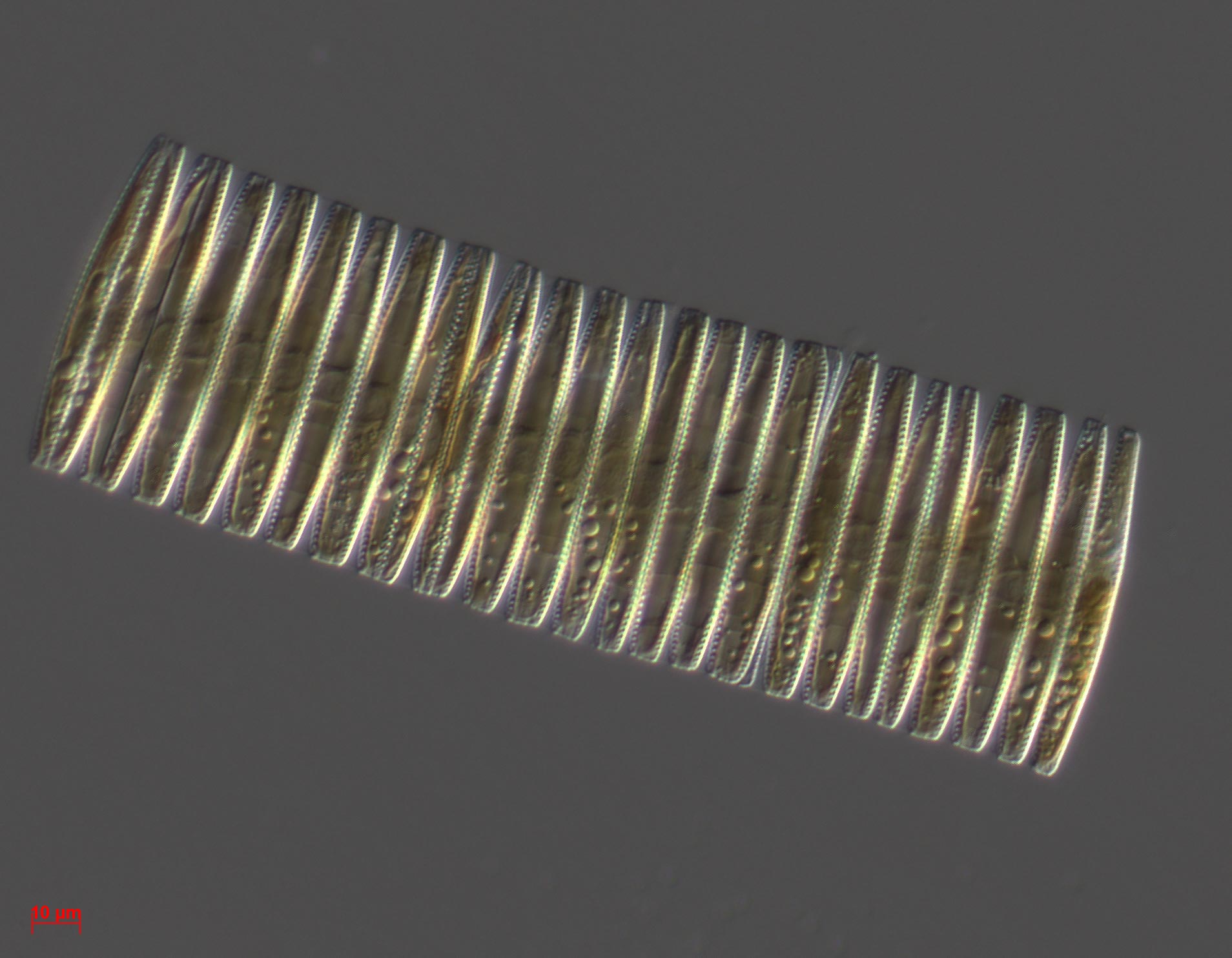
Now, an international collaboration led by scientists from Princeton University and the Max Planck Institute for Chemistry (MPIC) have found evidence indicating that during ice ages, changes in the surface waters of the Antarctic Ocean worked to store more CO2 in the deep ocean. Using sediment cores from the Antarctic Ocean, the researchers generated detailed records of the chemical composition of organic matter trapped in the fossils of diatoms — floating algae that grew in the surface waters, then died and sank to the sea floor. Their measurements provide evidence for systematic reductions in wind-driven upwelling in the Antarctic Ocean during the ice ages. The research was published in a recent issue of the journal Science.
For decades, researchers have known that the growth and sinking of marine algae pumps CO2 deep into the ocean, a process often referred to as the “biological pump.” The biological pump is driven mostly by the tropical, subtropical, and temperate oceans and is inefficient closer to the poles, where CO2 is vented back to the atmosphere by the rapid exposure of deep waters to the surface. The worst offender is the Antarctic Ocean: the strong eastward winds encircling the Antarctic continent pull CO2-rich deep water up to the surface, “leaking” CO2 to the atmosphere.
The potential for a reduction in wind-driven upwelling to keep more CO2 in the ocean, and thus to explain the ice age atmospheric CO2 drawdown, has also been recognized for decades. Until now, however, scientists have lacked a way to unambiguously test for such a change.
The Princeton-MPIC collaboration has developed such an approach, using tiny diatoms. Diatoms are floating algae that grow abundantly in Antarctic surface waters, and their silica shells accumulate in deep sea sediment. The nitrogen isotopes in diatoms’ shells vary with the amount of unused nitrogen in the surface water. The Princeton-MPIC team measured the nitrogen isotope ratios of the trace organic matter trapped in the mineral walls of these fossils, which revealed the evolution of nitrogen concentrations in Antarctic surface waters over the past 150,000 years, covering two ice ages and two warm interglacial periods.
“Analysis of the nitrogen isotopes trapped in fossils like diatoms reveals the surface nitrogen concentration in the past,” said Ellen Ai, first author of the study and a Princeton graduate student working with Sigman and with the groups of Alfredo Martínez-García and Gerald Haug at MPIC. “Deep water has high concentrations of the nitrogen that algae rely on. The more upwelling that occurs in the Antarctic, the higher the nitrogen concentration in the surface water. So our results also allowed us to reconstruct Antarctic upwelling changes.”
The data were made more powerful by a new approach for dating the Antarctic sediments. Surface water temperature change was reconstructed in the sediment cores and compared with Antarctic ice core records of air temperature.
“This allowed us to connect many features in the diatom nitrogen record to coincident climate and ocean changes from across the globe,” said Martínez-García. “In particular, we are now able to pin down the timing of upwelling decline, when climate starts to cool, as well as to connect upwelling changes in the Antarctic with the fast climate oscillations during ice ages.”
This more precise timing allowed the researchers to home in on the winds as the key driver of the upwelling changes.
The new findings also allowed the researchers to disentangle how the changes in Antarctic upwelling and atmospheric CO2 are linked to the orbital triggers of the glacial cycles, bringing scientists a step closer to a complete theory for the origin of the ice ages.
“Our findings show that upwelling-driven atmospheric CO2 change was central to the cycles, but not always in the way that many of us had assumed,” said Sigman. “For example, rather than accelerating the descent into the ice ages, Antarctic upwelling caused CO2 changes that prolonged the warmest climates.”
Their findings also have implications for predicting how the ocean will respond to global warming. Computer models have yielded ambiguous results on the sensitivity of polar winds to climate change. The researchers’ observation of a major intensification in wind-driven upwelling in the Antarctic Ocean during warm periods of the past suggests that upwelling will also strengthen under global warming. Stronger Antarctic upwelling is likely to accelerate the ocean’s absorption of heat from ongoing global warming, while also impacting the biological conditions of the Antarctic Ocean and the ice on Antarctica.
“The new findings suggest that the atmosphere and ocean around Antarctica will change greatly in the coming century,” said Ai. “However, because the CO2 from fossil fuel burning is unique to the current times, more work is needed to understand how Antarctic Ocean changes will affect the rate at which the ocean absorbs this CO2.”
Reference: “Southern Ocean upwelling, Earth’s obliquity, and glacial-interglacial atmospheric CO2 change” by Xuyuan E. Ai, Anja S. Studer, Daniel M. Sigman, Alfredo Martínez-García, François Fripiat, Lena M. Thöle, Elisabeth Michel, Julia Gottschalk, Laura Arnold, Simone Moretti, Mareike Schmitt, Sergey Oleynik, Samuel L. Jaccard and Gerald H. Haug, 11 December 2020, Science.
DOI: 10.1126/science.abd2115
The research was supported by the National Science Foundation (grant PLR-1401489 to D.M.S.), ExxonMobil through the Andlinger Center for Energy and the Environment at Princeton University, the Swiss National Science Foundation (grant PBEZP2_145695 to A.S.S. and grants PP00P2_144811 and PP00P2_172915 to S.L.J.), a Global Research Fellowship from the German Research Foundation (DFG grant GO 2294/2-1 to J.G.), and the Max Planck Society. Other Princeton connections: Anja Studer and Francois Fripiat were both postdoctoral researchers in Sigman’s lab, and Sergey Oleynik is the isotope lab manager for Princeton’s Department of Geosciences.
Never miss a breakthrough: Join the SciTechDaily newsletter.
Follow us on Google and Google News.
3 Comments
Insufficient facts. Your still just guessing and trying to get grant money. Waste of time. Go to Africa and build some house and dig some wells. Then you can smile like you accomplished something.
Let us bring on the next ice age, just to put a lid on all the Climate Change Hoaxers that think taxing anything will make an improvement.
The title of this article was: What Caused the Ice Ages? Tiny Ocean Fossils Provide Key Evidence.
I read the article, there is no proof in the article about what caused ice ages.
The vapor pressure of a gas that is in the atmosphere and that also dissolves in the oceans is dependent on the amount of the gas dissolved in the oceans and the oceans temperatures. The oceans are huge carbonated drinks, of course ocean temperatures influence atmospheric CO2.