
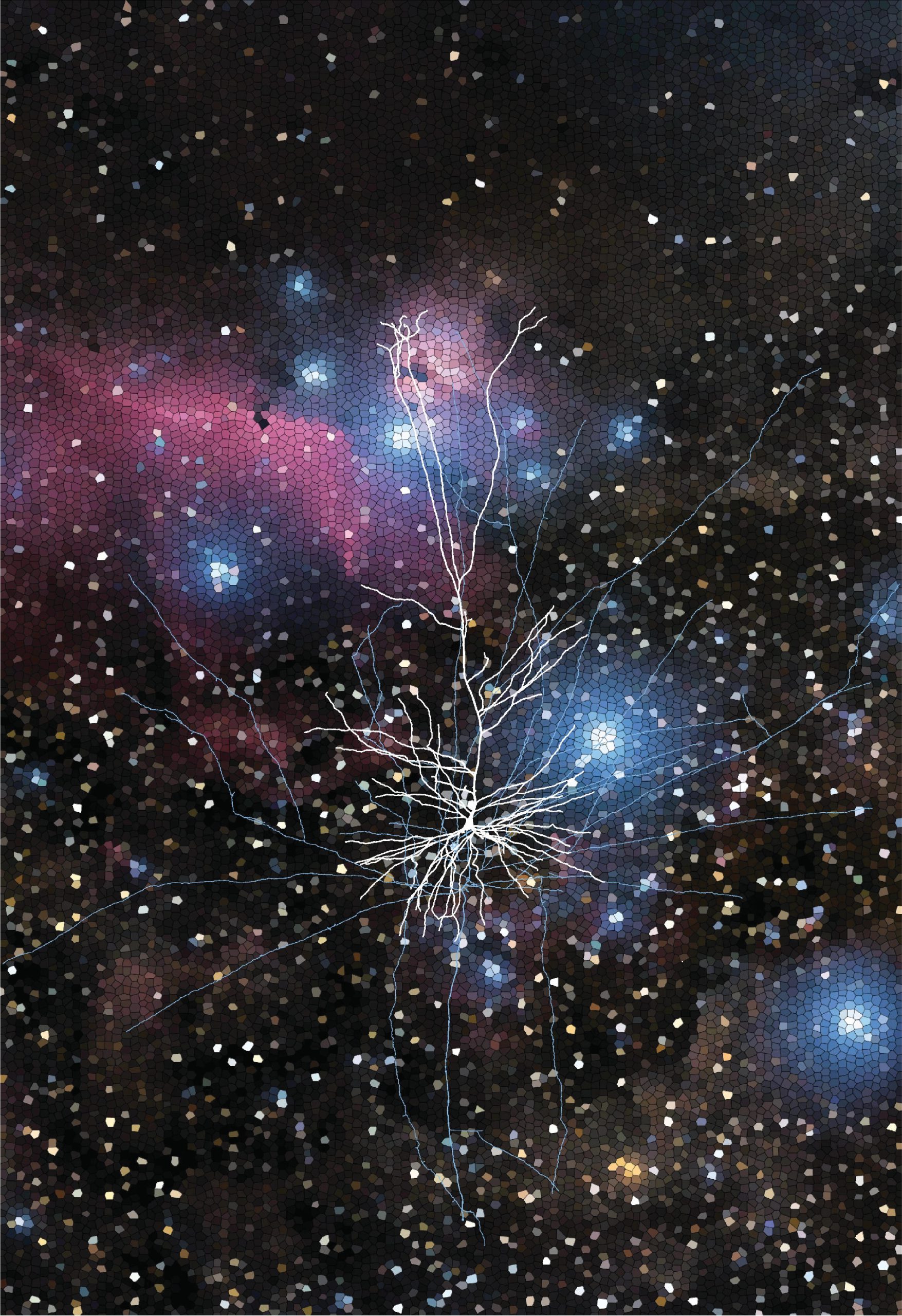
New Research Sheds Light on the Brain’s Computational Function
The human brain’s function is remarkable, driving all aspects of our creativity and thoughts. However, the neocortex, a region of the human brain responsible for these cognitive functions, has a similar overall structure to other mammals.
Researchers from The University of Queensland (UQ), The Mater Hospital, and the Royal Brisbane and Women’s Hospital have shown that changes in the structure and function of our neurons may be the cause of the human brain’s increased processing power.
They recently published their findings in the journal Cell Reports.
Professor Stephen Williams of UQ’s Queensland Brain Institute (QBI) explained that his team has researched the electrical properties of human neocortical pyramidal neurons embedded in their neuronal networks.
“To study human neurons, we prepared live tissue slices from small blocks of the human neocortex collected from patients who were undergoing neurosurgery for the alleviation of refractory epilepsy or the removal of brain tumors at the two hospitals,” Professor Williams said.
“We compared the electrical properties of human and rodent neocortical pyramidal neurons by making intricate simultaneous electrical recordings from their cell bodies and thin dendrites. Our research revealed that human and rodent neocortical pyramidal neurons share fundamental biophysical properties. For example, we showed that both the dendrites of human and rodent neocortical pyramidal neurons generate dendritic sodium spikes, suggesting a conservation of the machinery for integrating the many thousands of input signals that a neuron receives. However, we discovered the computational function of human neocortical pyramidal neurons is dramatically enhanced.”
Dendritic Complexity Drives Enhanced Processing
Dr. Helen Gooch, a QBI postdoctoral fellow and co-author of the study, stated that the team discovered that the architecture of human neocortical pyramidal neurons’ dendritic trees—the branch-like extensions that carry electrical signals—was larger and more complex than that of other mammals, such as rodents.
“This elaboration of the dendritic tree in humans was accompanied by the generation of dendritic spikes at multiple sites, which actively spread through the neuron to drive the output signals of each neuron,” Dr. Gooch said.
“We suggest that this enhancement of distributed dendritic information processing may therefore be one factor that increases our brain’s overall processing power.”
The translation of such discoveries paves the way for a better understanding of how the electrical activity of the human brain is disturbed in disease.
Mater Hospital Neurologist and co-author, Dr. Lisa Gillinder said “As clinician-researchers, we are not only excited to learn more about the normal function of human brain cells, but through future research in this field, we also aim to better understand the functional changes that occur in conditions like epilepsy with the hopes of improving treatments.”
Reference: “High-fidelity dendritic sodium spike generation in human layer 2/3 neocortical pyramidal neurons” by Helen M. Gooch, Tobias Bluett, Madhusoothanan B. Perumal, Hong D. Vo, Lee N. Fletcher, Jason Papacostas, Rosalind L. Jeffree, Martin Wood, Michael J. Colditz, Jason McMillen, Tony Tsahtsarlis, Damian Amato, Robert Campbell, Lisa Gillinder and Stephen R. Williams, 18 October 2022, Cell Reports.
DOI: 10.1016/j.celrep.2022.111500
The study was funded by the National Health and Medical Research Council and the Australian Research Council.
Never miss a breakthrough: Join the SciTechDaily newsletter.
Follow us on Google and Google News.