
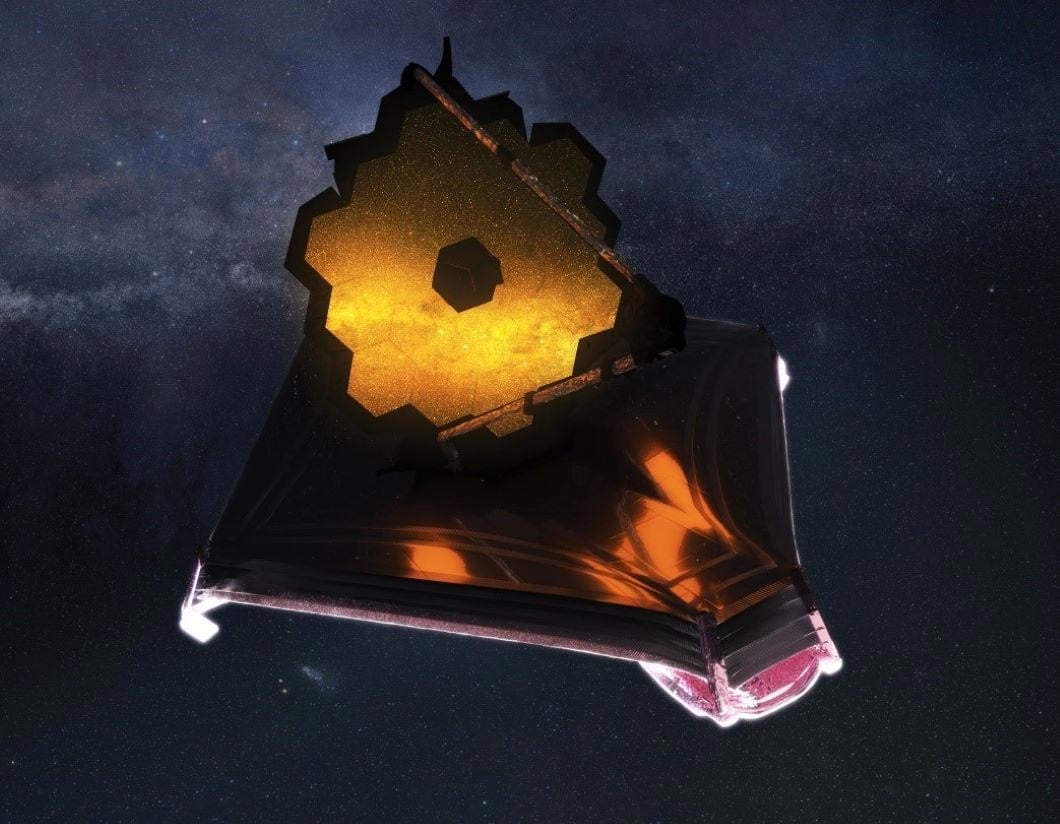
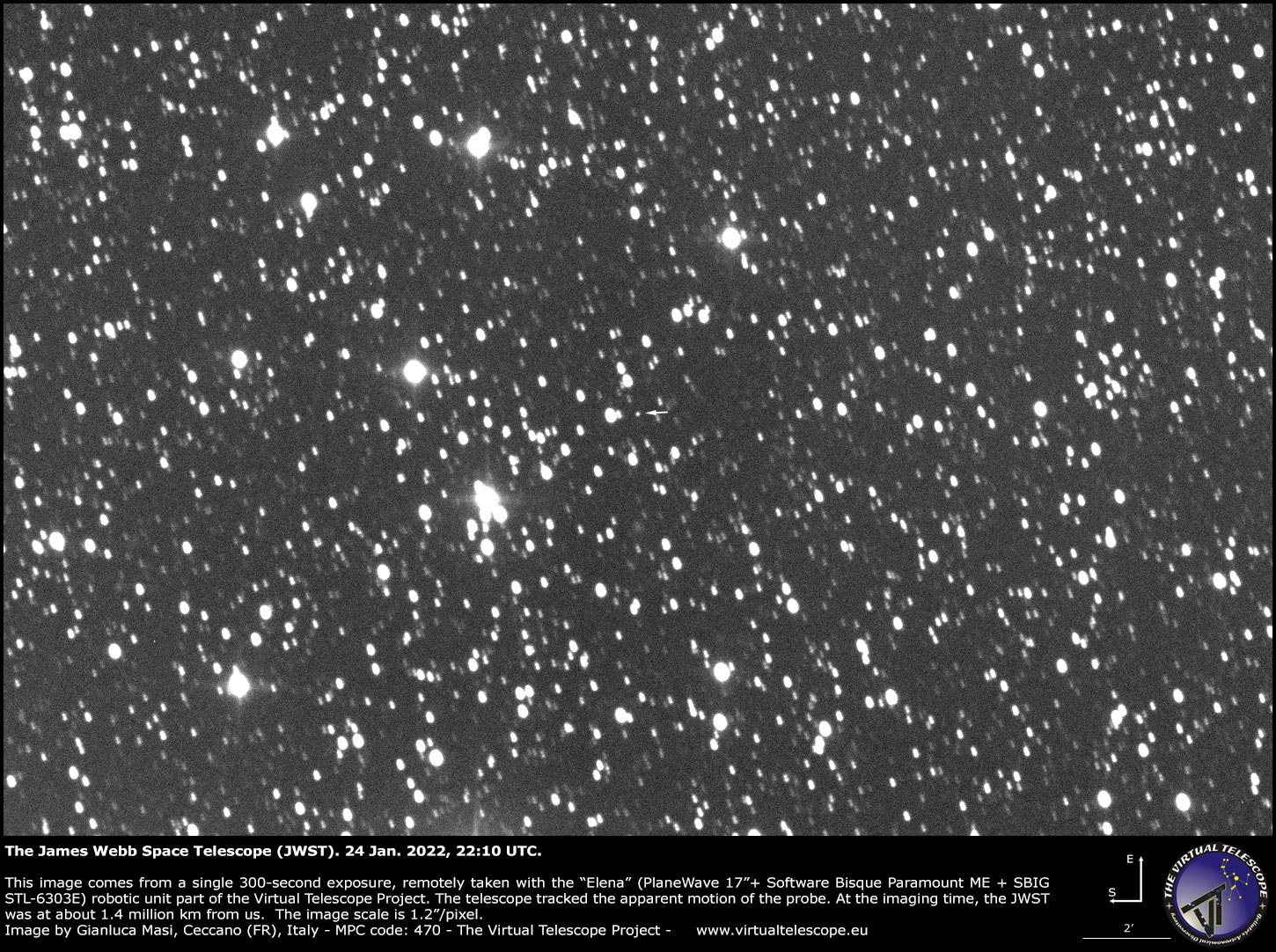
The Virtual Telescope Project (VTP) captured an image of the James Webb Space Telescope (JWST) on January 24th using the robotic telescope Elena. The 300-second unfiltered exposure shows JWST’s position at its final destination at Lagrange Point 2 (L2), approximately 1.4 million km (869,920 mi) from Earth.
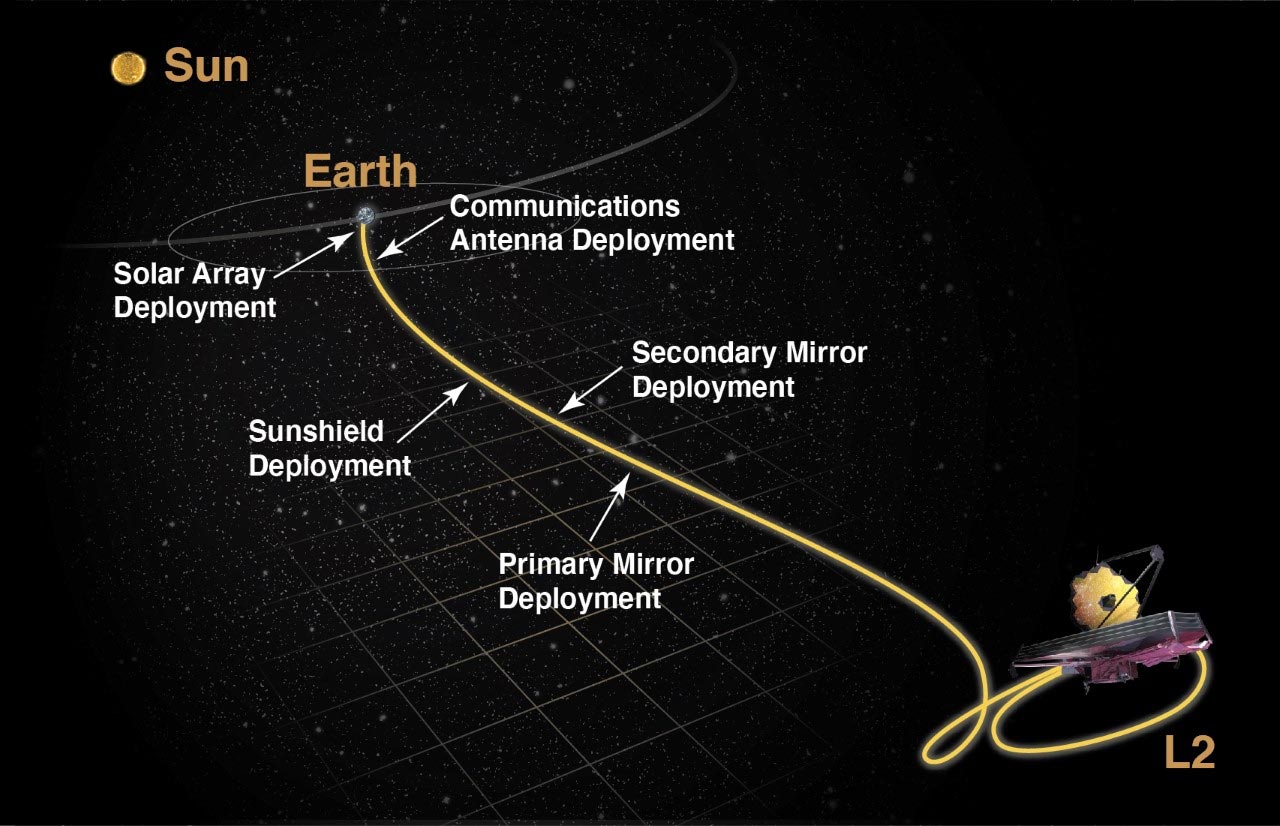
The past month has been an exciting time for the James Webb Space Telescope! After launching on Christmas Day, the telescope spent the next few weeks deploying its mirrors, checking the individual segments, and then maneuvering to L2, where it will spend the next ten to twenty years unlocking the mysteries of the cosmos. According to NASA Administrator Bill Nelson and the Chief Science Communications Officer (CSCO) for the JWST, James Webb will begin collecting light this summer.
To mark the occasion, the Virtual Telescope Project (VTP) captured images of James Webb to give people a sense of what it looks like in orbit. Unfortunately, there’s not a lot to see there, other than a bright dot in the night sky. But like Carl Sagan’s famous “Pale Blue Dot” picture of Earth (taken by Voyager 1 on its way out of the Solar System), or Cassini’s “The Day Earth Smiled” image, there’s a tremendous amount of significance in that small point of light.
The VTP is an advanced astronomical service launched in 2006 by the Bellatrix Astronomical Observatory, located in Ceccano, Italy. The VTP operates two remotely-accessible robotic telescopes, the Planewave 17-inch g/6.8 (432/2939 mm) Corrected Dall-Kirkham Astrograph (aka. “Elena”), and the Celestron 14″-f/8.4 (356/3000 mm) Schmidt-Cassegrain OTA. They also offer public online observing sessions, live streams, expert commentary from their scientific staff, and public outreach to people worldwide.
The image of the JWST (shown below) was taken on January 24th using Elena. This robotic telescope tracked the apparent motion of the JWST automatically and acquired a single 300-single unfiltered exposure that shows the telescope’s position (indicated by an arrow in the center). When it was imaged, the JWST had reached its final destination (L2), placing it at a distance of about 1.4 million km (869,920 mi) from Earth.
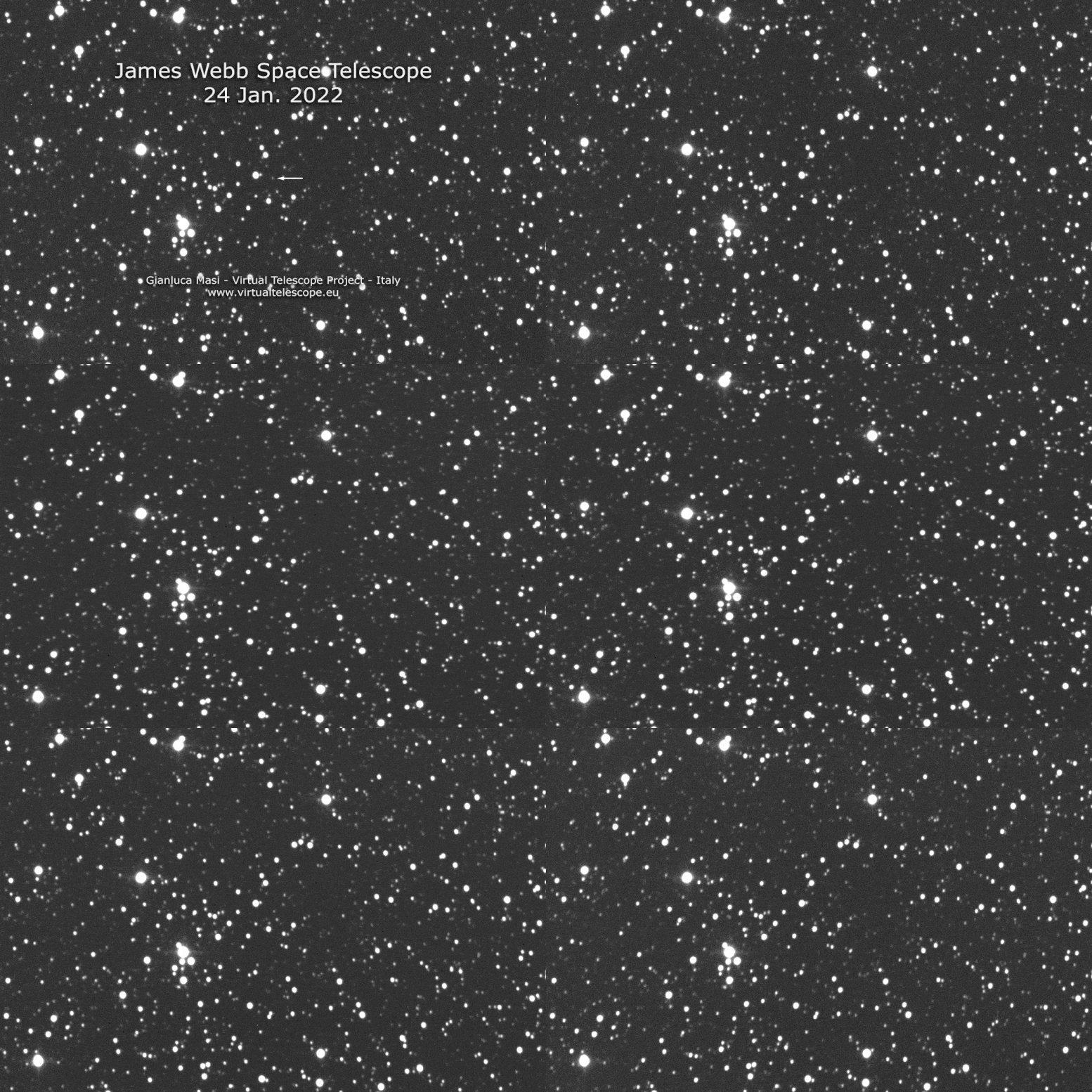
In addition to the above image, the VTP also created a short GIF animation (below) that shows the JWST’s apparent motion against the stars. While it may look like little more than a tiny dot against a background of brighter dots (and the darkness of space), these images tell a story of an ambitious mission that was decades in the making. Work began on the telescope in 1996, and it was initially hoped that the James Webb would be launched by 2007 and with a budget of $500 million.
Unfortunately, there were many delays and cost overruns due to a major redesign, issues with the sunshield, and the Ariane 5 rocket that would launch it. The COVID-19 pandemic also imposed delays, as did the fact that the James Webb is the most complex and advanced space telescope ever conceived. Time and again, the origami-like nature of the telescope (where it has to fold up to fit within a payload fairing) required extensive testing runs, and the slightest issues required retesting and safety checks.
By 2016, construction was finally finished, but an extensive testing program still had to be completed. By late 2021, the telescope testing finished up, and the James Webb was shipped to Kourou, French Guiana, for integration with the Ariane 5 rocket. When the launch finally happened on Christmas Day, it went off without a hitch. Thomas Zurbuchen, NASA’s associate administrator for science missions, commented, “It’s truly Christmas with all the presents and everything and we have a space mission!”
By 2016, construction was finally finished, but an extensive testing program still had to be completed. By late 2021, the telescope testing finished up, and the James Webb was shipped to Kourou, French Guiana, for integration with the Ariane 5 rocket. When the launch finally happened on Christmas Day, it went off without a hitch. NASA’s associate administrator for science missions Thomas Zurbuchen, “It’s truly Christmas with all the presents and everything and we have a space mission.”
Now that the mission is at L2, the mission team is waiting for the telescope to reach operational temperature. This will be followed by the activation of the telescope’s instruments, final testing, and calibration. Barring any issues, NASA anticipates that the James Webb will begin collecting its first light by June 2022. As NASA Administrator Bill Nelson said:
“Webb, welcome home! Congratulations to the team for all of their hard work ensuring Webb’s safe arrival at L2 today. We’re one step closer to uncovering the mysteries of the universe. And I can’t wait to see Webb’s first new views of the universe this summer!”
Adapted from an article originally published on Universe Today.
Never miss a breakthrough: Join the SciTechDaily newsletter.
Follow us on Google and Google News.
8 Comments
The communal telescope project used to produce this animation is an interesting project in its own right, are multipe telescopes used in conjunction to reduce noise, I wonder?
jr htps://www.rutmanip.com
thanks for this
gooooooooooooooooood
goooooooooooooood
Thank you for this article and its images. The James Webb telescope is an amazing feat of engineering. I can’t wait for the science that will come from the instrument and the astronomers who will use it.
Breathtaking 💫
I have followed JWST since launch to L-2 orbit. Fantastic!
The death ray is nearing completion. Best part. It pegs off suckers only at night.