
What did people make clothes from in the Neolithic? Çatalhöyük, the world’s largest known Stone Age settlement, gives us answers after 60 years of debate.
Stone Age cities sound like something of an oxymoron. But as many as 10,000 people lived in Çatalhöyük in Turkey some 8,000-9,000 years ago. This makes it the largest known settlement from what archaeologists call the Neolithic and Chalcolithic periods.
“Çatalhöyük is one of the most famous archaeological sites,” says Lise Bender Jørgensen.
She is an archaeologist and professor emerita from the Norwegian University of Science and Technology’s Department of Historical and Classical Studies, and has helped to confirm what people in the ancient city wove their clothes from.
“Some experts believed that people made their clothes from wool. Others thought they made them out of linen instead.”
Bender Jørgensen is a specialist in archaeological textiles, so it comes as no surprise that she has been involved in this work.
Under Discussion for Almost 60 Years
Experts have been discussing what kind of clothes people wore in Çatalhöyük since 1962, when they found the first pieces of cloth here.
Some specialists believed that people made their clothes from wool. Others thought they made them out of linen instead. So who’s right? After almost 60 years, we now know the answer.
“Neither,” Bender Jørgensen and her colleagues say.
Now they have presented their findings in Antiquity, a leading archaeological journal.
Çatalhöyük Is a Superstar
You may not have heard of Çatalhöyük, but the city is considered a superstar in archaeological circles.
“When Çatalhöyük was excavated from the late 1950s onwards, it was considered one of the oldest cities ever. Even though new discoveries show that this is no longer true, the place still has a high celebrity factor,” says Jørgensen.
“People were already living here more than 9,000 years ago.”
Archaeologist James Mellaart led the earliest excavations. Turkish authorities later expelled him from the country, as he was allegedly involved in the black market sale of archaeological artifacts.
Çatalhöyük the city is genuine, however. People were already living here more than 9,000 years ago, and 18 layers of settlements have been identified. People called the city home until about 7,950 years ago.

Unearthed Textiles From the Stone Age
One of the world’s leading archaeologists, Professor Ian Hodder at Stanford University, undertook new excavations between 1993 and 2017. They yielded large amounts of new data and have provided us with a whole new understanding of the site.
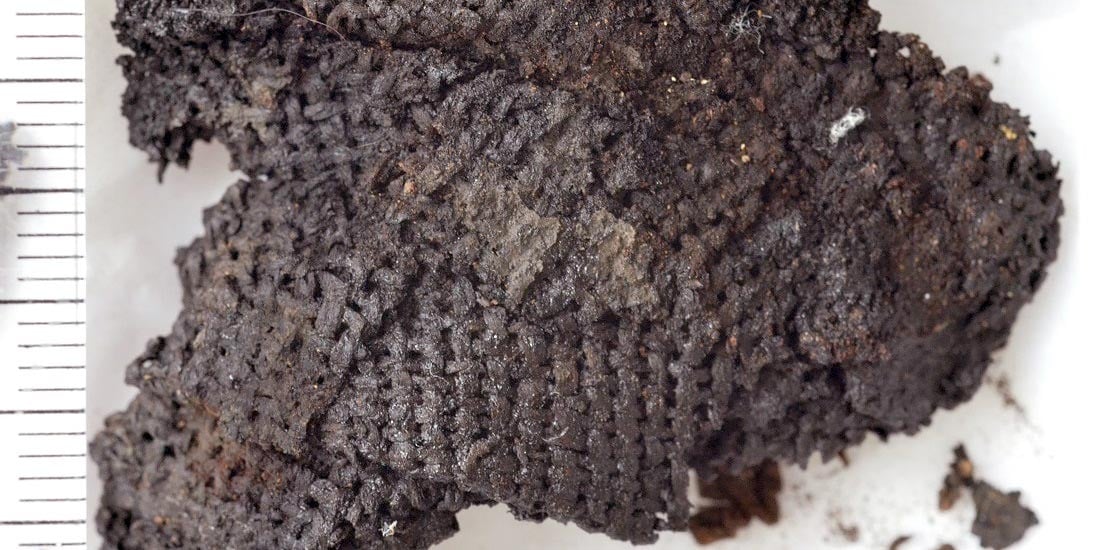
The finds made by Hodder and colleagues unearthed several pieces of cloth that later turned out to be between 8500 and 8700 years old.
“When Hodder’s excavations began to reveal textiles, they invited me to examine them with my Swiss colleague Antoinette Rast-Eicher,” Bender Jørgensen says.
Rast-Eicher, who is affiliated with the University of Bern, specializes in identifying fabric fibers. She has experience with some of the oldest European textiles found in Alpine lakes. The two researchers have collaborated on several projects in recent years, including under the auspices of Norwegian University of Science and Technology (NTNU).
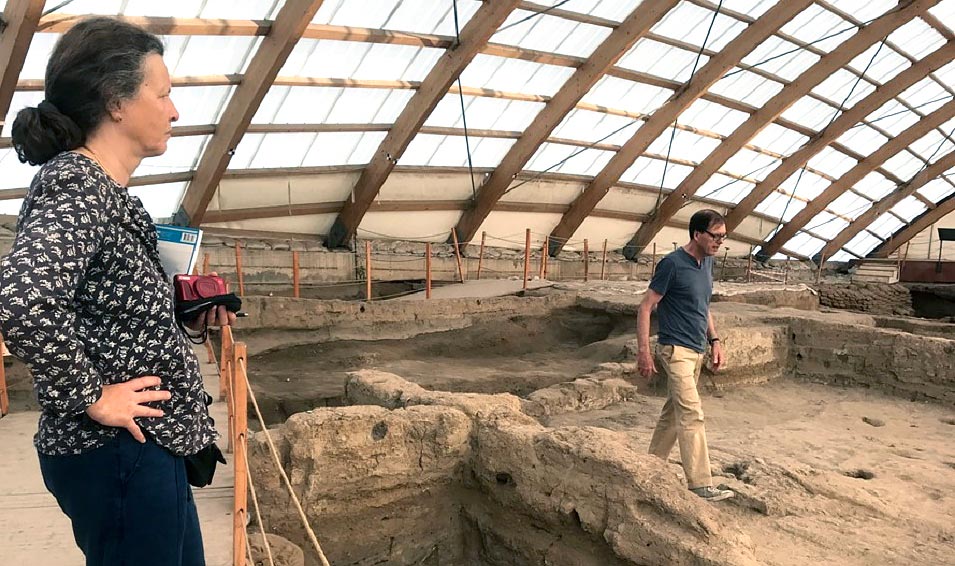
In August 2017, they traveled together to Çatalhöyük and examined the textiles that the archaeologists in Hodder’s group had found. They also collaborated with postdoctoral fellow and archaeobotanist Sabine Karg from the Free University of Berlin. This group of specialists found clear answers.
A Neglected Old Material
“In the past, researchers largely neglected the possibility that the fabric fibers could be anything other than wool or linen, but lately another material has received more attention,” Bender Jørgensen says.
People in Çatalhöyük used assorted varieties of exactly this material.
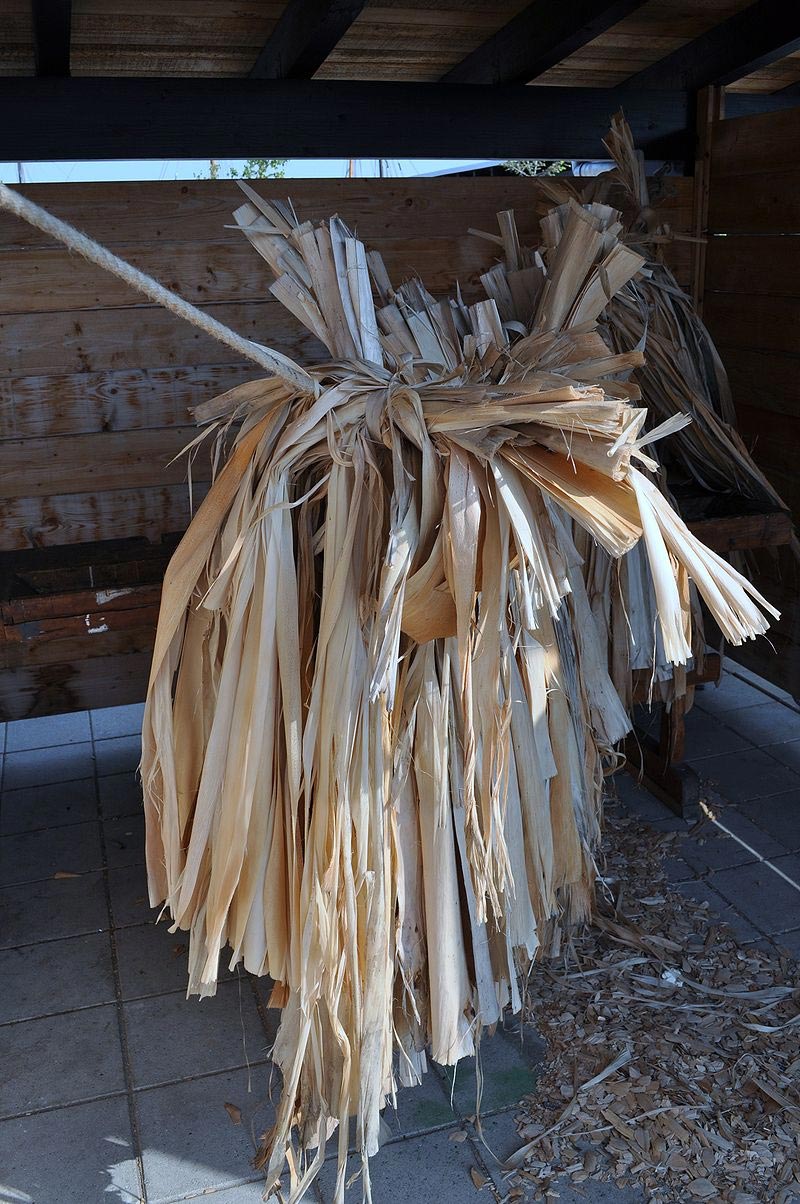
“Bast fibers were used for thousands of years to make rope, thread, and in turn also yarn and cloth,” says Bender Jørgensen.
A fiber sample from a basket turned out to be made of grass, but several of the textiles are clearly made of bast fiber from oak trees. They are also the oldest preserved woven fabrics in the world.
Bast fiber is found between the bark and the wood in trees such as willow, oak or linden. The people from Catalhöyük used oak bark, and thus fashioned their clothes from the bark of trees that they found in their surroundings. They also used oak timber as a building material for their homes, and people undoubtedly harvested the bast fibers when trees were felled.
“Bast fibers were used for thousands of years to make rope, thread, and in turn also yarn and cloth.”

Didn’t Grow Flax
The experts’ conclusions also align with another striking point: No large quantities of flaxseed have been found in the region. People in Çatalhöyük do not seem to have cultivated flax.
Bender Jørgensen notes that a lot of people often overlook bast fiber as an early material. “Linen tends to dominate the discussion about the types of fabric fibers people used,” she says.
As it turns out, people in this area did not import linen from elsewhere, as many researchers have previously thought, but used the resources they had plentiful access to.
Reference: “The use of local fibers for textiles at Neolithic Çatalhöyük” by Antoinette Rast-Eicher, Sabine Karg and Lise Bender Jørgensen, 14 July 2021, Antiquity.
DOI: 10.15184/aqy.2021.89
Never miss a breakthrough: Join the SciTechDaily newsletter.
Follow us on Google and Google News.
5 Comments
Ancient clothing? Go online & Google Otzi the ice man. He’s what 10,000-15,000 yrs. old? Remember he was clothed when he was found. And the fabric was known.
More like animal skins! And it was 5,300 years ago, not “10,000-15,000 yrs.
https://www.livescience.com/55804-otzi-clothing-species-identified.html
So how do you process Bast into fiber for weaving?
It’s tough to find anything specific to bark processing since hemp, flax and banana boshofu are all considered bast, but I did find one:
https://youtu.be/ey68uVUuyvs
Bast fibers are strong enough to be able to weave them into shoes, and it makes sense to use the softer inner fibers of oaks, after they were felled. Woven fibers have been found that are even older, in a cave setting. By the way, Otzi is NOT older than Catal huyuk, he’s about circa 5,000 years old, give or take.