
Close Menu
    Facebook X (Twitter) Instagram
    SciTechDaily
    • Biology
    • Chemistry
    • Earth
    • Health
    • Physics
    • Science
    • Space
    • Technology
    Facebook X (Twitter) Pinterest YouTube RSS
    SciTechDaily
    Home»Physics»When Impacted by Positrons Spherical Nanoparticles Release Electron-Positron Pairs in Forward Directions
    Physics

    When Impacted by Positrons Spherical Nanoparticles Release Electron-Positron Pairs in Forward Directions

    By SpringerDecember 27, 20191 Comment3 Mins Read
    Facebook Twitter Pinterest Telegram LinkedIn WhatsApp Email Reddit
    Share
    Facebook Twitter LinkedIn Pinterest Telegram Email Reddit
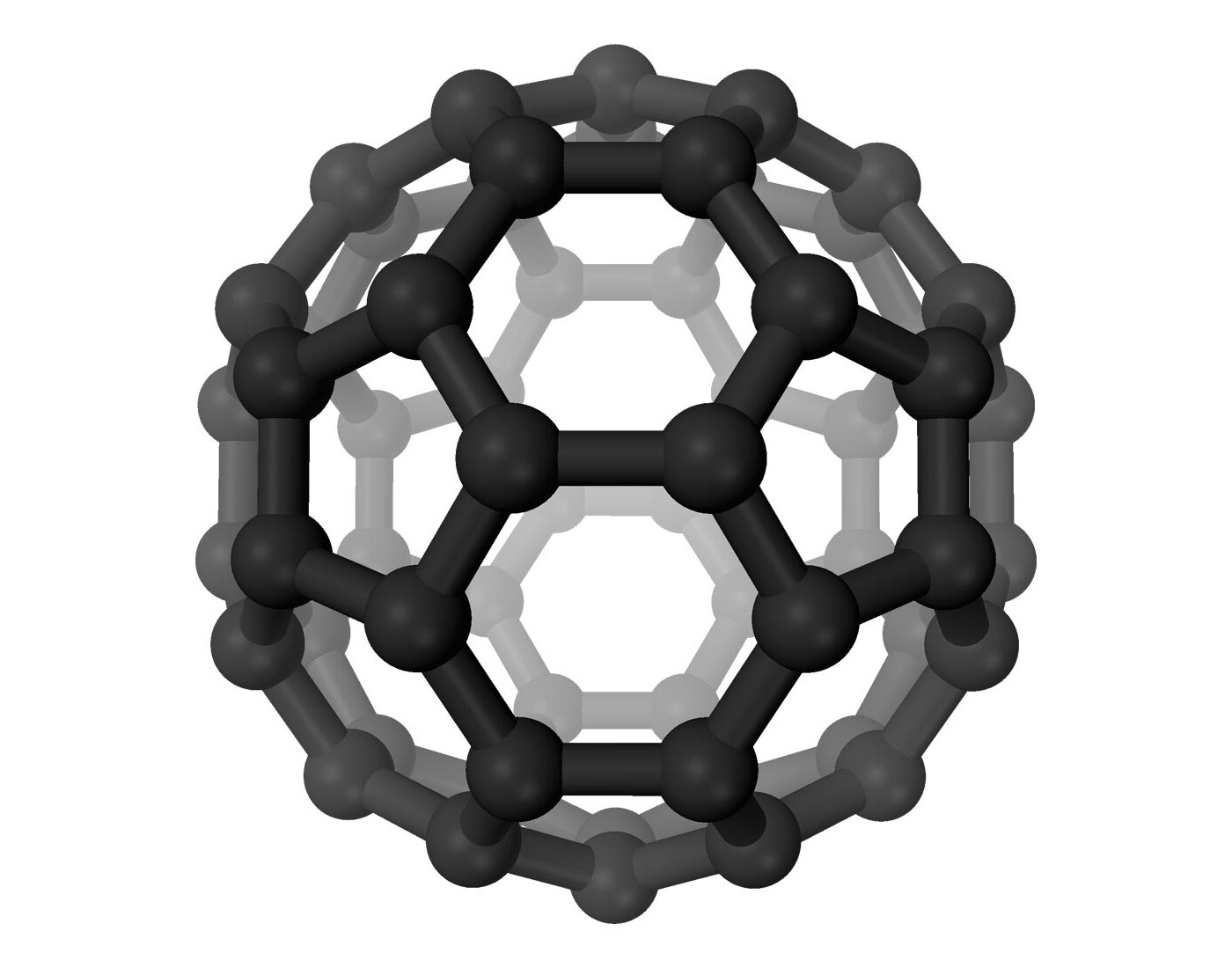
    Buckminsterfullerene Perspective 3D Balls
    Impacting positrons release positronium from C60. Credit: Benjah-bmm27, public domain

    Theoretical calculations reveal that when impacted by positrons of particular energies, spherical nanoparticles release unstable electron-positron pairs, with signals dominating in the same direction as the incoming positrons.

    When electrons collide with positrons, their antimatter counterparts, unstable pairs can form in which both types of particle orbit around each other. Named ‘positronium’, physicists have now produced this intriguing structure using a diverse range of positron targets – from atomic gases to metal films. However, they have yet to achieve the same result from vapors of nanoparticles, whose unique properties are influenced by the ‘gases’ of free electrons they contain in well-defined, nanoscopic regions. In new research published in EPJ D, Paul-Antoine Hervieux at the University of Strasbourg, France and Himadri Chakraborty at Northwest Missouri State University, USA, reveal the characteristics of positronium formation within football-shaped nanoparticles, C60, for the first time. At specific positron impact energies, they show that positronium emission dominates in the same direction as the incoming antiparticles.

    Commonly known as buckminsterfullerene, or ‘buckyballs’, C60 is stable, easily synthesized and sustainable at room temperatures. Thanks to these useful properties, Hervieux and Chakraborty’s findings could have important implications for fields including astrophysics, materials physics, and pharmaceutical research. In particular, they could offer improvements in tests of how antimatter responds to gravity, which can involve structures including dipositronium and antihydrogen atoms; each of which feature positronium in the first steps of their fabrication processes.

    When positrons of certain energies approach buckyballs at angles of up to 10 degrees, the physicists showed that a series of narrow, forward-facing positronium signals resulted from the ‘diffraction resonance’ of the particles. The effect is comparable to how light is diffracted by microscopic spherical obstructions; showing variation with larger fullerene molecules like C240, and when particles are excited to higher energy levels. Hervieux and Chakraborty modeled these properties through theoretical calculations of how diffraction resonance affected the angles over which positronium is emitted, as a function of positron impact energy. Their results offer important insights for the wide variety of researchers who use these short-lived structures. In future studies, the duo now hopes to further explore their potential for use in real experiments.

    Reference: “Strongly resolved diffraction resonances in positronium formation from C60 in forward direction” by Paul-Antoine Hervieux and Himadri S. Chakraborty, 19 December 2019, European Physical Journal D.
    DOI: 10.1140/epjd/e2019-100552-2

    Never miss a breakthrough: Join the SciTechDaily newsletter.
    Follow us on Google and Google News.

    Nanoparticles Particle Physics Springer
    Share. Facebook Twitter Pinterest LinkedIn Email Reddit

    Related Articles

    Quantum Reality Gets Stranger: Physicists Put a Lump of Metal in Two Places at Once

    Igniting New Insights: The Thermal Shift in Quantum Field Theory

    Quantum Nanoparticles: Pulled and Compressed

    Mathematical Breakthrough Makes It Easier to Explore Quantum Entanglement

    Exploring Strangeness in the Universe’s First Ten Microseconds

    Nanoscale Manipulation of Light Leads to Exciting New Nanophotonics Advancement

    Quantum Entanglement of 8 Photons Successfully Accomplished by Physicists

    Higgs Boson Signals Gain Strength at Large Hadron Collider

    Quantum Physicists Take a Step Forward in Understanding Quantum Inseparability

    1 Comment

    1. Mitsuki kimura on December 27, 2019 4:27 pm

      USA! USA! USA is the greatest!

      Reply
    Leave A Reply Cancel Reply

    • Facebook
    • Twitter
    • Pinterest
    • YouTube

    Don't Miss a Discovery

    Subscribe for the Latest in Science & Tech!

    Trending News

    Scientists Discover Stem Cells That Could Regrow Teeth and Bone

    Early Cannabis Use May Stall Key Brain Skills in Teens

    Popular Vitamin D Supplement Has “Previously Unknown” Negative Effect, Study Finds

    Study Reveals Malaria’s Hidden Role in Human Evolution

    The Hidden Risk of Taking Breaks From Weight-Loss Drugs Like Ozempic

    Scientists Warn That This Common Pet Fish Can Wreck Entire Ecosystems

    Scientists Make Breakthrough in Turning Plastic Trash Into Clean Fuel Using Sunlight

    This Popular Supplement May Interfere With Cancer Treatment, Scientists Warn

    Follow SciTechDaily
    • Facebook
    • Twitter
    • YouTube
    • Pinterest
    • Newsletter
    • RSS
    SciTech News
    • Biology News
    • Chemistry News
    • Earth News
    • Health News
    • Physics News
    • Science News
    • Space News
    • Technology News
    Recent Posts
    • A Simple Molecule Could Unlock Safer, Easier Weight Loss
    • Stretching Diamonds Unlocks Powerful New Quantum Sensing Abilities
    • This Robot Could Explore Mars 3x Faster Than Today’s Rovers
    • Scientists Just Built a Quantum Battery That Charges Almost Instantly
    • Researchers Unveil Groundbreaking Sustainable Solution to Vitamin B12 Deficiency
    Copyright © 1998 - 2026 SciTechDaily. All Rights Reserved.
    • Science News
    • About
    • Contact
    • Editorial Board
    • Privacy Policy
    • Terms of Use

    Type above and press Enter to search. Press Esc to cancel.